Stop Chimney Leaks Before They Wreck Your Roof
A roof leak around the chimney often shows up long after the work is done. A homeowner patches a few shingles, seals a gap with caulk, or tinkers with the chimney, then weeks or months later a brown spot appears on the ceiling. By the time water shows inside, it has already found a path through your roof system.
Chimneys are one of the weakest points in a roof. You have brick or siding, metal, shingles, and sealants all meeting in one small area, and water is very good at finding even tiny mistakes. When DIY projects disturb this area, small errors can open up hidden paths for water to run right into your home.
In this article, we walk through how DIY work can lead to a roof leak around the chimney, what early warning signs to watch for, the usual problem spots, and how professional repairs keep your home protected in the Cincinnati, Northern Kentucky, Southeast Indiana, and Dayton areas.
How DIY Roof Projects Lead to Chimney Leaks
Many roof leaks around chimneys start with a project that seems simple and harmless. Some of the most common DIY jobs that can cause trouble later include:
- Replacing or patching shingles near the chimney
- Installing or adjusting a chimney cap
- Reattaching or trimming metal flashing
- Resealing gaps with general caulk or spray products
- Repointing brick joints or trying to fix small cracks
- Pressure washing the chimney or siding around it
The problem is not the idea of fixing something. It is how easy it is to miss small details that keep water out. For example:
- Nails driven too high or in the wrong spot can let water run under a shingle.
- Using general construction caulk instead of roofing sealant can fail quickly in sun and heat.
- Overlapping shingles the wrong way can send water toward the chimney instead of away from it.
- Scraping or pressure washing masonry can open hairline cracks that soak up water.
Another tricky part is timing. Many leaks do not show up right away. A small gap might stay hidden until the next big storm or long summer downpour. By then, it is easy to forget about that weekend project and blame the leak on "old age" instead of a specific mistake.
Spotting a Roof Leak Around the Chimney Fast
Catching a leak early can save drywall, insulation, and even framing. A quick visual check outside and inside your home can tell you a lot.
Outside, look closely at the chimney area:
- Shingles that are discolored, curling, or sagging near the chimney
- Rusted, bent, or lifted metal flashing where roof and chimney meet
- Cracked or missing mortar between bricks
- Gaps where siding or trim meets the chimney chase
- Dried, cracked, or peeling sealant blobs along the base of the chimney
Inside, look in rooms below the chimney and in the attic:
- Brown or yellow stains on ceilings or upper walls
- Paint or drywall that is bubbling, peeling, or soft to the touch
- Musty smells, even if you do not see obvious water
- Damp or clumped insulation near the chimney in the attic
- Darkened wood framing or visible water tracks on rafters
Stormy spring and early-summer weather in our region often exposes weak spots. A roof system that looks fine in light rain can start leaking fast when wind pushes water sideways or when heavy downpours overwhelm small gaps. If you notice changes right after strong storms, it is a sign that something at the roof-to-chimney connection may not be right.
The Usual Suspects: Flashing, Caps, and Masonry
Most chimney-related leaks come back to a few key parts: flashing, caps, and crowns, and the masonry or siding around the structure.
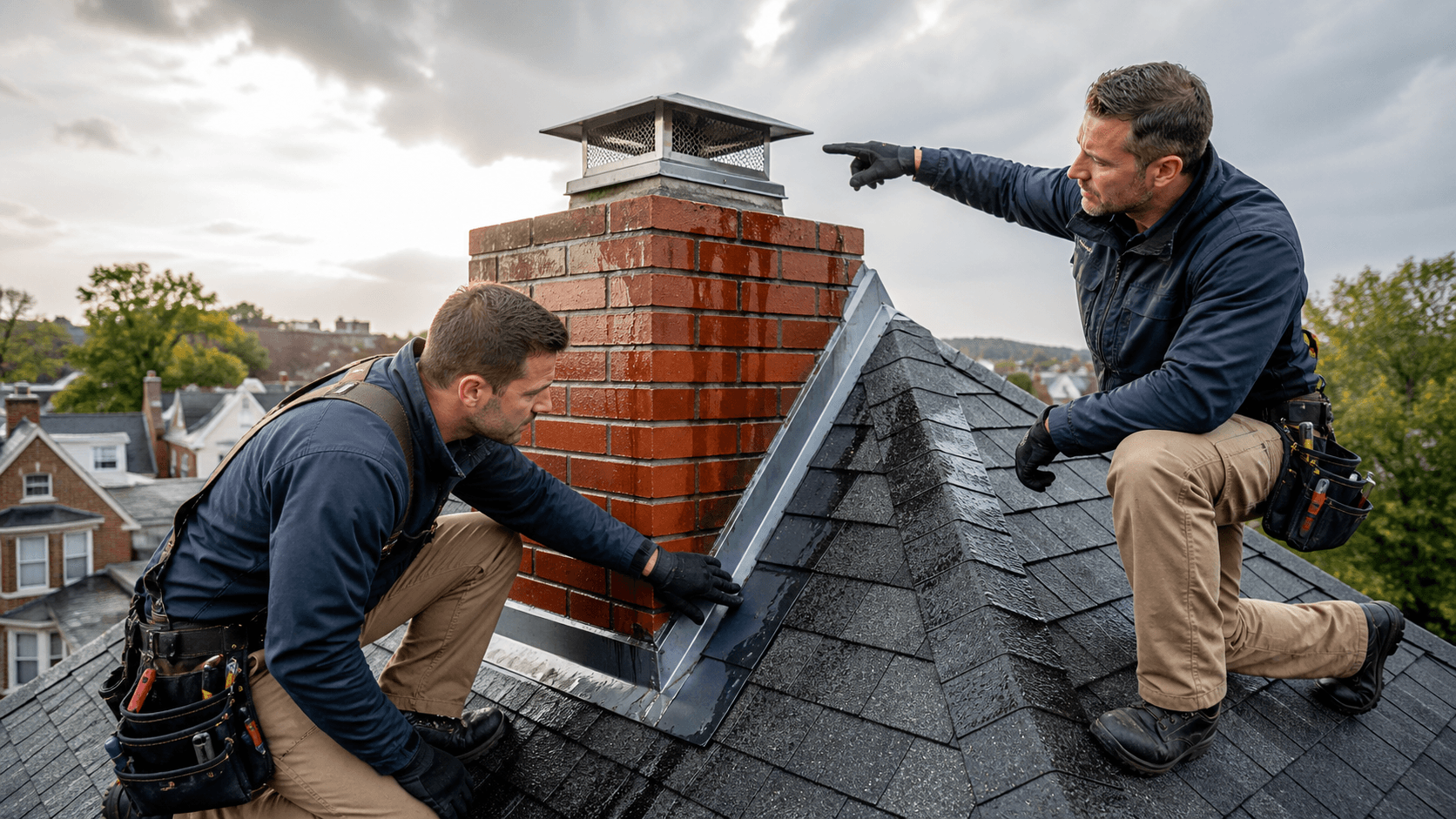
Proper chimney flashing is more than just a strip of metal with caulk on top. A solid system usually has:
- Step flashing, which tucks under each row of shingles up the side of the chimney
- Counter flashing, which is cut into the masonry or attached to the chase and overlaps step flashing
- Correct overlaps so water is always directed onto the shingles, never behind them
Many DIY fixes skip one of these layers or rely on caulk alone. Surface caulking might hold for a short time, but as it shrinks or cracks, water sneaks behind the metal.
Chimney caps and crowns are another common trouble spot. Problems we often see include:
- Caps that are the wrong size, leaving gaps for rain to blow in
- Caps that are loosely anchored or tilted, so water runs under the mounting points
- Cracked or crumbling concrete crowns that hold water instead of shedding it
- Crown "repairs" that are just beads of caulk instead of a proper rebuild
When water gets into the chimney structure, it can travel between the flue and the brick, then exit into the roof space around the chimney. That is why you might see a roof leak even though the visible part of the chimney looks dry.
For masonry and siding surrounds, DIY changes can break protective seals in ways that are hard to see:
- Repointing joints with the wrong type of mortar can trap moisture or flake out quickly.
- Pressure washing can erode soft brick faces and open tiny pores for water.
- Cutting into siding around a chimney for things like cable or satellite lines can leave gaps where water sneaks in.
Once that protection is broken, water can track behind brick, stone, or siding and find its way into the attic or wall cavities.
Fix It Right: Professional Solutions That Actually Last
Stopping a roof leak around the chimney means finding the real path the water is taking, not just where it shows up inside. That is why a thorough inspection matters.
A professional chimney and roof inspection for this kind of leak often includes:
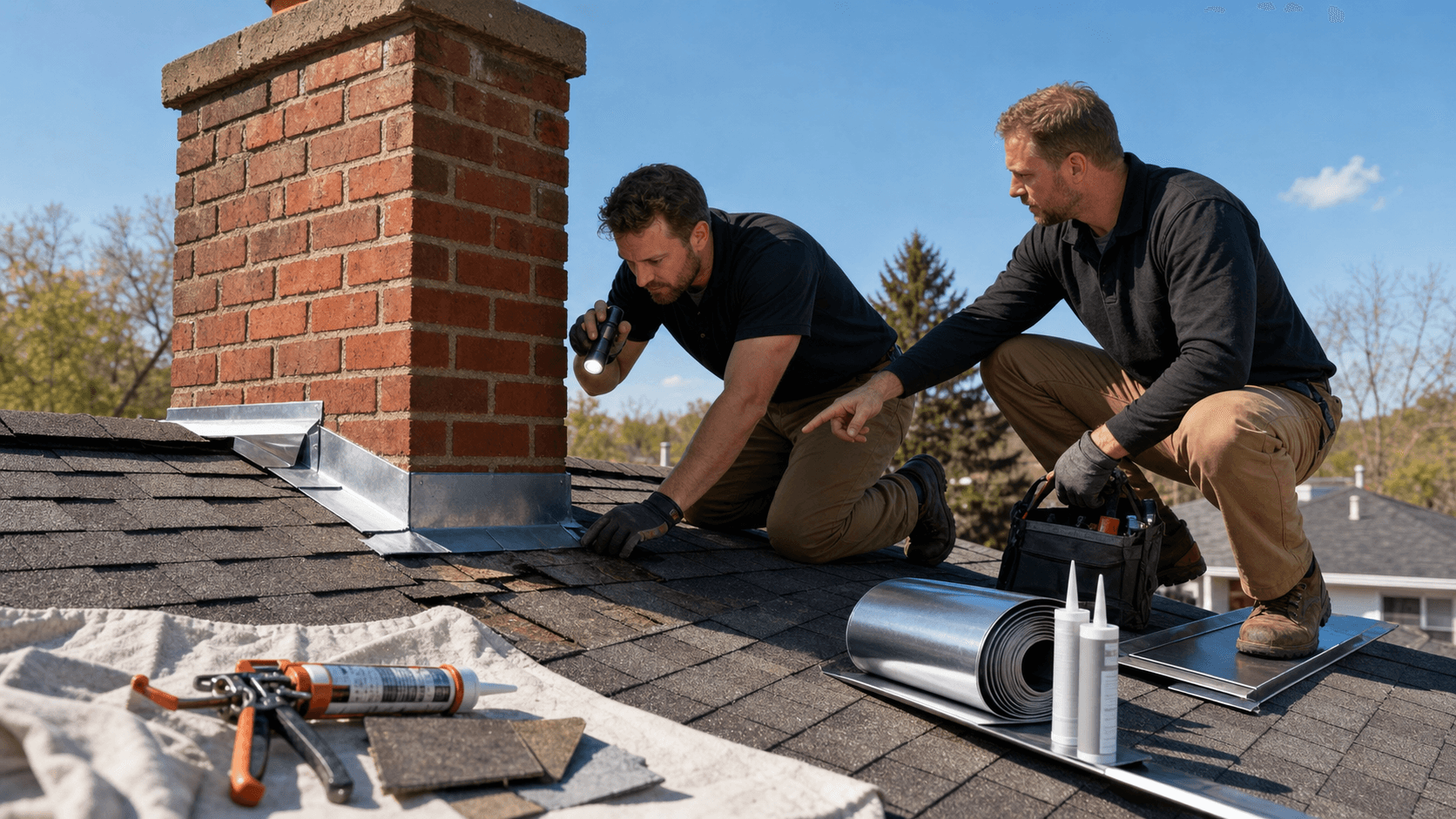
- Checking how shingles and flashing are layered along all sides of the chimney
- Looking at the condition of step and counter flashing, not just surface sealant
- Examining the crown, cap, brick, mortar joints, and any siding or trim around the chase
- Inspecting inside the flue for signs of water entry
- Reviewing the attic space for staining patterns that show how water is traveling
Common long-lasting repairs might include:
- Removing and properly reinstalling step and counter flashing so it works with the roofing system
- Rebuilding or repairing a damaged crown so it sheds water away from the chimney
- Installing a new chimney cap or resizing one that does not fit correctly
- Repointing brick with appropriate materials or sealing masonry in the right way
- Replacing water-damaged sheathing, framing, or insulation if needed
Quick patches, like smearing roofing cement over shingles or piling on extra caulk, may slow a leak for a short time but rarely stand up to Midwest sun, temperature swings, and heavy storms. Solid, code-compliant repairs focus on how all the pieces work together so water is directed off your roof, not into it.
Protect Your Home Before the Next Summer Storm Hits
If you finished any DIY work near your chimney in the last few months, it is smart to give that area a careful look before more strong storms roll through. From the ground or a safe viewing spot, check for missing shingles, crooked flashing, cracked crowns, or any fresh caulk that already looks dried or split. Indoors, walk the rooms under your chimney and peek into the attic if you can do it safely.
Any of these signs mean it is time to bring in a professional chimney company like Chimney Works for a closer look:
- Active dripping or wet spots that come back after each storm
- Ceiling stains that keep growing or changing color
- Rusted, loose, or obviously patched flashing around the chimney
- A leak that started soon after a DIY roofing, chimney, or siding project
Finding and fixing a roof leak around the chimney early helps protect the rest of your roof, your framing, and your finishes. It also gives you peace of mind the next time dark clouds build over Cincinnati, Northern Kentucky, Southeast Indiana, or the Dayton metro area.
Protect Your Home From Costly Water Damage Today
If you are noticing stains, dampness, or peeling paint near your chimney, now is the time to address a potential roof leak around the chimney before it leads to expensive structural repairs. At Chimney Works, we carefully inspect your chimney and roofing transition, identify the exact source of the problem, and provide durable repair solutions. We will walk you through our recommendations so you understand what is needed and why. To schedule an inspection or ask a question, simply contact us today.