
Transform Your Basement Into a Cozy Hamilton Retreat
Turning a chilly basement into a warm hangout spot is one of the best upgrades you can make to your home. A gas fireplace can take that cool, unused space and turn it into a cozy retreat where everyone actually wants to spend time.
In Hamilton and the surrounding area, basements can feel damp and cold for much of the year. A gas fireplace adds steady warmth, soft light, and a relaxed feel without the mess of hauling wood or dealing with ash. In this article, we will walk through how to plan a basement gas fireplace project, what professional gas fireplace installers in Hamilton, OH do, and why local experience matters when you are working below-grade.
Why Gas Fireplaces Are Ideal for Basement Conversions
For basements, gas fireplaces usually make more sense than wood-burning units. Below-grade spaces have special challenges, and gas options handle those challenges well.
Here are some reasons gas works so well in a basement:
- Flexible venting options for below-grade walls
- No firewood, ash, or chimney sweeping from wood smoke
- Steady, controllable heat instead of big temperature swings
- Simple on/off controls that work well in a casual hangout space
Gas fireplaces can be set up as direct-vent units that pull in outside air and send exhaust back out through a sealed pipe. This is great for basements because the system is closed off from the room. Vent-free options exist too, but code rules, room size, and air quality need to be carefully reviewed by a professional before going that route.
Lifestyle benefits are a big part of the appeal. With a gas fireplace in the basement, you can have:
- Instant warmth with a switch, remote, or wall control
- Low-maintenance comfort, with no hauling fuel or cleaning soot
- Easy pairing with media walls, game rooms, or guest spaces
- A cozy spot for a home bar, kids' zone, or in-law suite
That mix of comfort, control, and lower mess is why many Hamilton homeowners choose gas when they finish or remodel a basement.
Planning Your Basement Gas Fireplace Project
Good planning is what makes a new gas fireplace feel like it has always belonged in your basement. Before any tools come out, it helps to think through how you want to use the space and how the fireplace fits into that plan.
Start with the basics:
- Ceiling height and headroom
- Overall room size and shape
- Where people will sit and walk
- Whether the fireplace will be a main heat source or more for ambiance
Once you know the general layout, the technical pieces come next. A basement gas fireplace needs the right framing around it, correct clearances to wood and other materials, and safe pathways for both gas and electric lines. Many homes already have natural gas or propane service, but the line size and layout still need to be checked to support a new appliance.
Key planning steps usually include:
- Confirming gas supply type and capacity
- Choosing a good exterior wall or vent location
- Planning electric for ignition, fans, and controls
- Making sure framing will support any stone, tile, or mantel details
In Hamilton and Butler County, code rules, inspections, and permits come into play. Professional gas fireplace installers in Hamilton, OH stay familiar with local requirements. Having a qualified installer handle the permit and inspection process can make everything smoother and help prevent delays.
Safety, Venting, and Moisture Control in Basements
Basements call for careful attention to safety, air, and moisture. That is one of the big reasons a DIY gas fireplace setup is not a good idea, especially below grade.
Key safety points include:
- Proper combustion air, so the flame burns clean
- Correct clearances to floors, walls, and furniture
- Safety shutoffs and controls installed as designed by the manufacturer
- Carbon monoxide awareness and protection
Venting is a big part of safety. In a basement, the vent often runs horizontally through an outside wall, then may turn upward to reach a proper exhaust point. In some homes, vertical venting is possible, but that takes planning around floor systems and roof lines. Unpermitted or homemade venting can lead to poor draft, moisture issues, and serious risk from exhaust gases.
Basements also tend to be more humid than upper floors. A well-designed fireplace project can help the space feel drier and more comfortable, but only if other basics are handled:
- Appropriate insulation on walls and around the fireplace chase
- Thoughtful air sealing to help control drafts
- Dehumidification or other moisture control where needed
When all these elements work together, the basement shifts from cool and clammy to warm and inviting.
How Professional Installers Bring Your Vision to Life
Working with experienced gas fireplace installers in Hamilton, OH takes the stress out of a basement conversion. Homeowners usually start with a simple conversation about how they want the space to feel and how the fireplace should look.
A typical professional process might include:
- On-site visit to inspect the basement and discuss layout options
- Help choosing a gas fireplace model that fits the room size and goals
- Design ideas for surrounds, mantels, stone, tile, or built-ins
- Clear written estimate and project plan
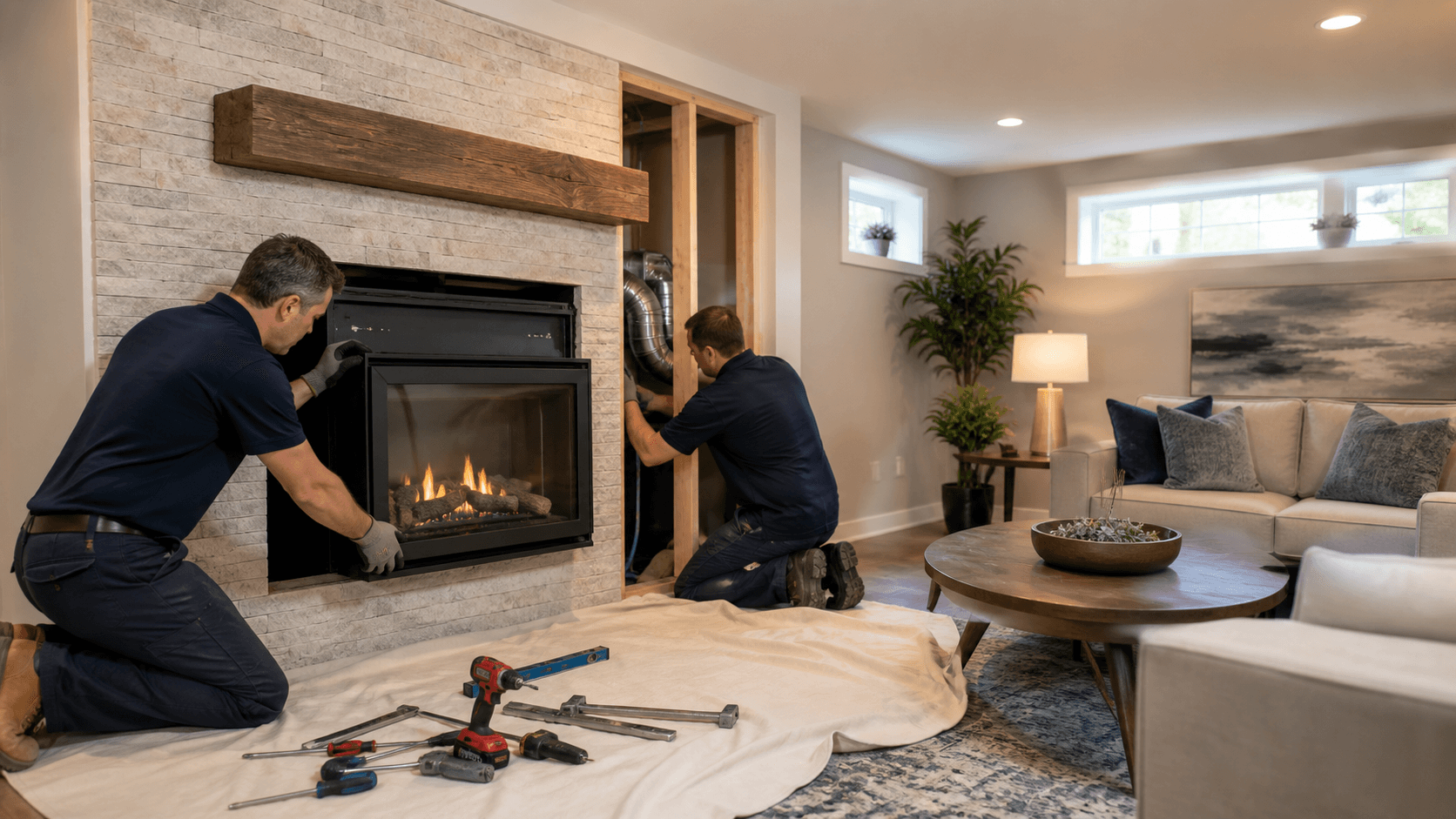
Installation itself happens in stages. After site protection and prep, rough-in work begins. That usually means running gas lines, adding any needed electric, and framing the wall or chase where the unit will sit. The installer then sets the fireplace, connects and tests the venting, and makes sure everything is sealed and supported.
Once the technical work is complete, the finish details like drywall, stone, tile, or a mantel go in. At the end, there are final safety checks and a first light-off to confirm proper performance. A full-service chimney and fireplace company such as Chimney Works can also help with related masonry work, leak checks, and future inspections to keep the system working well over time.
Designing the Perfect Basement Fireplace Style
A gas fireplace can be a design anchor for your entire basement. The right choice will match how you live and how you want the room to feel.
Popular design directions for Hamilton-area basements include:
- Modern linear units set in sleek, simple walls
- Traditional fireplaces with mantels, trim, and classic details
- Rustic stone surrounds that bring a lodge-like feel
- TV and media walls with the fireplace centered under a screen
Think about how you plan to use the space. A sectional sofa facing the fireplace and TV can create a family movie zone. A small bar or kitchenette near the fire can turn the basement into a relaxed space for gatherings. For guest rooms or in-law spaces, a fireplace adds comfort and a welcoming feel.
Finishing touches make a big difference:
- Built-in shelving around the unit to hold books or decor
- Accent lighting to highlight stone or tile
- Warm flooring choices and area rugs to soften concrete floors
- Comfortable chairs, blankets, and side tables for drinks and snacks
When all these pieces come together, your Hamilton basement can feel like a natural extension of the main living space, with the gas fireplace at the heart of it.
Get Started With Your Project Today
If you are ready to add a safe, efficient gas fireplace to your home, our team at Chimney Works is here to help you plan every detail. Reach out to our gas fireplace installers in Hamilton, OH for a clear, no-pressure estimate tailored to your space and budget. If you have questions or want to speak with someone directly, you can also contact us to discuss your project and next steps.