Stop Holiday Stress with a Dry, Leak-Free Chimney
A roof leak around the chimney can ruin the mood fast. Instead of enjoying coffee by the fire with friends and family, you are staring at a brown stain on the ceiling, listening for drips, and smelling damp drywall. That is not how anyone wants to host during the holidays.
Chimneys are one of the most common places for winter roof leaks in the Greater Cincinnati, Northern Kentucky, Southeast Indiana, and Dayton areas. We get a lot of rain, snow, and freeze-thaw cycles, and all of that water tries to work into the weak spots where the roof meets the chimney. When that happens, leaks can show up in rooms, attics, and even inside the chimney system itself.
In this article, we will walk through how to spot early signs of trouble, what usually causes a roof leak around the chimney, a few safe checks you can do, and why bringing in a professional before guests arrive is so important.
Early Warning Signs a Chimney Leak Is Starting
Roof and chimney leaks rarely start with water pouring through the ceiling. Most of the time, the first signs are small and easy to brush off. Catching them early can save you from bigger repairs and holiday headaches.
Inside the home, pay attention to:
- New water stains on ceilings or walls near the fireplace
- Paint that is peeling, flaking, or bubbling
- Drywall that looks swollen or soft to the touch
- A damp, musty smell in the room after rain or wet snow
Around the fireplace and chimney itself, watch for clues like:
- Rust on the damper or metal parts in the firebox
- Crumbling or sandy mortar joints between bricks
- White, chalky deposits on the brick surface, called efflorescence
- Dark streaks or discoloration on the face of the chimney
Outside, even from the ground, you may notice:
- Moss, algae, or green growth on shingles near the chimney
- Siding or trim around the chimney that looks warped or stained
- Shingles near the chimney that stay darker or "wet" longer than the rest of the roof
If you notice more than one of these signs, there is a good chance water is getting in somewhere around the chimney and traveling along wood, insulation, or masonry before you see it.
Common Causes of a Roof Leak Around the Chimney
Water always looks for the easiest path, and the area where your chimney meets the roof gives it plenty of chances to sneak in if something is not sealed correctly.
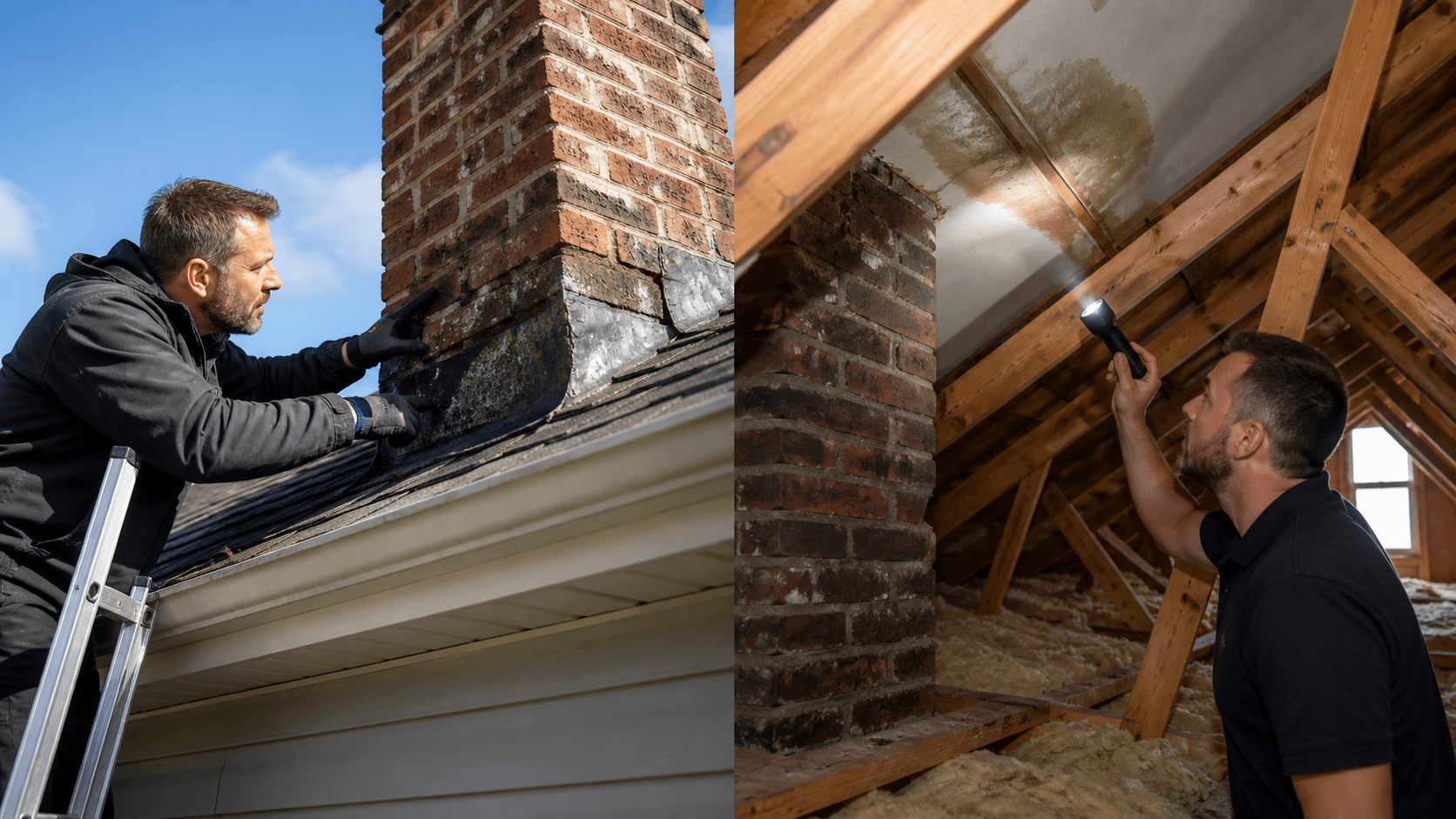
One of the biggest trouble spots is the flashing. Flashing is the metal that seals the joint where the chimney and roof meet. There are a few parts:
- Step flashing sits under the shingles along the sides of the chimney
- Counter flashing is embedded into the chimney and overlaps the step flashing
- Apron flashing covers the front or downhill side of the chimney
If any of this metal is missing, bent, rusted, or poorly installed, water can run right behind it and into your home. Even a small gap in caulk or sealant can lead to water entry over time.
The chimney crown and masonry are also common leak sources. A cracked or broken crown at the top of the chimney lets water seep down into the bricks. Missing mortar joints and porous or spalling bricks can soak up water like a sponge. That moisture can then travel into the attic, down walls, or into the firebox area.
Roof and gutter problems close to the chimney can make leaks worse. Deteriorated or curling shingles cannot shed water properly. Clogged gutters and downspouts allow water to back up and pool, and when temperatures drop, ice dams can form. All of that standing water often finds its way to the chimney area, which is already full of seams and joints.
Safe DIY Checks Before Your Holiday Guests Arrive
There are a few safe, simple checks you can do before company comes over. These will not replace a professional inspection, but they can help you spot problems early and gather helpful notes.
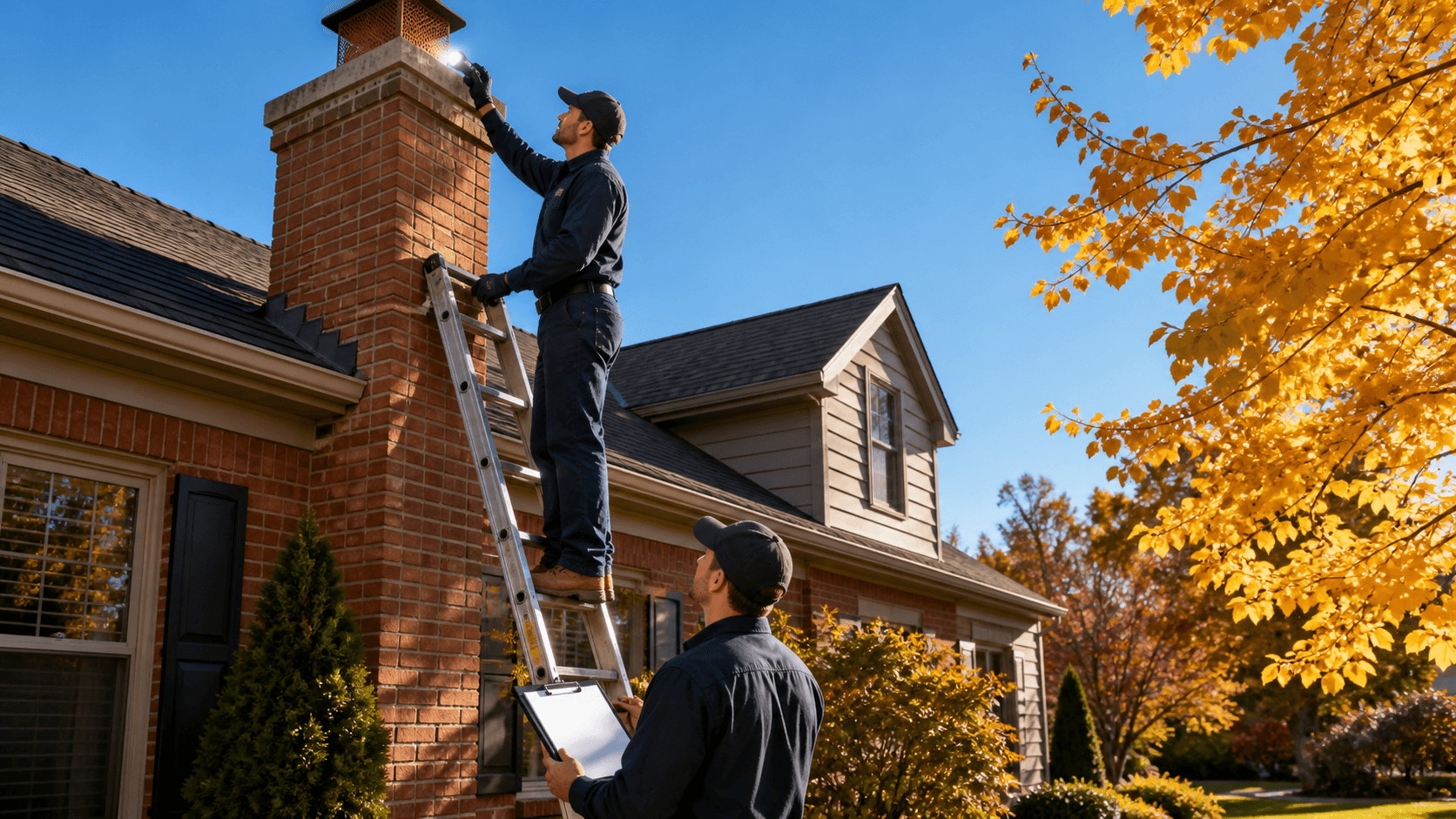
From ground level, grab a pair of binoculars and take a slow look at the chimney area:
- Check for metal flashing that looks lifted, bent, or rusted
- Look for gaps where flashing meets brick or siding
- Scan the top of the chimney for a cracked crown or missing mortar
- Note any dark, wet looking shingles hugging the chimney
Inside the house, a quick attic and ceiling check can be very revealing. On a dry day, look in the attic around the chimney for:
- Insulation that feels damp or looks matted down
- Water stains or dark streaks on rafters or roof sheathing
- Old water marks that may show a leak has been going on for a while
Right after a rain or during a light shower, check again, if it is safe to do so, and see if any active drips are present.
Some homeowners also try a controlled water test. This should be done with care. One person stands outside with a garden hose on low, slowly running water over small sections around the chimney, starting low and moving higher. Another person stays inside, checking the attic and rooms below for moisture. If you try this:
- Work in short sections, so you have a better idea where the leak starts
- Do not spray water directly into the flue opening
- Stop right away if you see water entering inside
Any notes or photos from these checks can be very helpful to a chimney professional.
Why Professional Chimney Leak Repairs Matter Most
A roof leak around the chimney can cause a lot of hidden damage before it becomes obvious. Water can soak insulation, rot wood framing, and damage drywall and ceilings. Damp, dark spaces also create a perfect setting for mold growth that you may not see right away. Over time, this can lead to bigger structural issues and more expensive repairs.
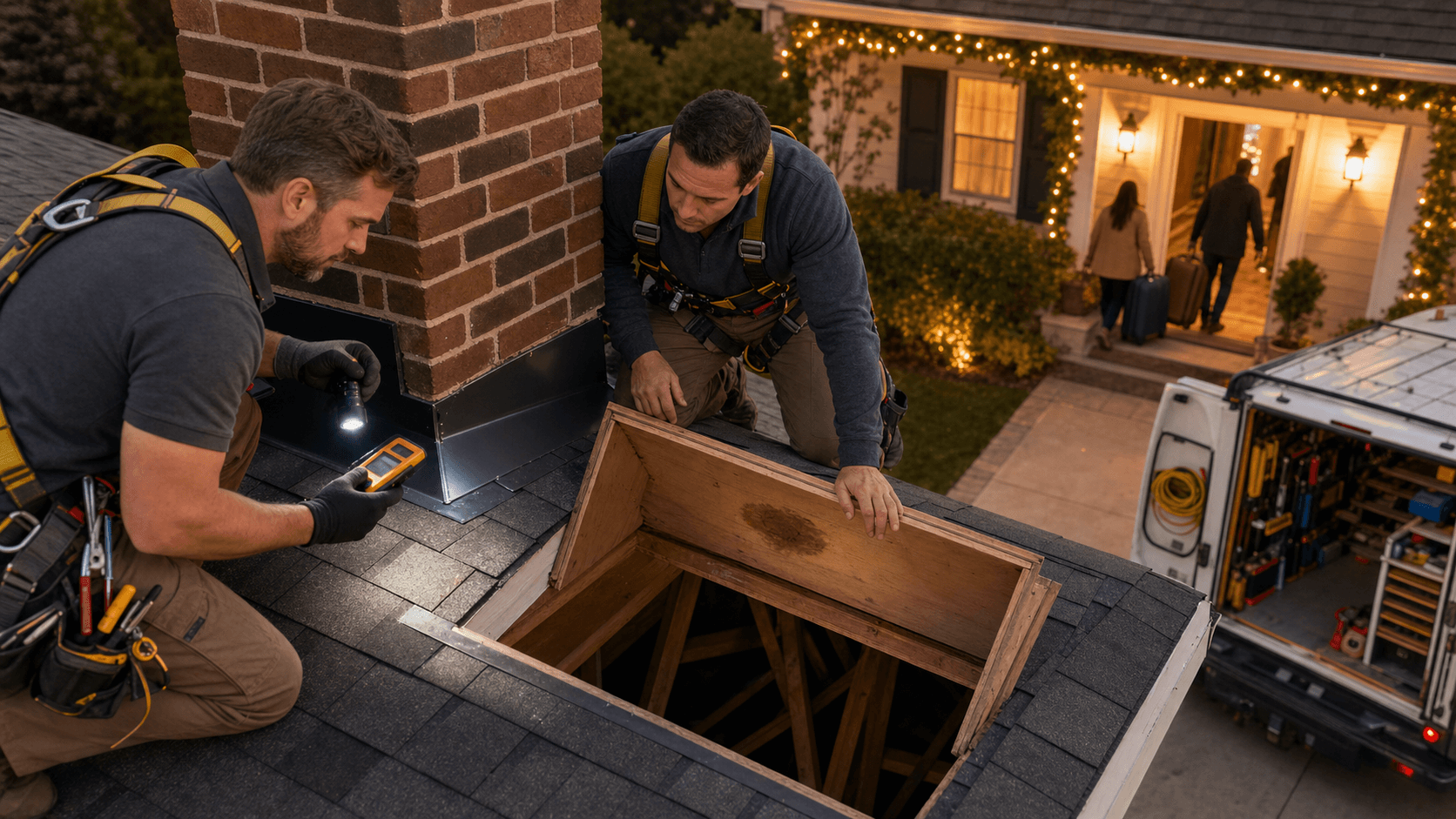
A professional chimney company knows where leaks like to hide and how water tends to move through brick, mortar, and roofing materials. During a leak inspection, we focus on:
- Checking all flashing components for gaps, corrosion, and incorrect overlaps
- Examining the crown and masonry for cracks, holes, and porous areas
- Looking inside the firebox, smoke chamber, and flue for water marks and rust
- Coordinating findings with nearby roof and gutter conditions
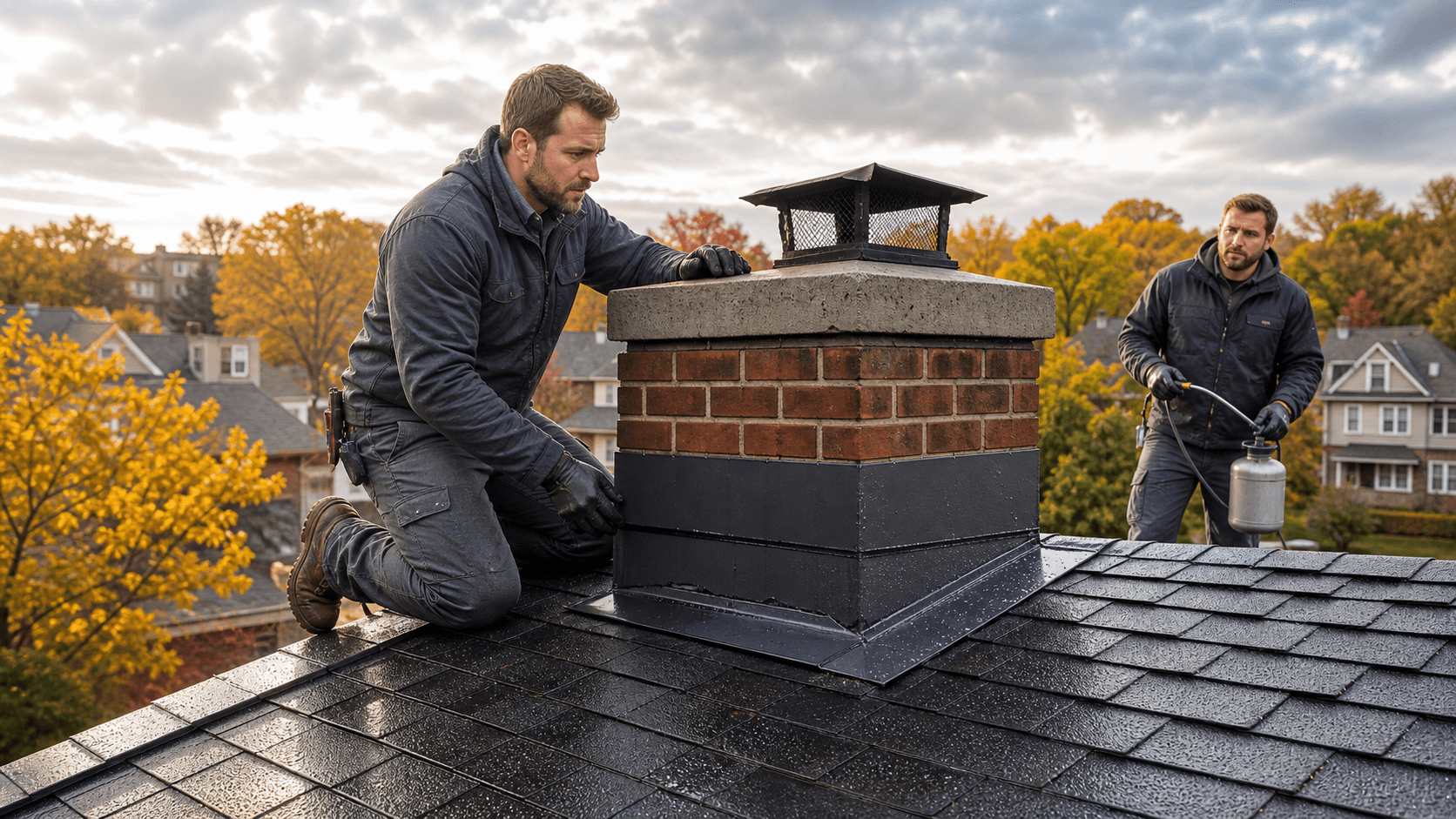
From there, we can repair or replace faulty flashing, rebuild or resurface a damaged crown, repair masonry, and apply proper waterproofing products designed for chimney materials. If the roof itself needs attention, we can work in step with roofing professionals so the whole system functions as one.
Taking care of leaks before the cold sets in helps protect your chimney from repeated freeze-thaw cycles that widen small cracks and let in even more water. It also gives you peace of mind when rain, snow, and holiday guests all arrive at the same time.
Schedule Your Chimney Leak Check Before the Holidays
The weeks leading up to the holidays fill up fast, especially for chimney and fireplace service. Many homeowners in the Cincinnati, Northern Kentucky, Southeast Indiana, and Dayton areas want their fireplaces cleaned, inspected, and ready for guests, all at the same time of year. Getting a chimney and roof leak inspection on the calendar early helps you avoid last minute stress.
It is also smart to combine leak diagnostics with your regular chimney sweeping and safety check. That way, your chimney system is inspected from top to bottom, both for water entry and safe operation. When Chimney Works takes care of chimney leaks and related issues, our goal is simple: a warm, dry, welcoming home that you feel proud to share with the people you care about.
Protect Your Home By Fixing Chimney Leaks Early
If you suspect a roof leak around the chimney, we can inspect the problem, find the source, and provide lasting repairs before water causes serious damage. At Chimney Works, our technicians focus on safe, code-compliant solutions that protect both your roof and your fireplace system. Tell us what you are seeing, and we will recommend a clear, practical plan to move forward. To schedule service or ask a question, simply contact us today.