Rethinking Roof Leak Repair When the Chimney Is the Suspect
Roof leak repair is not always a shingle problem. Many homeowners in our area keep calling roofing crews, patching spots, and replacing shingles, only to see the same water stain grow a little bigger after every storm. After a while, they find out the roof was not the real issue at all. The leak was sneaking in around the chimney.
We see this story a lot in Cincinnati, Northern Kentucky, Southeast Indiana, and the Dayton metro area. What looks like a mystery roof leak is often a chimney leak in disguise. Understanding how the chimney fits into your roof system helps you stop chasing the wrong repairs, protect your home before heavy rain hits, and get ready for fireplace season with more confidence.
Why Roof Leaks Often Start at the Chimney
Any time you cut a hole in a roof, you create a weak spot. A chimney is a big hole, and it interrupts the natural flow of water. Rain that would normally run straight down the shingles now has to move around brick, metal, mortar, and concrete. If any part of that connection fails, water finds its way in, even if the rest of the roof looks brand new.
The main chimney-related leak points include:
- Flashing and counterflashing where the roof meets the chimney
- The chimney crown at the top of a masonry chimney
- The chimney cap that covers the flue opening
- Cracks in bricks and missing mortar joints
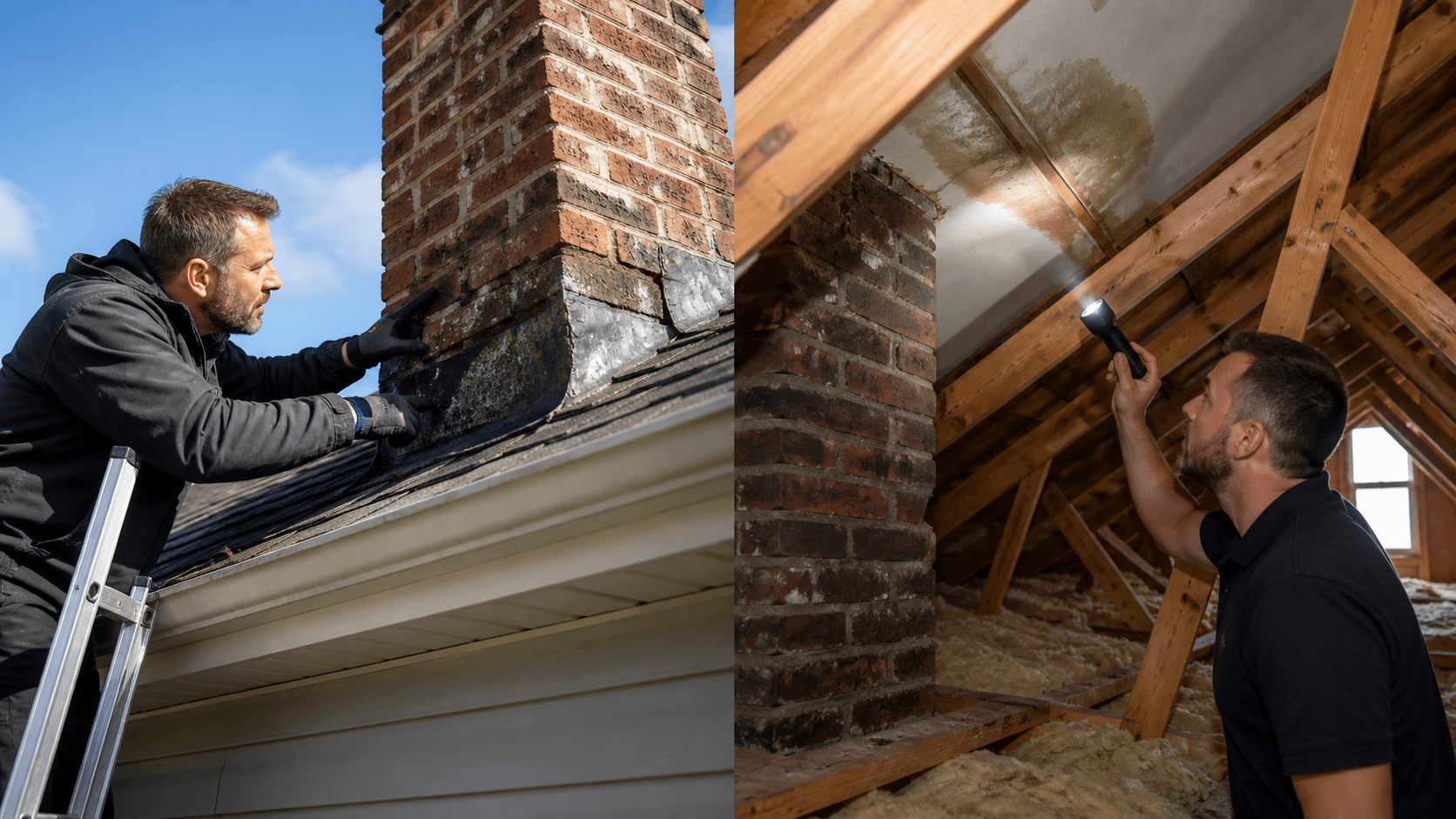
Flashing and counterflashing are the metal pieces that tie the roof and chimney together. If they are loose, rusted, or installed the wrong way, water can slip behind them and run inside your home. A cracked crown or missing cap lets water drop straight into the chimney structure and soak the masonry from the inside out. Over time, this water shows up where you might not expect.
Many standard roof leak repair visits focus only on shingles, nail pops, or surface sealant around pipes and vents. A quick look from the ground or a short walk on the roof can miss small gaps at the chimney. These leaks can be slow and sneaky, so the damage keeps building even after you think the problem was fixed.
Chimney Red Flags That Masquerade as Roof Leaks
When a chimney is leaking, the warning signs often appear far away from the actual problem. Inside the house, homeowners often notice:
- Brown or yellow water stains on ceilings or walls near the chimney
- Peeling or bubbling paint above the fireplace or on the chimney breast
- Musty or damp smells after summer storms
- Wet or compacted attic insulation close to the chimney
From the outside, the clues can be just as telling:
- Rust streaks on the face of the chimney or around the cap
- Loose, lifted, or missing flashing where the chimney meets the roof
- Crumbling bricks or mortar joints that look washed out or soft
- A chimney crown that is cracked, pitted, or flaking
- An undersized, damaged, or missing chimney cap
Our weather in this region can be rough on chimneys. Heavy spring and summer rains can drive water sideways into small gaps. Then the hot, humid air bakes that moisture into your masonry and framing. By the time you notice a stain on the ceiling or a musty smell in the family room, it is easy to assume you need roof leak repair when the water actually started at the chimney.
How Pros Diagnose Leaks When the Chimney Is the Suspect
When we are called out to look at a possible roof leak and the chimney is nearby, we treat the whole area as one system. Instead of only checking the shingles, we slow down and follow the path that water would take.
A careful leak inspection around the chimney usually includes:
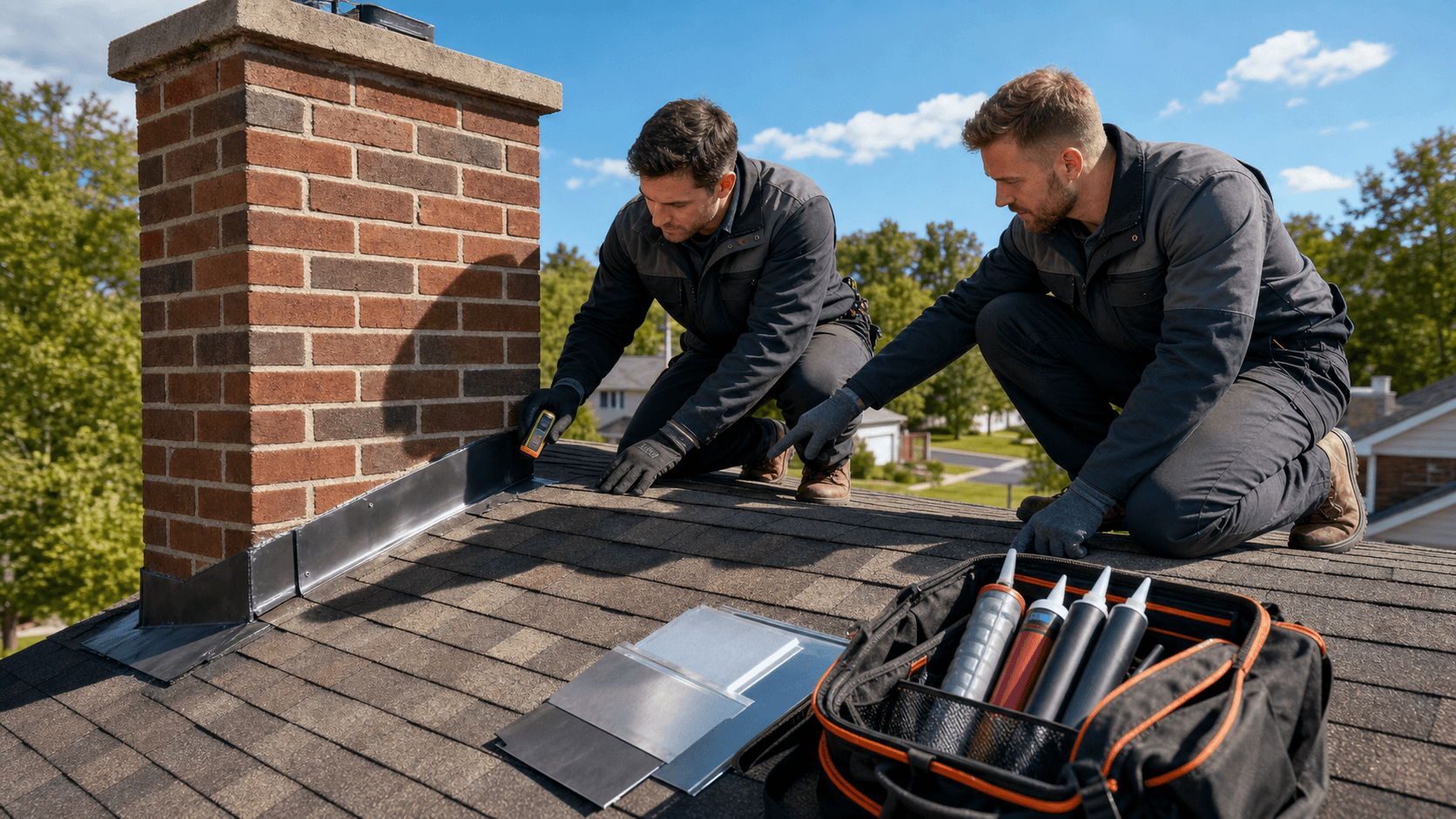
- Examining the step flashing and counterflashing along every side of the chimney
- Checking sealants and transitions where different materials meet
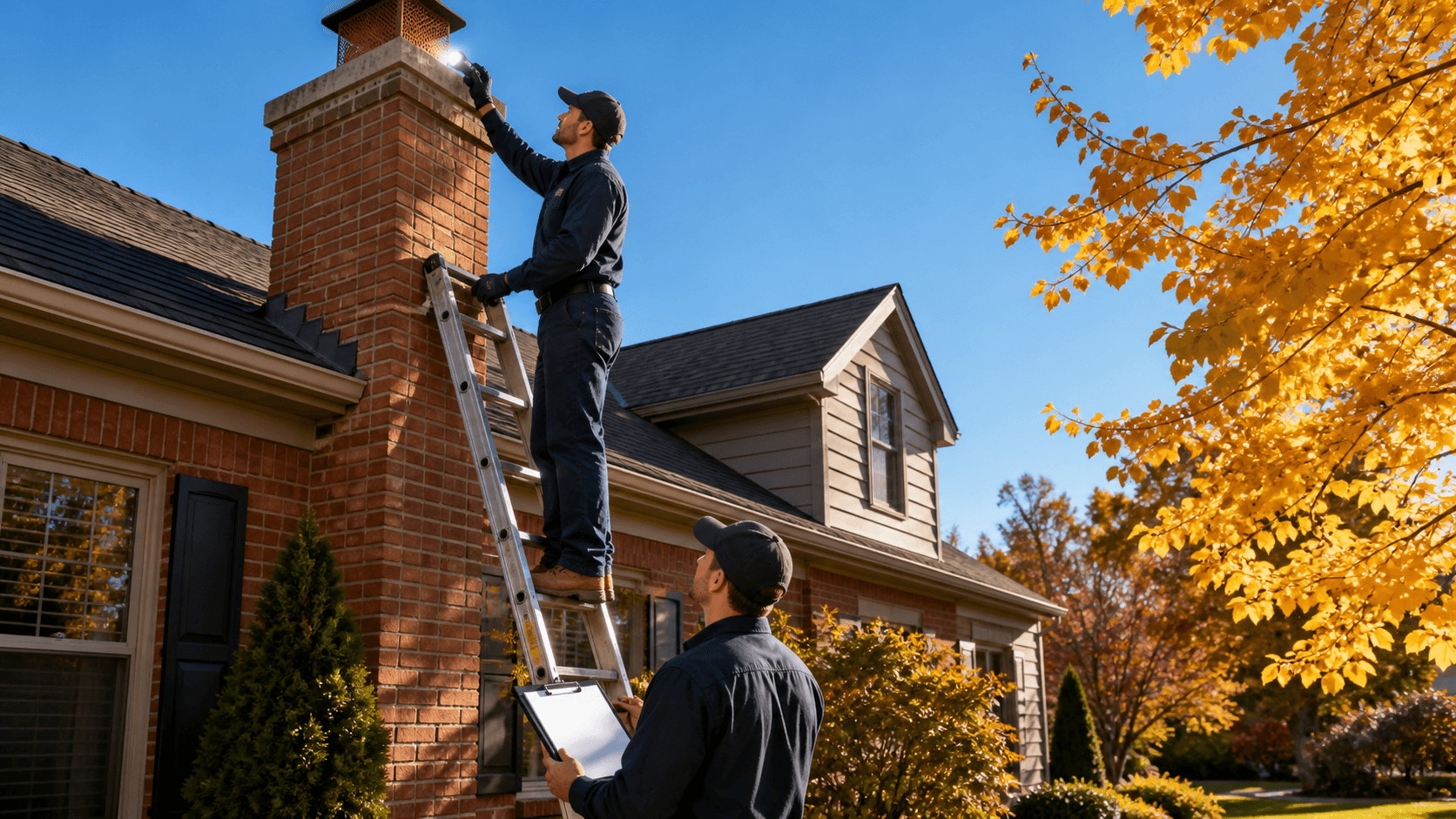
- Inspecting the chimney crown and cap for gaps, cracks, and rust
- Looking closely at bricks and mortar for spalling, holes, or loose joints
We often pair this with an attic inspection. By looking at the chimney from the inside, we can see staining on rafters, sheathing, and chimney sides that you will never notice from the outside. Tools like moisture meters help us tell if the wood or masonry is still damp, even if it looks dry to the eye.
Targeted water testing can also be useful. Instead of spraying the whole roof, we can apply water to specific areas in a set order: first the shingles below the chimney, then the side flashing, then the crown, then the cap. When water appears inside, we know which part of the system is to blame. Sometimes, we also use camera inspections inside the flue or chimney structure to look for hidden cracks and washouts.
This kind of focused work is different from a quick visual roofing check. By treating the chimney and roof as a team, we can pinpoint the true leak source and plan repairs that last longer than one season.
Repair Options That Actually Stop Chimney-Related Leaks
Once we know that the chimney is behind your roof leak repair problem, the next step is fixing it the right way. That means permanent solutions whenever possible, not just a fresh line of caulk that will crack or peel after a few storms.
Some common long-term repair options include:
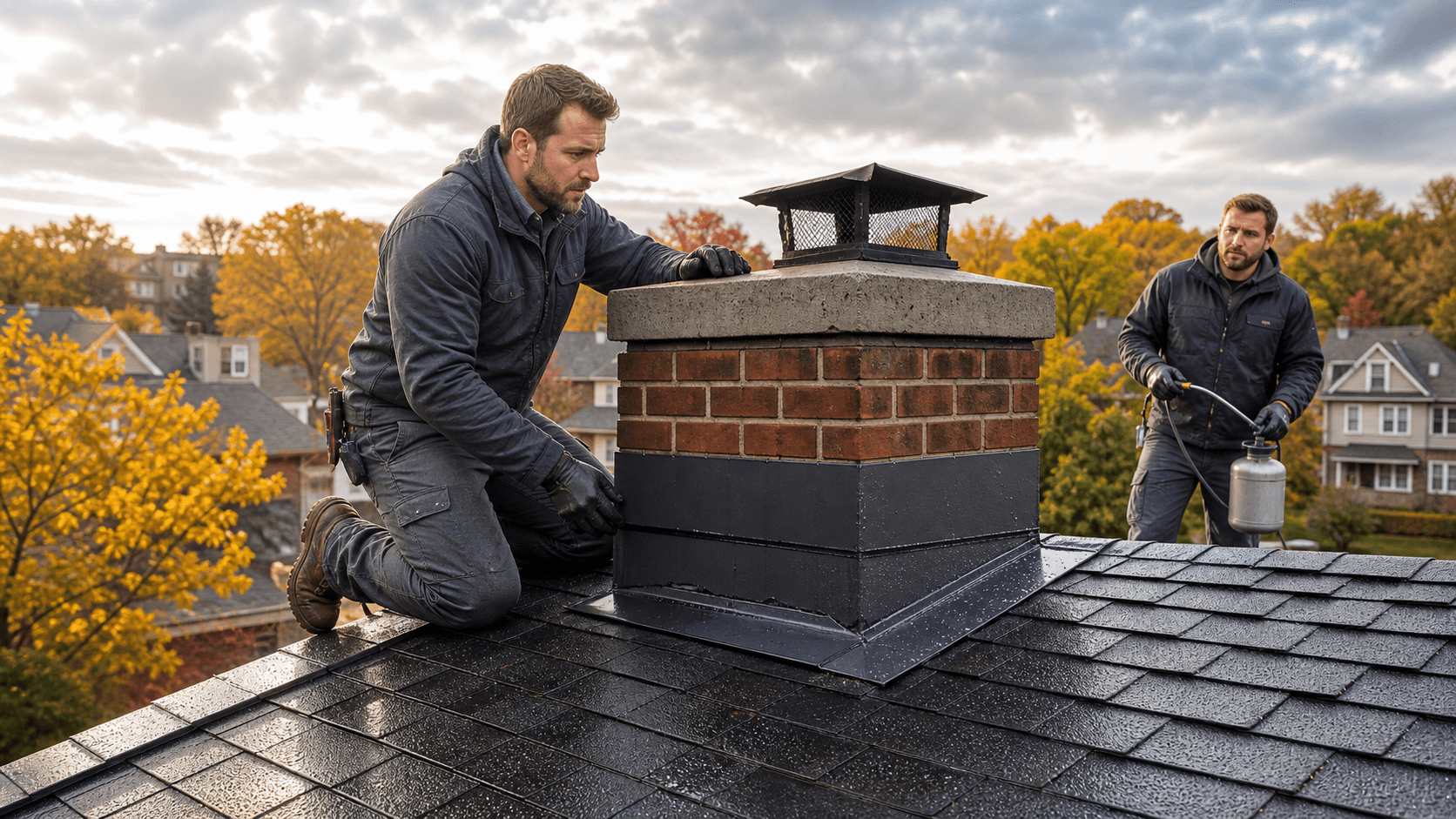
- Installing new step flashing and counterflashing around the chimney
- Repairing or rebuilding a damaged chimney crown and sealing it correctly
- Adding or upgrading a chimney cap to shield the flue from rain and debris
- Repointing mortar joints where old mortar has washed out or cracked
- Repairing or rebuilding damaged masonry that has started to crumble
Using chimney-specific materials and methods is key. For example, high-quality flashing, proper overlap, and correct attachment help water shed away from the chimney instead of driving into it. A well-built crown slopes to shed water and is separated from the flue so it can move a bit without cracking. A properly sized cap keeps water, animals, and debris out while letting smoke and gases move freely.
When we pair these chimney repairs with any needed roof repairs around the area, we are not only stopping the current leak. We are also helping protect:
- Interior ceilings, walls, and paint
- Attic insulation and wood framing
- The chimney structure itself
- The fireplace or heating appliance connected to the chimney
Taking care of these issues before regular fireplace use starts helps you head into the cooler months with less risk of smoke problems, odors, or more water damage.
When to Call a Chimney Specialist Instead of Another Roofer
It is not always easy to know if you should call a roofer or a chimney company first. As a general rule, a chimney specialist like Chimney Works is a smart call when:
- The leak shows up near a fireplace, chimney chase, or chimney wall
- You have already tried roof leak repair once or twice and the problem came back
- You can see rust, cracks, or missing pieces on the chimney from the ground
- The stains or damp spots line up with the path of the chimney through your home
Because we work on chimneys, fireplaces, and associated repairs across Cincinnati, Northern Kentucky, Southeast Indiana, and the Dayton metro area, we see the same patterns over and over again. We understand how local weather, common building styles, and older masonry chimneys tend to fail. That experience helps us zero in on chimney-related leaks faster and plan repairs that match your specific home.
Fresh shingles are nice, but if water is slipping in around the chimney, you will keep fighting the same stain on the ceiling. By rethinking roof leak repair and treating the chimney as a prime suspect, you give yourself a much better chance at a dry, healthy home and a fireplace system that is ready when you are.
Stop Roof Leaks Before They Cause Bigger Damage
If you suspect a leak around your chimney or roof, now is the time to act before small issues turn into costly structural repairs. At Chimney Works, our experienced team can inspect, diagnose, and handle precise roof leak repair to protect your home. Reach out today so we can assess the damage, explain your options, and schedule service that fits your timeline. Have questions or need to book an appointment right away? Just contact us.