Stop That Mystery Roof Leak Around the Chimney, Fast
A small brown stain on the ceiling near your fireplace rarely stays small. Water has a way of traveling, soaking insulation, feeding mold, and slowly ruining drywall, framing, and finishes. By the time the stain grows or the paint starts to peel, the damage above it can already be serious.
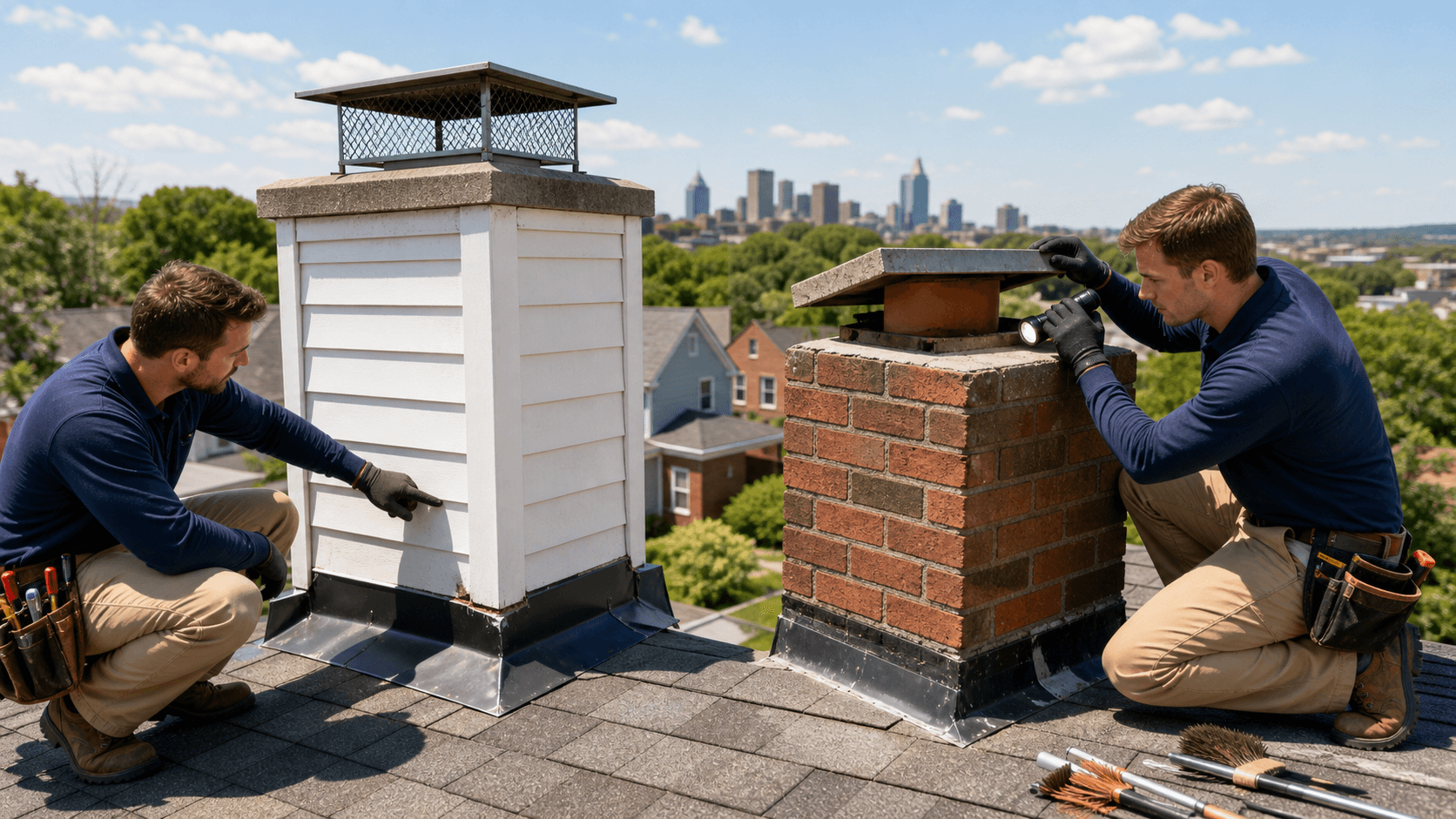
When people say they have a roof leak around the chimney, they are often talking about two very different setups. Some homes have a prefabricated metal chimney inside a wood-framed chase with siding. Others have a full brick or stone masonry chimney. The leak paths and repairs for each type are not the same.
We want to help you tell which system you have and where leaks usually start, especially around the chase cover, siding, storm collar, and cap. That way, owners around Greater Cincinnati, Northern Kentucky, Southeast Indiana, and the Dayton area can get the right fix in place before more storms roll through and fireplace season kicks in again.
Know Your Chimney Type Before You Chase the Leak
Before anyone can track a roof leak around the chimney, you have to know what kind of chimney you are dealing with. The parts, the weak spots, and even the safety concerns change a lot between prefab and masonry.
Here is the simple breakdown:
- Prefabricated chimney: A factory-built metal fireplace and metal flue pipe, wrapped in a framed wood box called a chimney chase and finished with siding or trim. A metal chase cover sits on top, and a round metal pipe sticks through with a metal cap.
- Masonry chimney: Built from brick, block, or stone, with visible mortar joints and a concrete or mortar crown on top. The flue liner is usually clay tile or sometimes metal, and you often see a masonry cap with a screen.
From the yard, you can usually tell quickly. If the chimney is covered in the same siding as your house, with a flat-looking sheet of metal on top and a round metal pipe and cap poking out, you have a prefab chimney chase. If it is all brick or stone from roofline up, with no siding and a solid-looking top, you have a masonry stack.
Getting this right matters because:
- The usual leak entry points are different.
- The repair materials and methods are different.
- Guessing can lead to surface caulk jobs that hide the problem instead of stopping the water.
Tracking Leaks on Prefabricated Chimney Chases
A prefab chimney chase is basically a tall wood-framed box built through the roof. The metal fireplace and round metal flue pipe run up inside it. On the outside, you see siding or trim. On top, a metal chase cover seals the box, and the metal flue passes through that cover with a storm collar and a cap.
Over time, every piece of that system can start to leak. Common trouble spots include:
- Rusted or flat chase covers that hold water instead of shedding it
- Gaps, cracks, or missing sealant around the storm collar where the round pipe passes through the cover
- Loose, warped, or rotten siding on the chase, especially along the roofline
- Flashing that has pulled away where the chase meets the shingles
- Failed caulk around trim boards at corners and along the bottom
On the outside, you might notice staining, peeling paint, or bubbling on the siding of the chase. You may see rust streaks on the chase cover or cap. Inside, warning signs often show up as water spots or soft drywall above or beside the fireplace, musty smells, or even faint dripping sounds during heavy rain.
Prefab systems can also trap water inside the framed chase where you cannot see it. That can lead to hidden wood rot. That is one reason we like to check these chases before people start using the fireplace again after summer. An inspection from the top-down and from inside the firebox area gives a much clearer picture of how far the moisture has traveled.
Diagnosing Leaks in Masonry Brick Chimney Stacks
A masonry chimney is a different animal. The main parts that can let water in are:
- Mortar joints between bricks or stones that are cracked or missing
- Bricks that are soft, flaking, or very porous
- A chimney crown on top that is cracked, thin, or pulling away from the flue
- A missing, damaged, or undersized chimney cap
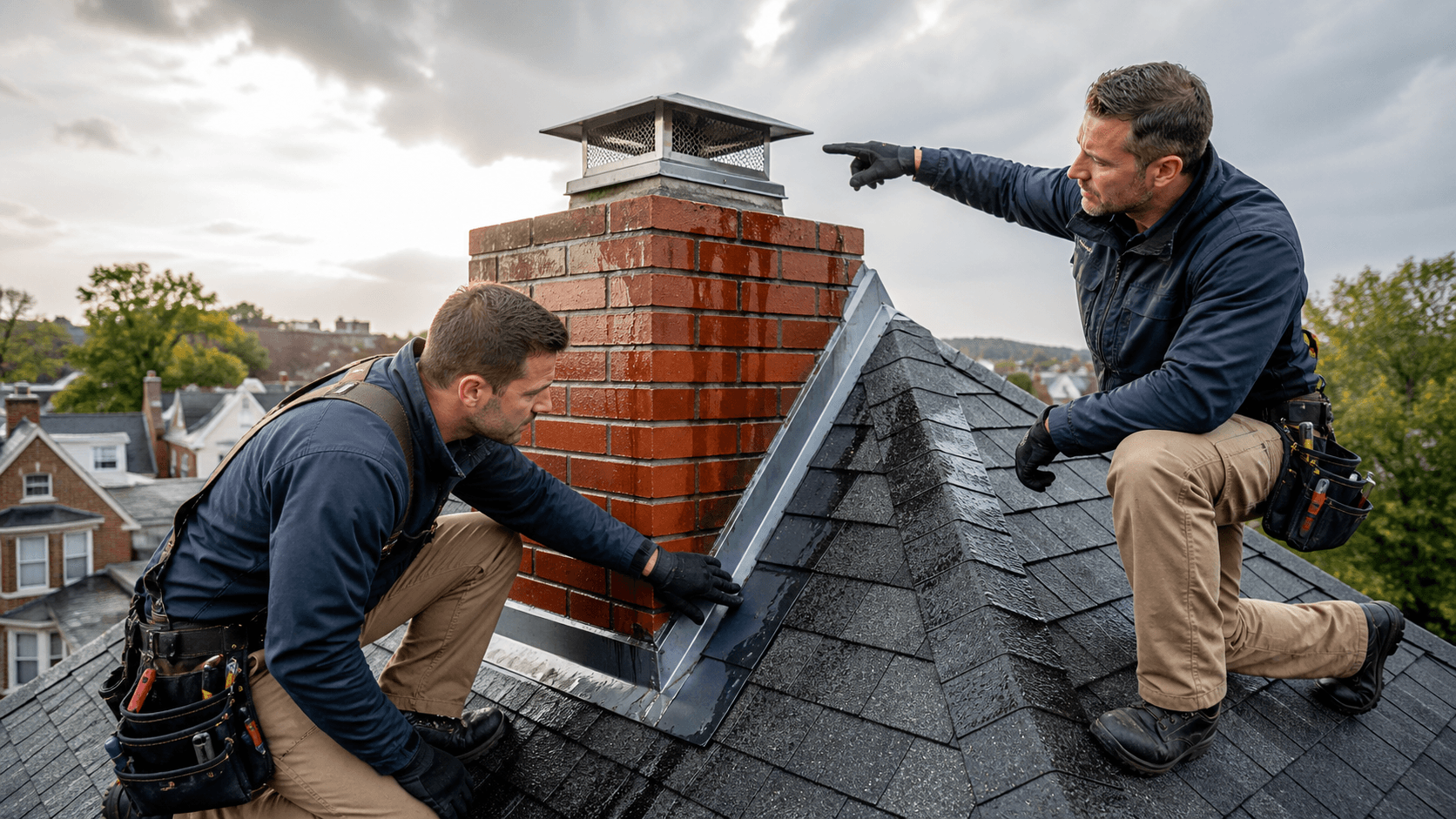
- Flashing where the roof meets the masonry that has rusted, separated, or was never installed correctly
Water often starts at the top on masonry systems. A cracked crown lets rain soak right into the top of the chimney. Porous brick and bad mortar joints allow water to soak in from the sides. Then gravity takes over. Water runs down through the chimney, behind old flashing, and into the attic and ceiling framing before you ever see a stain inside.
Shifts in temperature through late summer and early fall can make existing cracks open up even more. Hot sun and storms work on the crown and mortar, then cooler evenings cause the materials to move. If those cracks fill with water before freezing weather arrives, that water can expand and break the masonry even more, leading to more leaks and loose brick.
Waterproofing a masonry stack, repairing the crown, and tightening up the flashing area before those cycles hit hard is one of the best ways to keep a minor leak from becoming a major structural problem.
Siding, Flashing, and Caps the Hidden Leak Triggers
Around the roofline, water always follows the easiest path. Flashing is supposed to control that path and move water away from the chimney and down the shingles. When that flashing is missing or damaged, the water wins.
On both chimney chases and masonry stacks, you should have:
- Step flashing woven with the shingles up the sides of the chimney
- Counterflashing that overlaps the step flashing on masonry, or properly sealed metal on a chase
- Kickout flashing at the bottom where the chimney meets a wall, to push water away from siding
If any of these pieces are missing, corroded, or buried under siding or caulk, you can get a roof leak around the chimney even if the shingles look fine. On prefab chases, warped or loose siding can catch and trap water. That water can run behind the cladding and show up inside as a "roof leak" even though the actual entry was through failed siding or trim.
Chimney caps and chase covers also play a big role. When caps are missing, too small, badly rusted, or clogged with debris, rain can fall straight down the flue or get pushed sideways into the crown, chase cover, or surrounding materials. Animal nests and leaves inside the cap can act like a sponge, holding moisture against metal or masonry and giving it more time to find a way in.
When to Call a Chimney Pro Before the Next Storm Hits
Some signs tell you it is time to stop guessing and get a chimney specialist on the roof. Pay close attention if you notice:
- Active dripping near the fireplace or in the ceiling after rain
- Water stains that keep coming back even after repainting
- Rust streaks on the chase cover, storm collar, or chimney cap
- Crumbling mortar, loose brick, or a cracked chimney crown
- Any mix of smoke stains and moisture, which can point to deeper problems
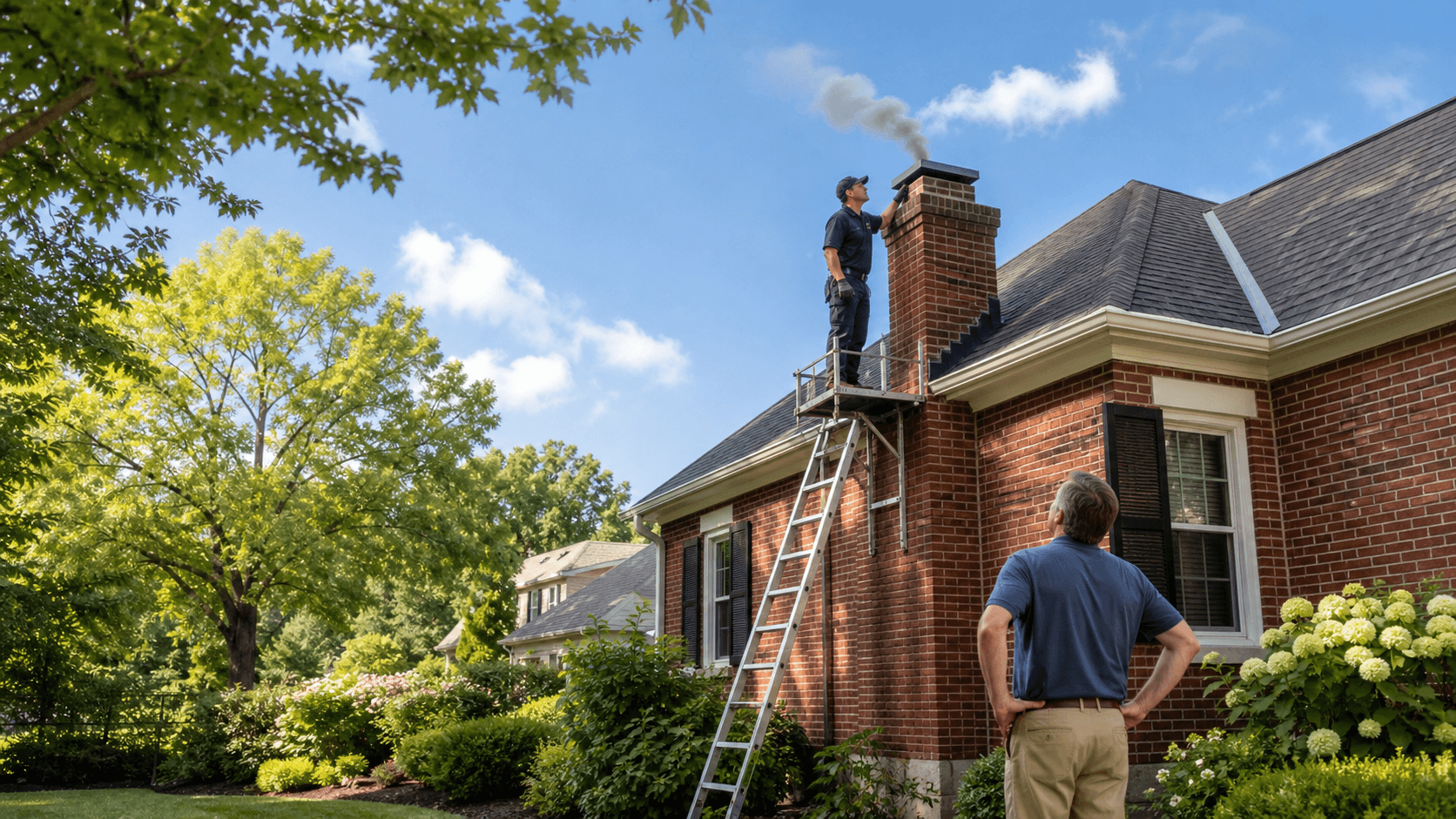
A professional chimney and roofline inspection lets someone trained and equipped for roof work see every key area up close. That includes the chase cover on prefab systems, the storm collar and cap fit, all visible siding and trim on the chase, masonry condition for brick stacks, and the full flashing system where the roof and chimney meet. A good inspection should give you clear photos and a step-by-step repair plan so you know what is really going on over your head.
At Chimney Works SEO, we work on chimney leaks across the Cincinnati, Northern Kentucky, Southeast Indiana, and Dayton areas. Our focus is on finding the true source of a roof leak around the chimney, whether it is a prefab chase or a full masonry stack, so your system stays dry, safe, and ready for the next round of storms and for your next fire.
Get Started With Your Project Today
If you are noticing stains, dripping, or musty odors near your fireplace, let Chimney Works SEO inspect and repair the roof leak around the chimney before it leads to costly structural damage. We will assess the problem, explain your options clearly, and provide a targeted repair plan that fits your home and budget. To schedule an appointment or ask questions, simply contact us and we will follow up promptly.