Stop Ohio Fall Rains From Ruining Your Fireplace
Ohio fall rain has a way of finding every weak spot in a chimney. Heavy fronts, long misty drizzle, and sudden pop-up storms all push water into tiny gaps in masonry, flashing, and crowns right before cold weather settles in.
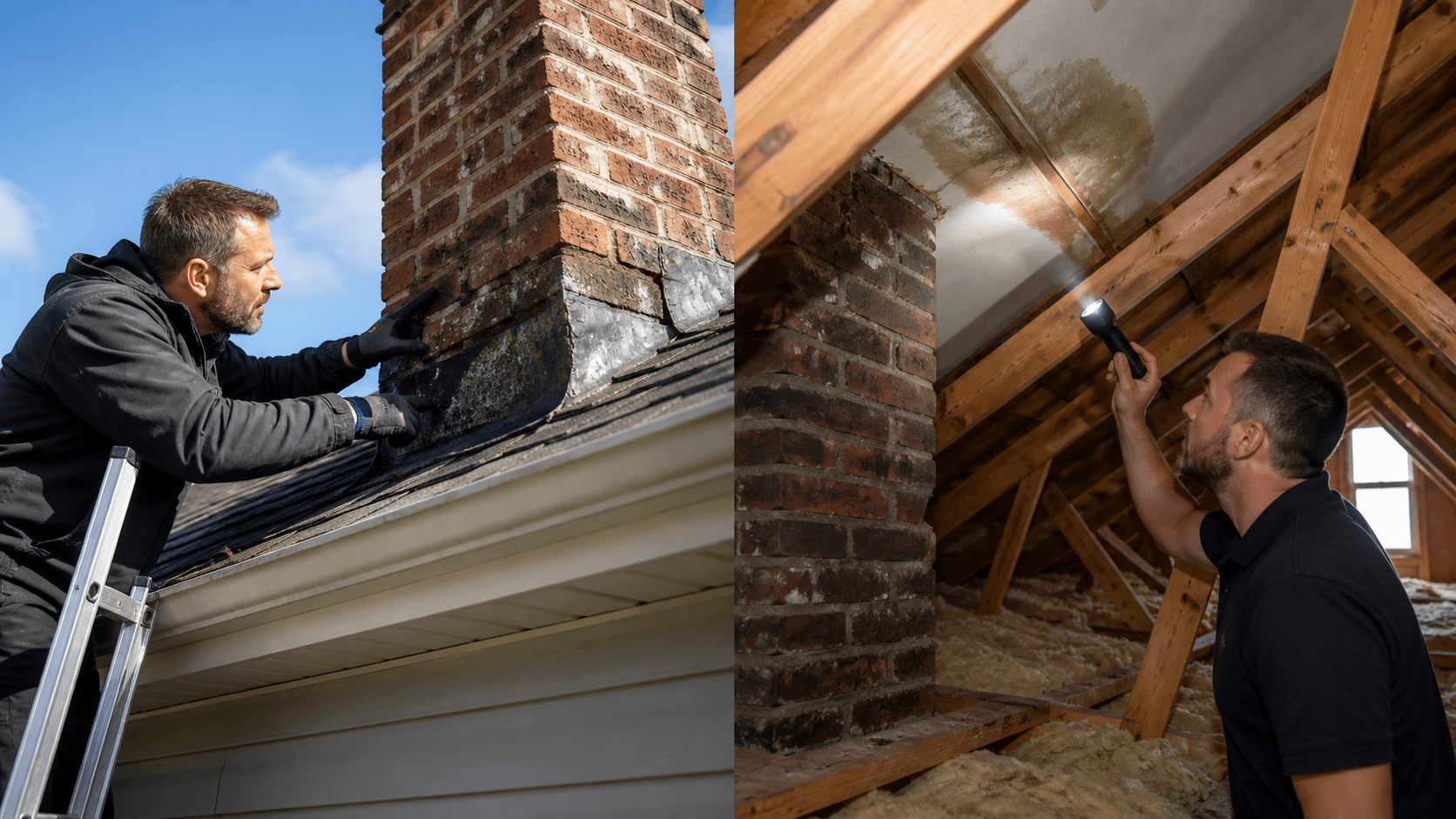
Where that water shows up inside or around your fireplace is your best clue about what to fix first. By paying attention to stains, damp smells, and wet spots, you can decide whether chimney waterproofing, flashing work, or crown repair should be at the top of the list. As a local company serving Greater Cincinnati, Northern Kentucky, Southeast Indiana, and Dayton, we see these patterns every year and know how our regional weather and masonry styles affect chimneys.
How Ohio Fall Rain Patterns Attack Your Chimney
Late summer and fall in the Ohio tri-state area often mean long stretches of damp, cloudy days mixed with strong storm fronts. We get:
- Extended wet periods where brick never fully dries
- Wind-driven rain that hits the chimney sideways
- Leaves clogging gutters and keeping water pooled near the roof
- Big temperature swings from warm days to chilly nights
Each type of weather stresses your chimney in a different way. A steady straight-down rain soaks into porous brick and mortar joints. If the masonry is already tired, that moisture can work deep into the structure. Sideways wind-blown rain looks for seams, so it often shows problems where the chimney meets the roof. Then freeze-thaw cycles in late fall push water that is trapped in cracks to expand and break things down even more, especially at the top.
Your chimney has three main lines of defense against all this water:
- Chimney waterproofing to protect the masonry itself
- Flashing where the chimney and roof meet
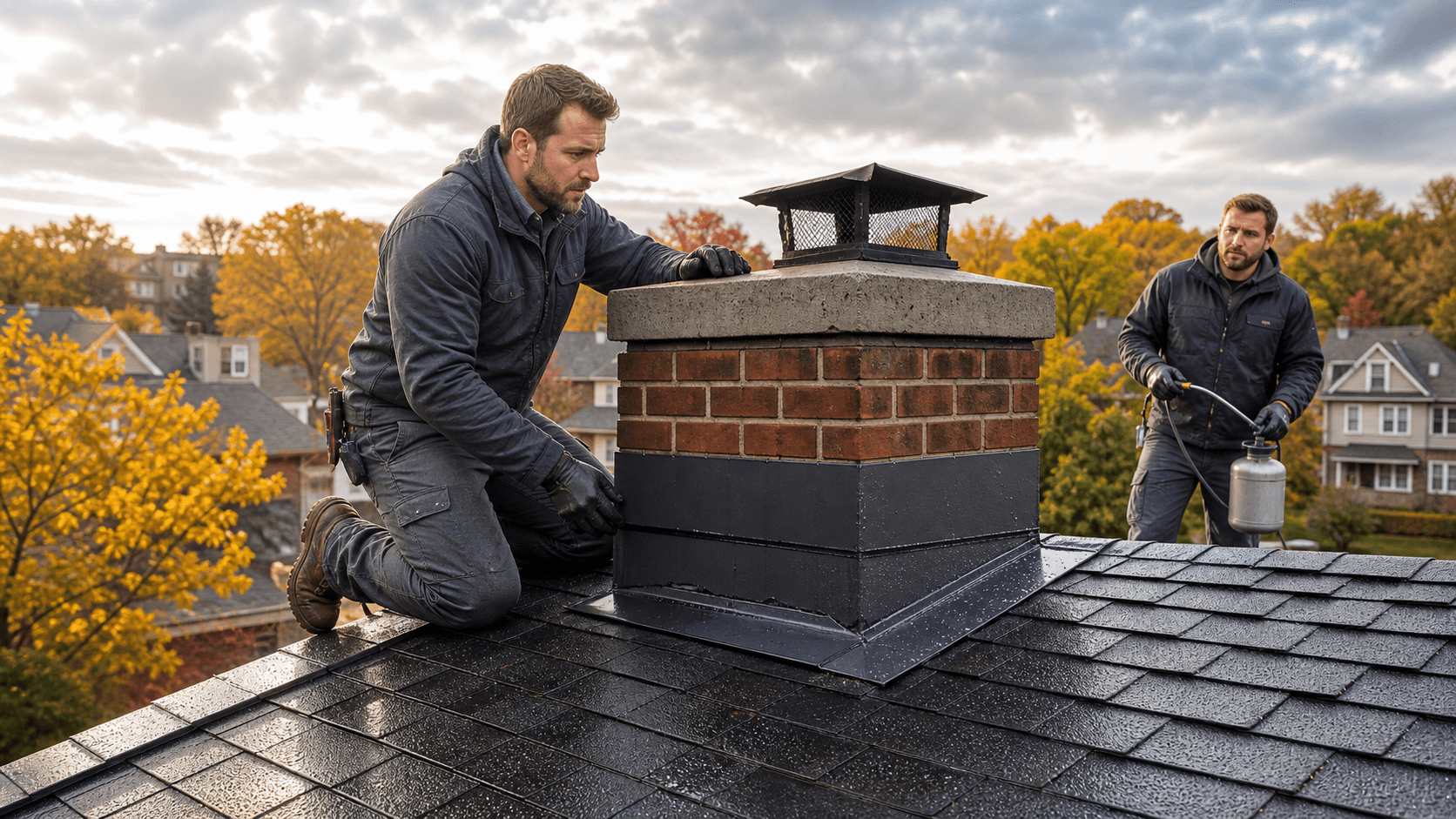
- The chimney crown that covers the top of the stack
These parts work together. If one fails, water will often find the next weak link and keep moving until it shows up inside your home.
When Chimney Waterproofing Should Be Your First Priority
If the main problem is that your masonry is soaking up water, chimney waterproofing often needs to come first. Signs that point toward masonry moisture problems include:
- Damp or musty smells coming from the firebox, especially after rain
- Dark, blotchy, or streaked bricks on the outside of the chimney
- Peeling paint, bubbling drywall, or soft spots near the chimney chase indoors
- White, chalky, or powdery deposits on brick, called efflorescence
These clues mean the bricks and mortar are drawing in water like a sponge. Over time, this can lead to spalling, where the face of the brick flakes off, and it can also weaken mortar joints.
Professional chimney waterproofing uses breathable sealants that sit on the surface of the masonry. They help repel heavy fall rains but still let trapped moisture inside the chimney work its way out. That balance is important. A good product does not lock moisture in; it slows how quickly water can soak in from the outside. This protects the structure from saturation and helps reduce freeze-thaw damage as temperatures drop.
Late summer and early fall are often the best windows for this work in our region. The weather is usually dry enough and warm enough for products to cure correctly. Getting masonry protected before long stretches of fall rain and the first hard freezes can help keep your chimney stronger through the whole cold season.
When Flashing Leaks Are Stealing Water Into Your Home
If you see water where the chimney and roof meet, flashing is a likely suspect. Flashing problems often show up as:
- Brown water stains on ceilings or walls near the chimney
- Drips or new spots after hard, wind-driven fall storms
- Soft, warped, or stained drywall close to the chase
- Shingles that are curling, cracked, or missing right beside the chimney
Flashing is made of step flashing tucked under shingles and counter-flashing that is built into or sealed against the chimney. Together, these parts are supposed to guide water away from the base of the chimney and back onto the roof surface.
Over time, several things can cause flashing to fail: rust, loose nails, aging roofing cement, and roof settling that pulls materials apart by a tiny amount. During the big fall storms we see around Cincinnati and Dayton, those hairline gaps can let in a surprising amount of water in a short time.
Common repair options include resealing or re-bedding existing flashing, replacing rusted metal with new flashing, and working alongside roofing professionals when the roof system also needs attention. It is usually smart to handle flashing leaks before worrying about interior cosmetic fixes. If you patch drywall without stopping the leak at the roof line, the damage will return with the next serious storm.
When Chimney Crown Damage Is the Real Culprit
The chimney crown is the concrete or mortar top that covers the masonry and directs water away from the flue. When it fails, water has a direct path into the heart of the chimney. Signs of crown trouble include:
- Visible cracks running across the crown surface
- Missing chunks along the edges or corners
- Rust streaks or stains running down from just below the top brick courses
- Water in the firebox or smoke chamber after long, steady rains, even without wind
A bad crown lets water soak straight down into the chimney structure. That moisture can lead to brick spalling, damage to the flue liner, and leaks that show up inside walls or ceilings lower down. This is especially hard on chimneys right as fall and winter weather pick up, because constant wetting and freezing will make existing cracks worse.
Typical solutions depend on how severe the damage is. For tiny surface cracks, a flexible crown sealer can help lock out water. For larger cracks or rough, flat crowns that hold water, resurfacing with a properly sloped cement layer or a specialized coating can shed rain and snow instead of holding it. When damage is heavy, a full crown rebuild with a proper overhang and drip edge can give the chimney a longer-lasting top that stands up better to Ohio weather.
Match the Leak Location to the Right Chimney Fix
One of the simplest ways to narrow down what your chimney needs is to match where you see water with the likely cause:
- Water in the firebox or smoke chamber often points toward a crown, cap, or top-sealing issue
- Stains or sagging drywall on ceilings or walls next to the chimney often signal flashing leaks
- Exterior bricks that look soaked, flaking, or crumbling usually mean masonry problems that call for chimney waterproofing and repair
Sometimes, more than one problem is going on at the same time. Older chimneys can have worn crowns, tired flashing, and porous brick all together. In those cases, a detailed professional inspection is the best way to figure out what should be done first based on urgency and budget.
Timing matters too. Having an inspection and any needed chimney waterproofing done in late summer or early fall gives time to handle flashing or crown repairs before the long October and November rains and the first hard freezes. That way, your chimney is better prepared before heavy use and harsher weather hit.
By watching where water shows up now and understanding which part of the chimney protects against which type of leak, you can make smarter choices about care and repair. This helps protect both your fireplace and the rest of your home from ongoing water damage.
Get Started With Your Project Today
If you are seeing signs of water damage around your chimney, now is the time to act before small issues become costly structural problems. At Chimney Works SEO, we provide expert chimney waterproofing solutions tailored to protect your home for the long term. We will inspect your system, explain what we find in plain language, and recommend only the work you truly need. To schedule an appointment or ask a question, simply contact us today.