Turn Storm Stains Into Leak-Finding Clues
New brown rings on the ceiling or streaks on the wall after a storm are more than just ugly. They are clues. When storms roll through the Cincinnati area with heavy rain and wind, they often expose weak spots around the chimney and roof line. Those stains are your first warning that water is getting in where it should not.
In this guide, we walk through a simple way to "map" those marks from the inside to likely trouble spots outside. With a little photo documenting and note-taking, you can give a chimney professional a clear picture of what is happening. That helps reduce guesswork, makes it easier to track down a roof leak around the chimney, and can limit future damage to your home.
Know the Usual Suspects Around a Leaking Chimney
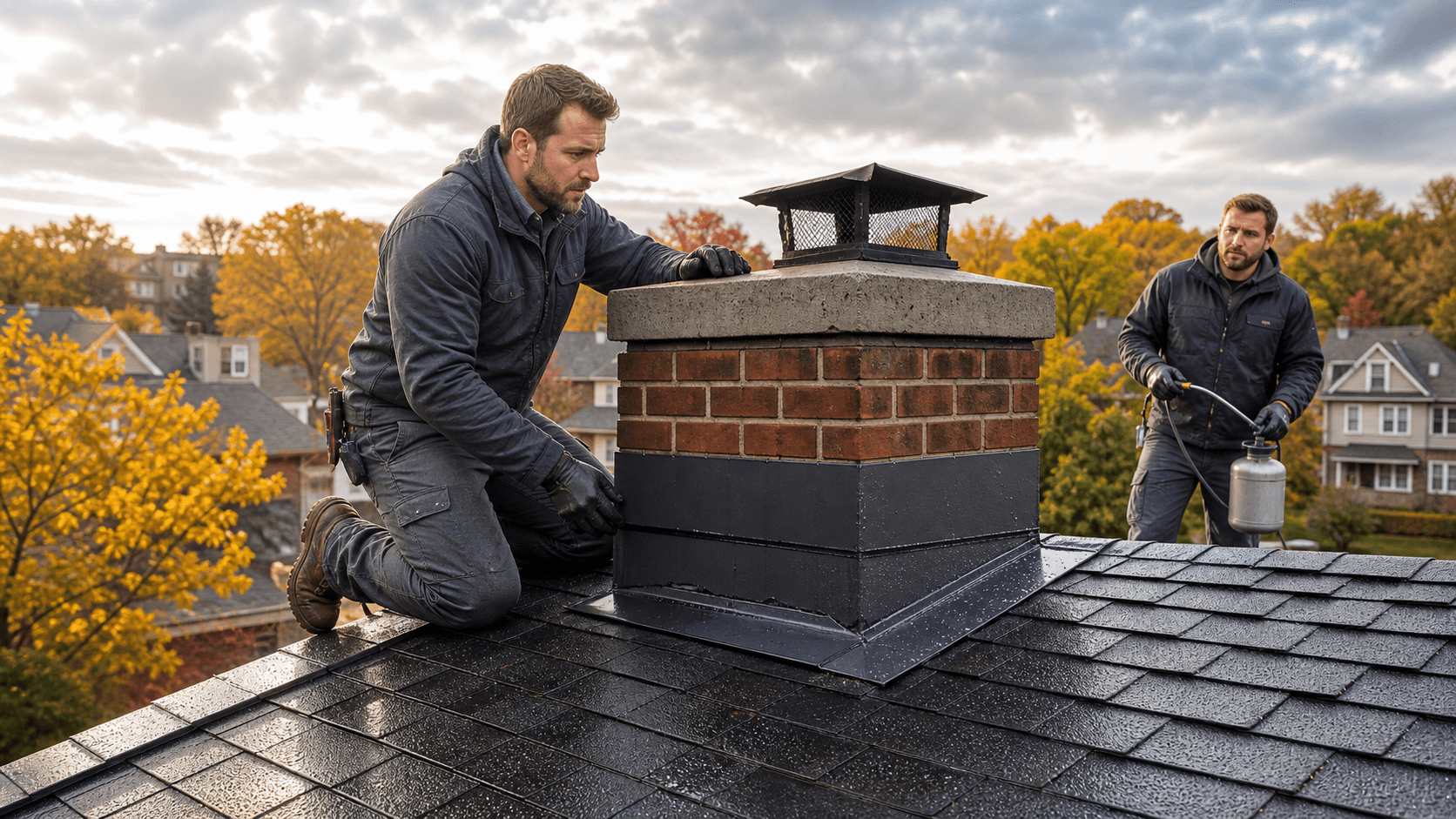
Water around a chimney almost always comes from a few key exterior parts. When any of these fail during heavy rain or strong wind, stains often show up inside.
Common weak points include:
- Chimney flashing
- Counterflashing and step flashing
- Chimney crown or chase cover
- Chimney cap or rain cover
- Masonry joints and bricks
- Nearby siding and roof shingles
Here is how each part often leaks and how it may show up indoors:
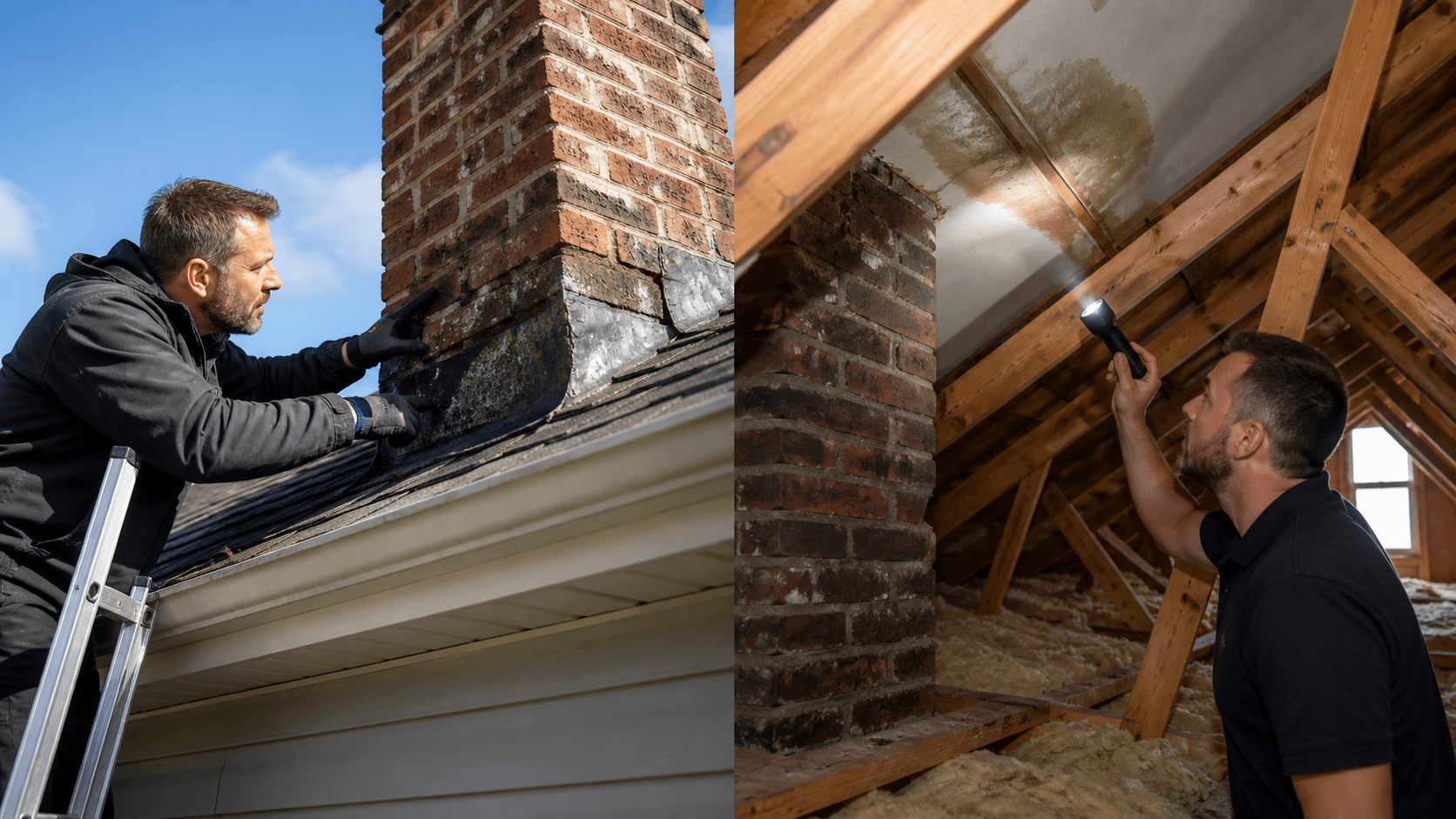
- Flashing gaps: When metal flashing where the chimney meets the roof starts to pull away, water can run under shingles and into the house. Inside, this often shows as stains where the ceiling meets a wall near the chimney or in an upper corner that lines up with the roof line.
- Crown or chase cover cracks: A damaged concrete crown on a masonry chimney, or a rusted metal chase cover on a factory-built chimney, lets water soak into the top and work down. That can create vertical stains along the wall behind or beside the chimney, or inside a chimney chase.
- Cap problems: A missing, loose, or damaged cap lets water drop straight into the flue. Indoors, you might see damp spots right over the firebox opening, stains on the face around the fireplace, or musty smells from a wet flue.
- Masonry issues: Open mortar joints or porous brick can pull in wind-driven rain. This often leads to slow, spread-out stains near where the chimney runs behind drywall, or flaking and paint bubbling close to the chimney area.
- Siding and roof issues: Loose siding, bad caulking, or worn shingles beside the chimney can leak too. Those stains might show up a few feet away from where you expect, such as mid-ceiling or near a nearby window.
Around Cincinnati, Northern Kentucky, Southeast Indiana, and Dayton, frequent freeze-thaw cycles and wind-driven rain are hard on all these parts. Once you see stains, a professional inspection becomes very important, because the damage inside the walls is often worse than what you can see on the paint.
Interior Photo Mapping After a Storm
You do not have to tear into walls to help find a roof leak around the chimney. Careful photos taken soon after a storm can be a big help.
Here is a simple step-by-step plan:
- Start with wide shots
Stand back and take a few photos that show the whole room, including:
- The stained area
- The ceiling and nearby walls
- Landmarks like windows, doors, and the fireplace
- Move in closer
Take close-up shots of each stain. Try to capture:
- Edges of the stain, rings, or halos
- Any drip paths, streaks, or runs
- Peeling paint, bubbling drywall, or soft spots
- Change your angles
Take photos from different spots in the room. Sometimes you can see how water is moving by looking at the stain from the side instead of straight on.
- Note timing and storm details
When you are done with photos, write down:
- Date and time of the storm
- Rough wind direction, if you know it
- How long it rained and how heavy it seemed
Try to take pictures as soon as it is safe after you spot the stains. As the surface dries, patterns can fade, and it becomes harder to see how far water spread.
Finally, make a simple "map." You can sketch the room on paper or use a phone app to mark where each photo was taken. Label things like "ceiling near chimney wall," "upper corner below roof line," or "right of fireplace mantel." That map will be very helpful during an inspection.
Matching Interior Stains to Likely Exterior Sources
Once you have interior photos and a rough map, you can start to match what you see inside to what might be causing it outside. This does not replace a professional inspection, but it points everyone in the right direction.
Here are some common patterns:
- Round or oval ceiling stains close to the chimney: These often suggest flashing issues or leaks at the roof line where the chimney meets the shingles.
- Long vertical stains along a wall that lines up with the chimney chase: This can point to a cracked crown, bad chase cover, or water entry near the top of the chimney that is running down behind the wall covering.
- Stains or damp patches over the fireplace opening: These may be linked to cap problems, water getting straight into the flue, or issues with the top of the chimney structure.
- Stains near a window or along siding close to the chimney: This can hint at step flashing leaks or siding gaps that allow wind-driven rain into the wall.
Storm type also offers clues:
- Stains that appear mainly after strong wind and sideways rain may point to loose caps, siding gaps, or flashing that is being lifted by gusts.
- Stains that grow slowly after long, steady rain can signal seeping through cracked crowns, porous masonry, or long-term flashing failure.
If you can safely step outside after the storm, take some matching exterior photos from the ground:
- The base of the chimney
- The roof line where the chimney meets the shingles
- Any visible crown or chase cover
- The cap on top
- Nearby siding, trim, and gutters
Label these to match your interior map, such as "outside chimney, same side as living room wall stain." That combined view, inside and out, gives your chimney technician a strong head start.
When to Call a Pro for Chimney and Roof Leak Troubles
Some stains are small and stay that way. Others grow fast and lead to serious issues like mold, wood rot, and loose brick. Certain warning signs mean it is time for a trained chimney professional to take a closer look.
Watch for:
- Stains that spread quickly over days or after each new storm
- Damp spots that reappear in the exact same place, even after repainting
- Musty or earthy odors near the chimney or fireplace
- Crumbling drywall or plaster around the chimney area
- Flaking brick, missing mortar, or white powdery deposits on masonry
Professional chimney companies use the photos and notes you collect to focus their inspection on the most likely trouble spots. When they can see your "before" images, they can compare them with what they find on the roof and at the chimney. That helps sort out whether water is coming from a roof leak around the chimney, a broader roofing problem, or an issue with siding or windows nearby.
Climbing ladders, walking on steep roofs, and working with metal flashing and masonry is not safe work for most homeowners. Repairs to flashing, crowns, caps, and chimney masonry should always be handled by trained pros, especially as the heating season approaches and you plan to use your fireplace or stove.
Turn Your Photos Into a Targeted Repair Plan
The goal of all this photo mapping is simple: give your chimney technician the clearest picture possible so repairs can be accurate and long-lasting.
A few easy habits help:
- Create a "storm leaks" folder on your phone
- Drop in interior photos, exterior photos, and a quick note about each storm
- Keep your simple sketch or digital map so you can pull it up at your next service visit
When late summer and fall storms start showing new stains, that is often a good time to plan a chimney inspection. If you live in the greater Cincinnati region, including Northern Kentucky, Southeast Indiana, or Dayton, catching leaks early can protect your home before cold weather and heavy fireplace use arrive. With careful photo documentation and a focused inspection, your chimney system can stay safe, dry, and ready for many seasons to come.
Get Started With Your Project Today
If you are seeing stains on your ceiling or suspect a roof leak around the chimney, we can inspect the problem and recommend the right repair before it leads to costly damage. At Chimney Works SEO, our technicians focus on long-term solutions that protect both your roof and your fireplace system. Reach out today through our contact page to schedule an appointment and get your chimney and roof back in reliable shape.