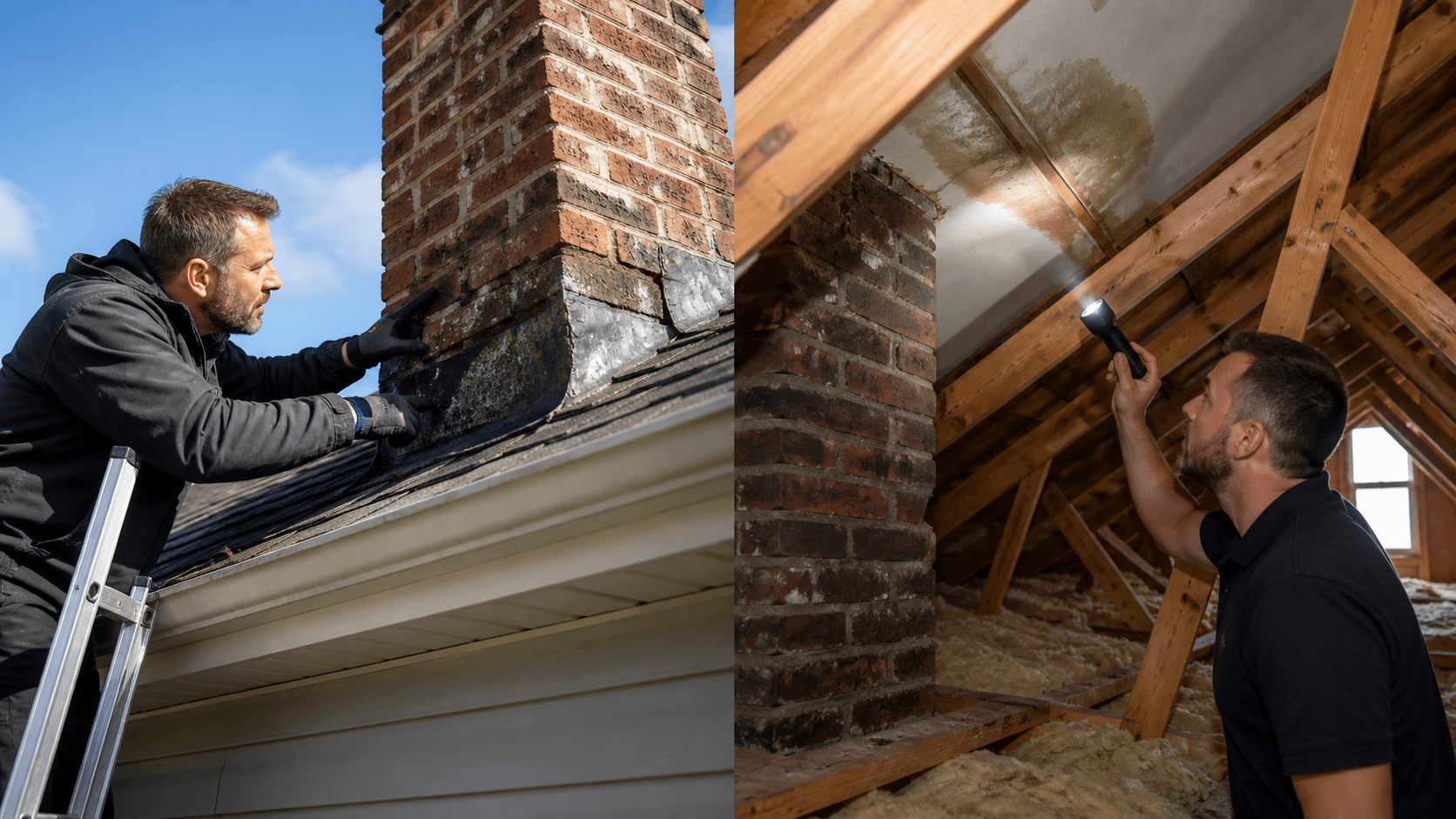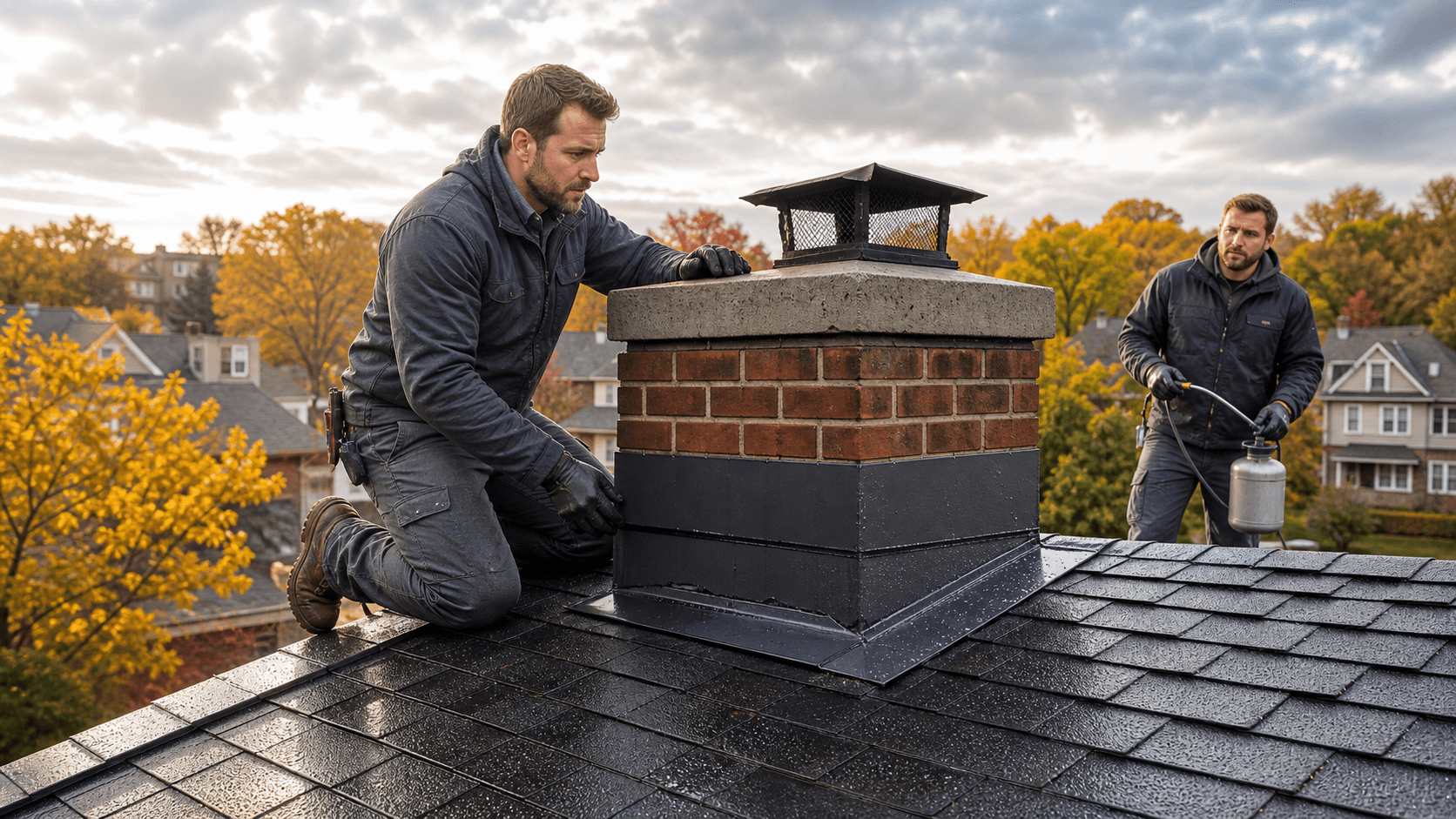
Hidden Storm Damage Lurking Above Your Ceiling
A roof leak around the chimney often starts small, but it does not stay that way. After strong summer storms with heavy rain and wind, the first signs of trouble usually show up in your attic long before you see yellow stains on ceilings or bubbling paint in the living room.
The attic is where water from a chimney leak first lands, spreads, and soaks in. When you know what to look for around rafters, insulation, and vent pipes, you can catch problems early. Fixing a small leak now helps protect your roof, insulation, and framing before cooler weather and fireplace season move in again.
For homeowners across Greater Cincinnati, Northern Kentucky, Southeast Indiana, and the Dayton metro area, those late-summer storms are a regular thing. Taking a few minutes to check the attic after a big rain can save a lot of stress later.
Why Summer Storms Trigger Chimney Leaks
Summer storms are tough on chimneys and the roof areas around them. Wind-driven rain can hit the side of the chimney and push water into any small gap it finds. Hail and heavy downpours can pound the flashing, the crown, and the masonry until weak spots open up.
Common trouble spots include:
- Flashing where the chimney meets the roof
- Hairline cracks in mortar joints or bricks
- The chimney crown at the very top
- Old sealants around metal or masonry
On hot days, your roof, chimney bricks, and metal flashing all heat up. Then a fast-moving storm cools everything down quickly. That constant heating and cooling makes metal expand and contract, and it can make mortar joints loosen or crack. Even tiny separations create a path for water.
Water does not always drip straight down in a neat line. It can run along the chimney, slide under shingles, and travel across roofing nails and wood before it finally drops. That means you may not see water in your living space right away. Instead, attic wood, insulation, and nearby vent pipes slowly soak up moisture, setting the stage for rot, odors, and mold growth over time.
Attic Red Flags Near Rafters and Roof Decking
If you want to check for a roof leak around the chimney after a storm, the attic is the best place to start. Make sure you can walk safely, use a solid light, and avoid stepping between joists. Daylight is helpful, because even a small pinhole of light through the roof is easier to spot when the sun is out.
Focus on the area where the chimney passes through the roof and the rafters and sheathing around it.
- Dark or yellow-brown water stains on rafters or roof decking
- Wood that looks swollen, soft, or warped
- Rusted or dark nail heads that stand out against the wood
- Peeling or sagging roof underlayment under the decking
- Gaps or cracks where the chimney meets the roof line
A leak tied to the chimney often shows a stain that starts near the masonry or flashing and then spreads along nearby wood. If you see staining or dark streaks that extend several feet from the chimney, that is a sign water has been traveling for a while.
Stained framing below the roofline is also important. Marks on truss webs, collar ties, or the sides of rafters can show that water has been dripping or running there over and over, not just from one single storm. That kind of pattern tells you the leak is active and needs professional attention.
Insulation Warning Signs You Should Never Ignore
Insulation around the chimney chase acts like a sponge. It may be the first thing to show that a leak is happening above it, even when the wood nearby looks mostly dry at a quick glance.
Different types of insulation react to moisture in different ways:
- Fiberglass batts can look darker, feel heavy, or sag down from rafters
- Blown-in cellulose may clump together, shrink down, or grow patchy and uneven
- Spray foam can discolor, pull away from wood, or show surface staining
Use your nose too. A musty, earthy smell near the chimney chase often points to damp insulation that has been wet for more than one storm. Even if you cannot see standing water, any area that smells off deserves attention.
Leaving wet insulation in place is never a good idea. It loses its ability to hold heat, which hurts your home's energy efficiency, and can trap moisture against wood framing. Over time, that trapped moisture can lead to hidden structural problems that are hard to see from the attic floor.
In many cases, once the source of the leak is corrected by a chimney professional, sections of insulation need to be removed and replaced. Sometimes that means coordinating repair work so insulation can be safely pulled out, the framing checked, and new material installed only after the area is confirmed dry.
Vent Pipes, Metal Collars, and Hidden Leak Pathways
In a lot of homes, the chimney is not the only thing poking through the roof near that part of the attic. You might have bathroom vent fans, furnace or water heater vents, and plumbing vent stacks close by. Water from a roof leak around the chimney can run along these features and show up in spots that seem unrelated.
When you look around the attic, pay close attention to vent pipes and their connections:
- Rust or streaks on metal vent pipes
- Cracked or deteriorated rubber boots where pipes exit the roof
- Loose or bent metal collars that no longer sit snug to the roof
- Drip marks or water trails running down pipes
- Circular water rings on the attic floor or ceiling drywall below
Roofs, chimneys, and vents all share framing paths. Water tends to follow the easiest route, which might be a framing joint, a nail, or the side of a vent pipe. That is why a stain under a vent pipe can still be tied to flashing around the chimney several feet away.
Because these systems are connected, tracking the true starting point of a leak can be tricky. What looks like a vent problem may turn out to be chimney flashing, masonry, or crown damage. A trained eye can trace the water path, check all the nearby penetrations, and find where repairs will actually stop the leak.
When to DIY Monitor vs. Call Chimney Works & Rocky Mountain Stoves
There are a few simple things homeowners can do to keep an eye on potential attic trouble spots after storms. These steps do not replace professional work, but they help you notice changes:
- Take clear photos of any stains, damp insulation, or rust marks
- Lightly mark the edge of a stain with a pencil to see if it grows after the next storm
- Note the date, how heavy the rain was, and any strong wind direction you remember
If a stain does not change after several dry weeks, it may be an old mark. If it keeps growing after each round of bad weather, that usually points to an active leak that still needs repair.
It is time to bring in Chimney Works & Rocky Mountain Stoves when you spot any of these signs:
- Active dripping, beads of water, or fresh wet spots after storms
- Stains that grow or new stains that appear after more than one storm
- Crumbling or missing mortar on the chimney, or visible cracks in bricks
- Loose, bent, or lifted chimney flashing seen from the ground or attic
- Musty or moldy odors that seem to come from the attic or chimney area
Late summer is a smart time to have a professional inspection, cleaning, and leak evaluation. Catching a roof leak around the chimney before fall means your chimney, roof junction, and attic can be dry, sound, and ready when you start using your fireplace again.
Get Started With Your Project Today
If you are seeing water stains, damp walls, or suspect a roof leak around the chimney, our team at Chimney Works SEO can inspect the problem and recommend the right repair. We focus on long-lasting solutions that protect your home and help prevent future damage. To schedule an appointment or ask questions about your specific issue, simply contact us today.