Stop the Drip Fast and Protect Your Home
Water leaking around a chimney during a storm is never a good surprise. You spot a dark stain on the ceiling, a steady drip in front of the fireplace, or damp bricks on the face of the chimney, and your mind jumps straight to damage and repairs. Those first 30 minutes are when you can do the most to protect your home.
Quick, calm action can keep a small leak from turning into ruined ceilings, swollen trim, mold, or damaged flooring. You do not have to solve the leak right away, and you definitely should not climb on the roof, but you can slow the damage and get ready for a proper inspection.
At Chimney Works, we help homeowners across Cincinnati, Northern Kentucky, Southeast Indiana, and the Dayton metro area deal with chimney leaks all the time. Here is how we suggest you handle those first key minutes after you notice water leaking around a chimney.
Make It Safe First: Power, Fire, and Roof Dangers
Before you grab towels or buckets, think about safety. Water and electricity do not mix, and a wet chimney is not safe for any kind of fire.
If you see water near anything electrical, take these steps right away:
- If a ceiling light is dripping or a fixture looks wet, switch off power to that room at the breaker, not just the wall switch.
- If outlets, a sound system, or a TV over the fireplace are damp, turn off the breaker for that circuit and avoid touching cords, plugs, or devices.
- If anything sparks, hums, or smells burnt, stay away from that area until an electrician checks it.
Next, think about fire and heat appliances. Any time you see water leaking around a chimney, treat the chimney as off-limits until it is checked.
- Do not start a wood fire to "dry it out."
- Do not run gas logs, inserts, or a wood stove that uses that chimney.
- Let everything cool fully if it was recently in use.
We also have to say this clearly: stay off the roof. Wet shingles, metal flashing, and steep pitches are a bad mix with rain, wind, and lightning. Quick trips to spread a tarp or smear on roof cement often end with:
- Slips and falls
- Broken shingles or gutters
- More pathways for water to get in
Roof work and temporary coverings should be handled by trained, insured professionals once conditions are safe.
Contain the Water and Protect Your Interior
Once you have handled the obvious safety issues, work on catching and controlling the water you can see. Your goal is simple: keep water off surfaces that are easy to damage, like floors, rugs, and furniture.
Start with basic containment:
- Place buckets, bowls, or pans directly under any active drips.
- Lay towels or old blankets around them to catch splashes.
- Slide small rugs or furniture out of the way if you can do it safely.
- If you have plastic sheeting or large trash bags, spread them under towels in high-traffic areas for extra protection.
If you notice a sagging or "bubbled" spot in the ceiling, it may be holding a pool of water. If you are comfortable doing so, you can carefully relieve that pressure, because a sudden ceiling collapse is worse than a controlled drain.
- Set a large bucket or trash can under the bulge.
- Use a screwdriver or nail to make a small hole in the lowest point of the bubble.
- Let the water drain slowly into the container, and be ready to swap in a second bucket if the first fills.
After you catch the active water, help things start to dry, but go gentle. In humid summer weather, moisture can hang in the air and in building materials.
- Turn on a fan on low or medium nearby, but point it away from the wet spot so you are not driving water deeper into walls or ceilings.
- If it is not raining and the air outside feels less muggy, crack a window for fresh air.
- Avoid blasting heat directly at wet drywall, wood, or brick, since this can cause cracking, odors, or move moisture into hidden cavities.
What to Photograph When Water Leaks Around a Chimney
While you are waiting for professional help, this is the perfect time to document what you see. Good photos make it easier to find the source of the leak and to explain the situation for insurance.
Start with wide shots:
- Take a photo of the full wall with the chimney, from floor to ceiling.
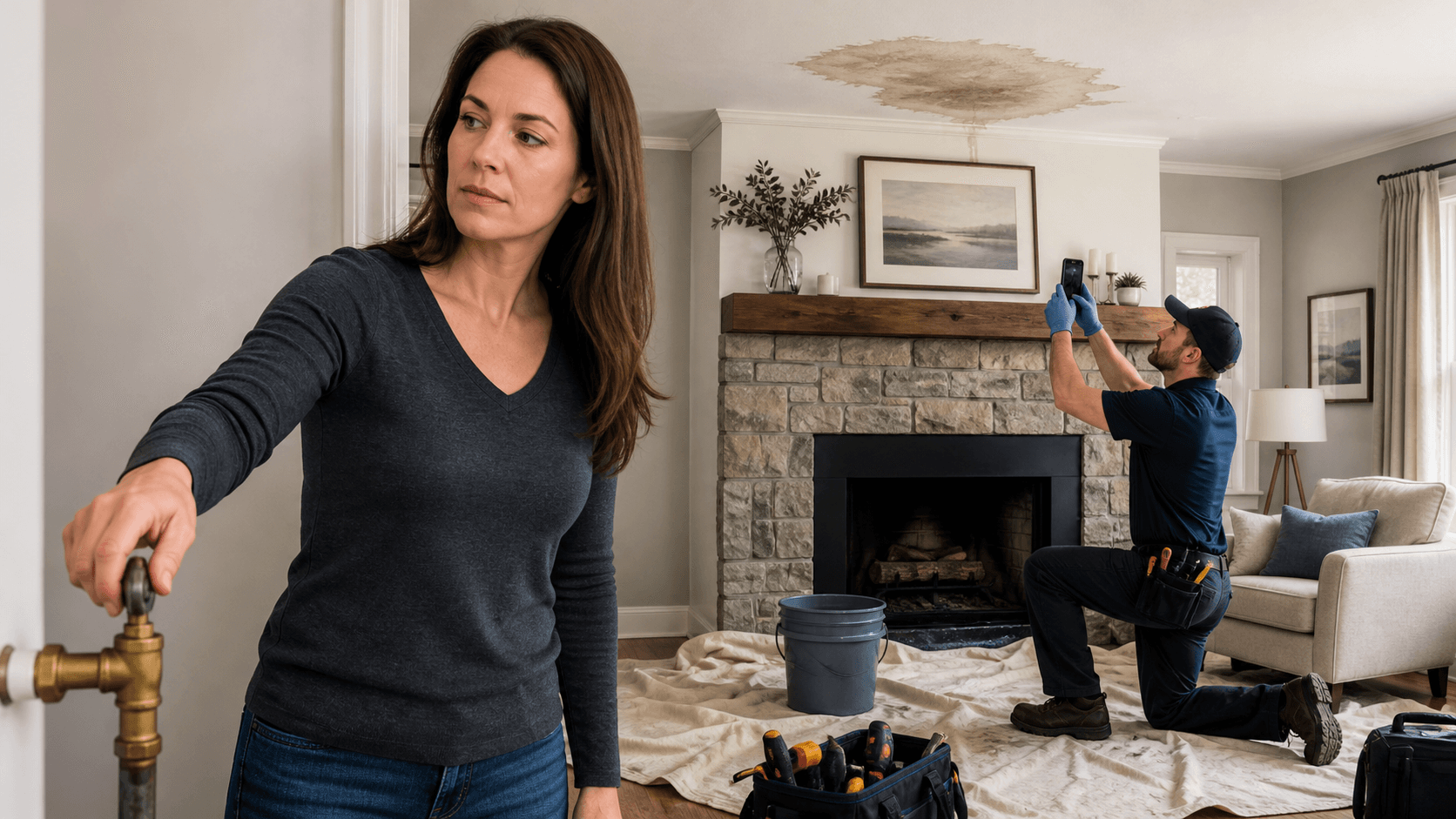
- Capture the ceiling area above or next to the chimney where stains or bubbles show.
- Step back and take a shot that shows the room layout and where the leak is in relation to windows, doors, and the fireplace.
Then grab some close-ups:
- Stains, peeling paint, or bubbling on the ceiling or walls near the chimney
- Damp or darkened brick or stone on the fireplace face
- Rust on fireplace doors, damp soot, or water on the hearth
- Puddles on floors, window sills, or the top of the mantel
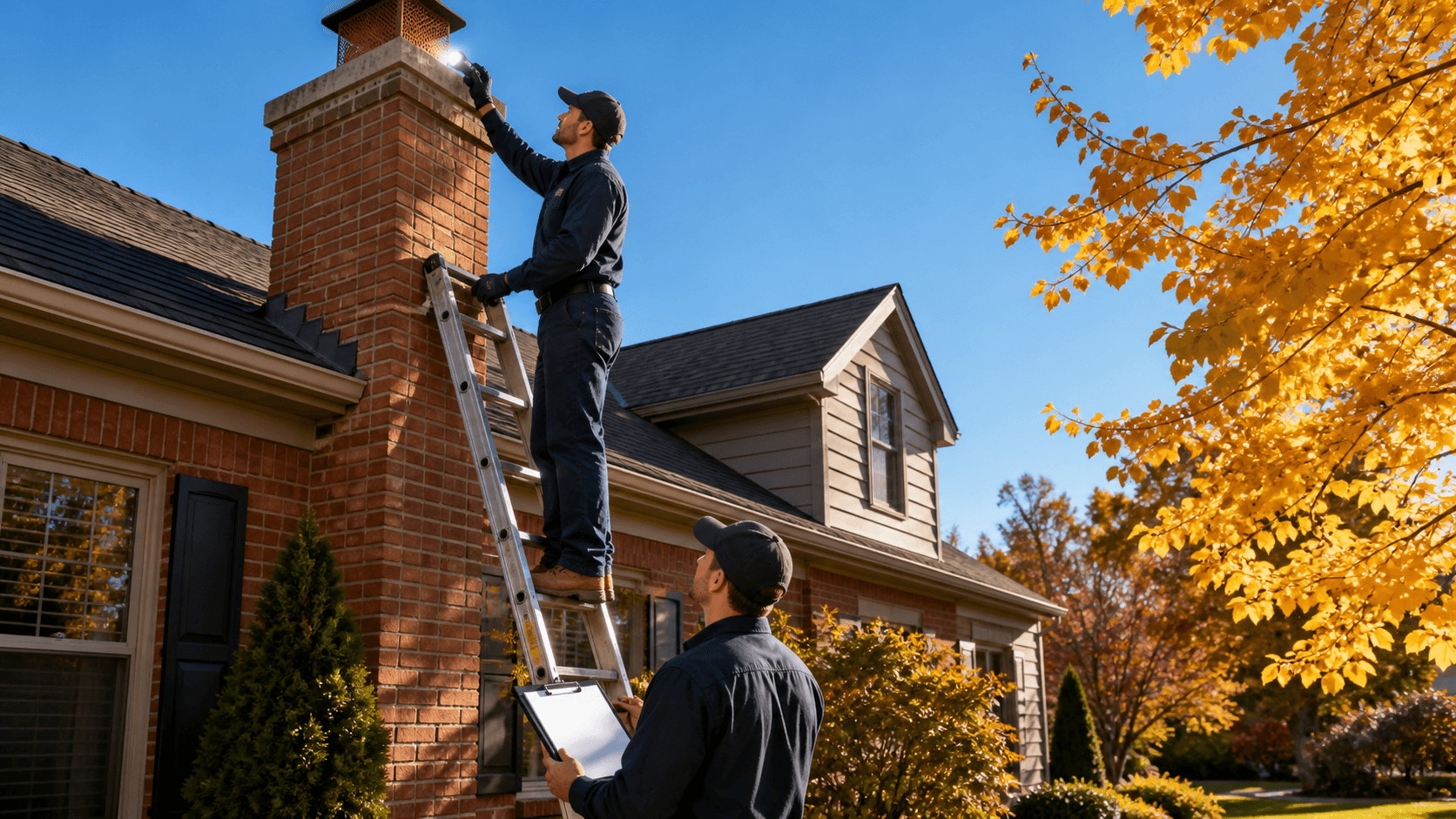
If you can see the outside of the chimney from the ground, a few exterior photos help too. Stay on the ground and zoom in if needed. Helpful shots include:
- The chimney from each side, from top to bottom
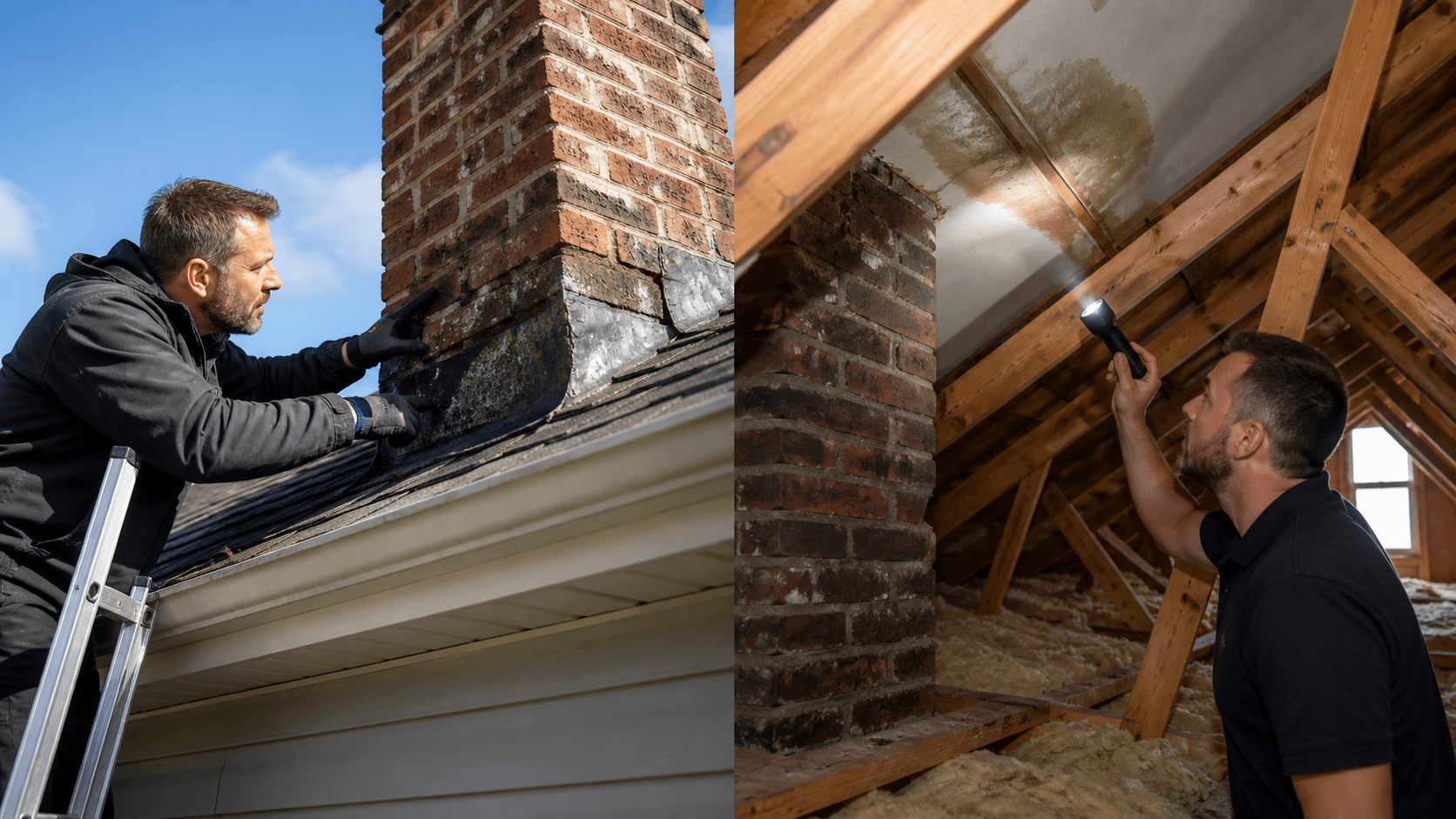
- Any visible metal flashing where the chimney meets the roof
- Nearby gutters and roof valleys if they are in the same area as the leak
Finally, jot a short note in your phone or on paper: when you first noticed the leak, whether it was raining hard, windy, or had just rained, and if the leak starts and stops or seems steady.
What Not to Do in the First 30 Minutes
Some reactions that feel helpful at the time can actually make chimney leaks worse or more dangerous.
Avoid these common mistakes:
- Do not light any fire in the fireplace or stove to "help it dry."
- Do not tape plastic directly to wet drywall, brick, or stone, which can trap moisture and create a perfect spot for mold.
- Do not spray or smear caulk, foam, or roof cement on any visible crack or stain inside the home.
Outdoor quick fixes can cause trouble too, especially right after a storm when surfaces are still slick. Try not to:
- Walk on the roof to place a tarp or inspect shingles.
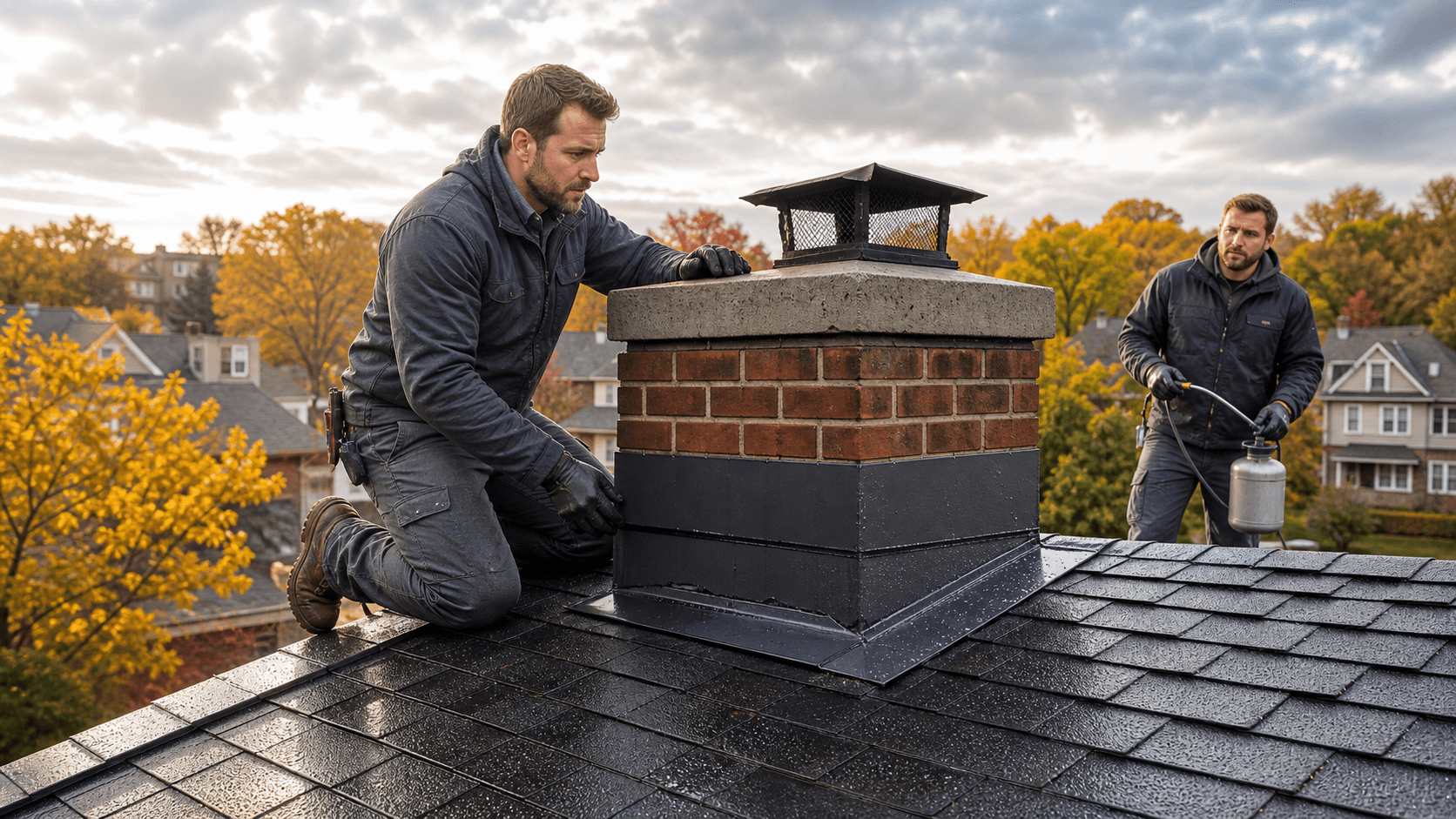
- Attempt your own chimney cap installation or repair in wet or windy conditions.
- Pry up shingles or metal flashing to "look for the leak," which often opens new paths for water.
Most of all, do not ignore even a slow drip. A small stain near the chimney can still point to:
- Damaged flashing where the chimney meets the roof
- A cracked chimney crown or chimney top
- Masonry cracks that soak in water over time
- Hidden wood rot around framing or roof decking
The sooner a leak is checked, the better the chances of stopping bigger problems like mold growth, crumbling mortar, or soft, weakened framing.
Call in Reinforcements and Prepare for the Visit
Once you have made things safe, contained the water, and taken photos, it is time to bring in a professional chimney team. This is especially important as cooler weather approaches and more people in the Cincinnati and Dayton areas start planning to use their fireplaces again.
To help the inspection go smoothly, have a few key details ready:
- Your photos, both inside and outside, with the most severe areas clearly shown
- A simple timeline of when leaks appear, such as only during heavy rain, wind-driven storms, or snow melt
- Any past chimney work or roof repairs you know about in that area of the house
- Notes on smells, like musty odors or smoke smells that seem stronger since the leak
When a technician from Chimney Works arrives, they will have a clearer picture of what you are dealing with and where to start looking. Your calm actions in those first 30 minutes can make a big difference in how quickly the problem is found, how much of your home needs repair, and how soon you can relax and enjoy your fireplace again with confidence.
Protect Your Home From Costly Chimney Water Damage
If you have noticed water leaking around a chimney, we can inspect the problem, pinpoint the source, and recommend the right repair before it spreads. At Chimney Works SEO, we focus on long-term solutions that help protect your roof, masonry, and interior from recurring leaks. Reach out today and let our team assess your chimney so you can address the issue with confidence. To schedule an appointment or ask a question, simply contact us.