Stop Chimney Leaks Before Winter Starts
Chimney crown damage almost always turns into a leak if it is ignored. Water finds tiny openings, then Cincinnati rain and winter freeze cycles make those openings bigger until you see stains, musty smells, or crumbling brick.
Late summer is one of the best times to deal with this. The roof is usually dry, access is safer, and there is still time to fix problems before cold weather hits our area. The big question many homeowners have is simple: is chimney crown repair enough, or is a full crown rebuild the safer move?
In this guide, we will walk through what the crown does, how local weather affects it, what repair really means, what a rebuild involves, and clear warning signs that patching is no longer a good idea. By the end, you will have a better feel for which option may make sense for your chimney and when it is smart to bring in a professional.
What Your Chimney Crown Actually Does
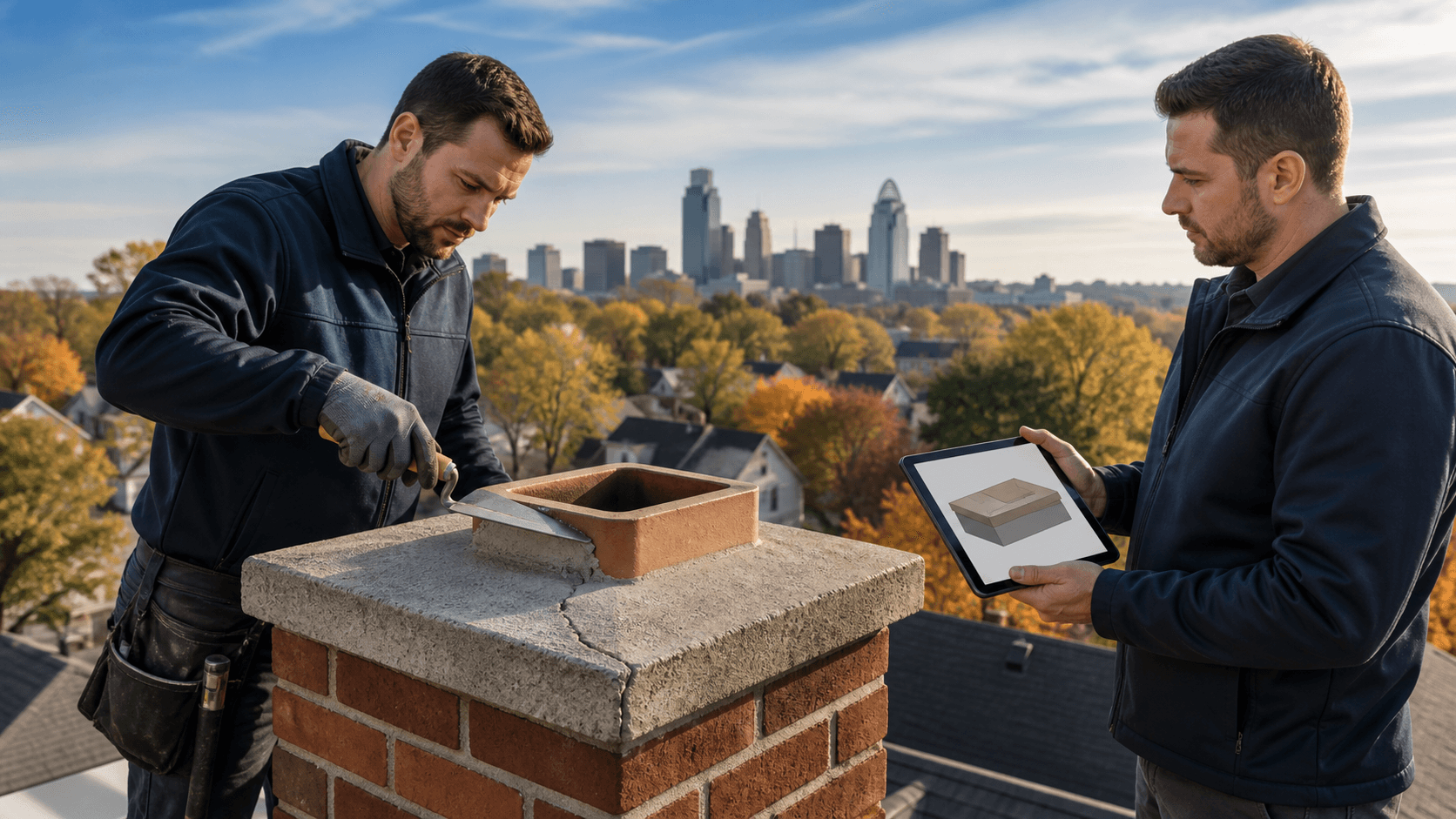
The chimney crown is the concrete or similar material that forms a lid across the top of your chimney. Think of it as the roof for your chimney structure. Its job is to keep water away from the flue and the brick or stone that support it.
A quality chimney crown usually has:
- A solid slab of concrete or another durable material
- A slight slope so water runs away from the flue
- An overhang or drip edge so water drips off instead of running down the bricks
- A proper gap around the flue liner, filled with flexible material so the flue and crown can move differently without cracking
In the Cincinnati, Northern Kentucky, Southeast Indiana, and Dayton areas, crowns take a lot of abuse. Heavy summer storms can pool water on a crown that is too flat. Falling leaves and debris can trap moisture. When winter hits, that water freezes and thaws over and over. This can lead to:
- Hairline cracks that slowly get deeper
- Surface flaking or spalling where thin layers pop off
- Gaps around the flue where water sneaks inside
Once water gets past the crown surface, it can soak into the masonry, cause odors, or even lead to damage inside the home.
Chimney Crown Repair vs. Rebuild Basics
Chimney crown repair is focused on fixing a crown that is still basically solid. The structure is sound, but there may be cracks, worn spots, or early signs of wear. In those cases, a professional may:
- Seal small cracks so water cannot get in
- Resurface the crown with a specialized coating to create a smoother, more water-resistant top layer
- Apply waterproofing products designed for chimney crowns
This kind of work is more like maintenance or a mid-level fix. It can extend the life of a good crown and delay the need for a full rebuild.
A crown rebuild is different. This means removing the existing crown and building a new one from scratch. Rebuilds are usually recommended when the old crown is:
- Badly cracked or breaking apart
- Built too thin, too flat, or with the wrong materials
- Allowing water into the chimney or home
With a rebuild, a new crown is formed with the right slope, thickness, and overhang so it sheds water properly and protects the chimney for the long haul.
The choice between repair and rebuild depends on:
- The level of visible damage
- The condition of the brick and flue under the crown
- The age of the chimney and any past repairs
- Whether there are active leaks or interior stains
Cost and Lifespan of Crown Repair Options
Repair is usually the right approach when problems are caught early. Common situations where chimney crown repair makes sense include:
- Small, non-structural cracks with no loose pieces
- A relatively new crown showing early wear from weather
- A solid crown that has never been sealed or waterproofed
Typical repair methods include:
- Crack sealing, where a flexible sealant is worked into small cracks to block water
- Resurfacing, where a professional-grade compound is spread across the crown to create a new, protective layer
- Waterproof coatings, which help shed water and slow down future damage
These repairs do not turn an old, failing crown into a brand new one, but they can add useful years of service. With proper repair and ongoing maintenance, many crowns can see their life extended for a good amount of time. The exact lifespan boost depends on:
- How worn the crown was to start with
- The quality of materials and application
- How exposed the chimney is to wind and weather
Homeowners should think of repair as a way to slow down wear and delay bigger work when the core of the crown is still healthy.
When Crown Replacement Is Safer and Cheaper Long Term
Sometimes, patching is like trying to tape cardboard onto a rotting roof. It might hold for a short time, but the base is already failing. Red flags that usually mean repair is not enough include:
- Wide or deep cracks that run across the crown
- Loose or missing chunks of concrete
- Metal rebar or wire showing through the surface
- Standing water on top because the crown is flat
- A crown that looks very thin at the edges
There are also serious warning signs inside the home that point to a failing crown and water entry, such as:
- Brown or yellow stains on ceilings or walls near the chimney
- Musty or damp odors from the fireplace area
- Rust on metal fireplace parts
- Flue tiles that are cracked or flaking
- Brick and mortar that are soft, crumbly, or flaking apart
When these issues show up, repeated patch jobs often end up costing more over time than building a new, properly shaped crown. Water that sneaks in can damage chimneys from the inside, weaken support for the flue, and in severe cases affect how safely your fireplace vents smoke and gases. A professionally built crown, maintained over time, can usually give decades of protection compared to short-term fixes on a badly damaged top.
How Pros Diagnose Chimney Crown Damage Safely
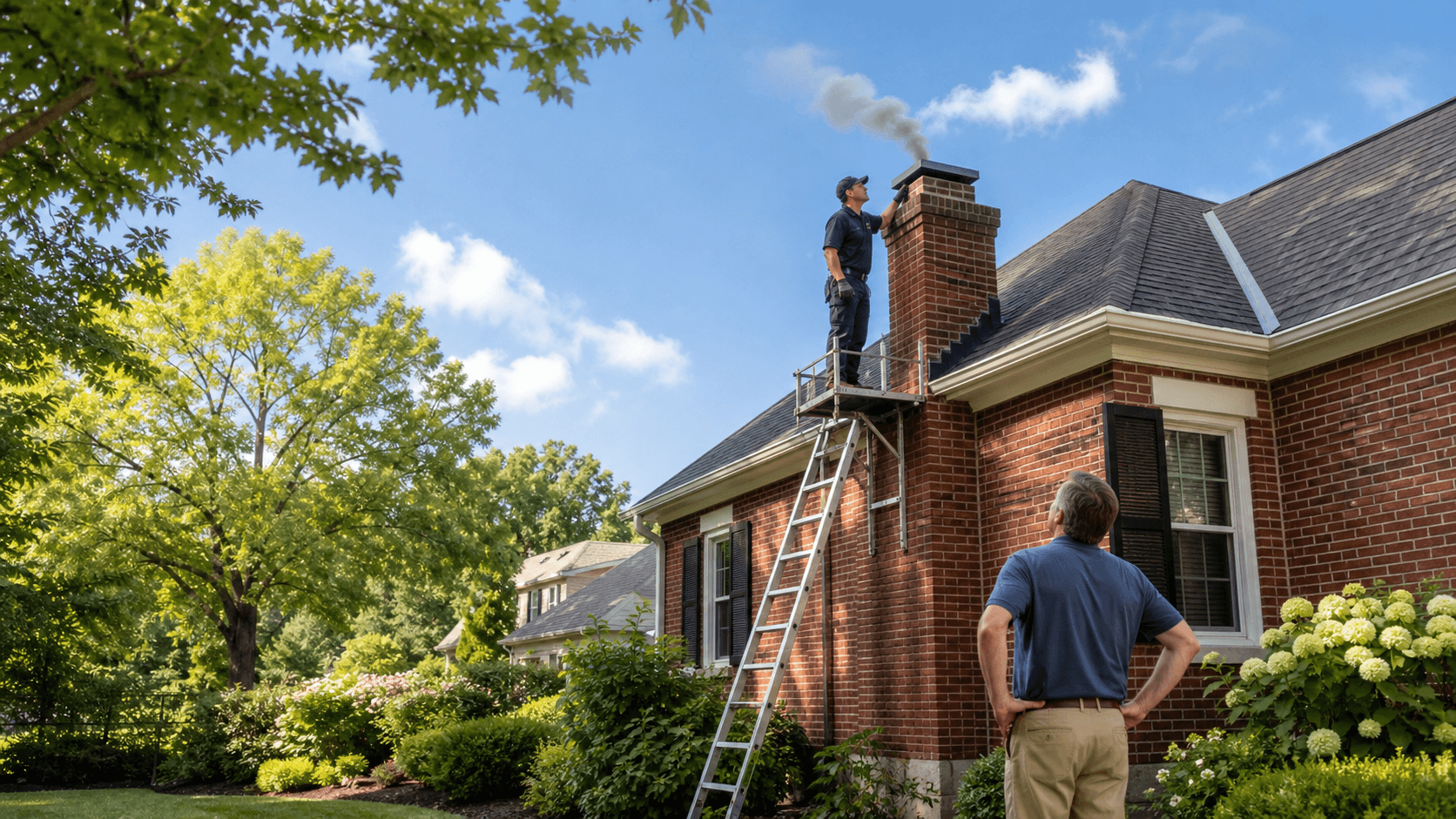
From the ground, even a badly worn crown can look fine. That is one reason a professional inspection matters. A chimney expert will usually:
- Climb to the rooftop to see the crown up close
- Check thickness at the edges and overall slope
- Look for tiny surface cracks that are hard to see from the yard
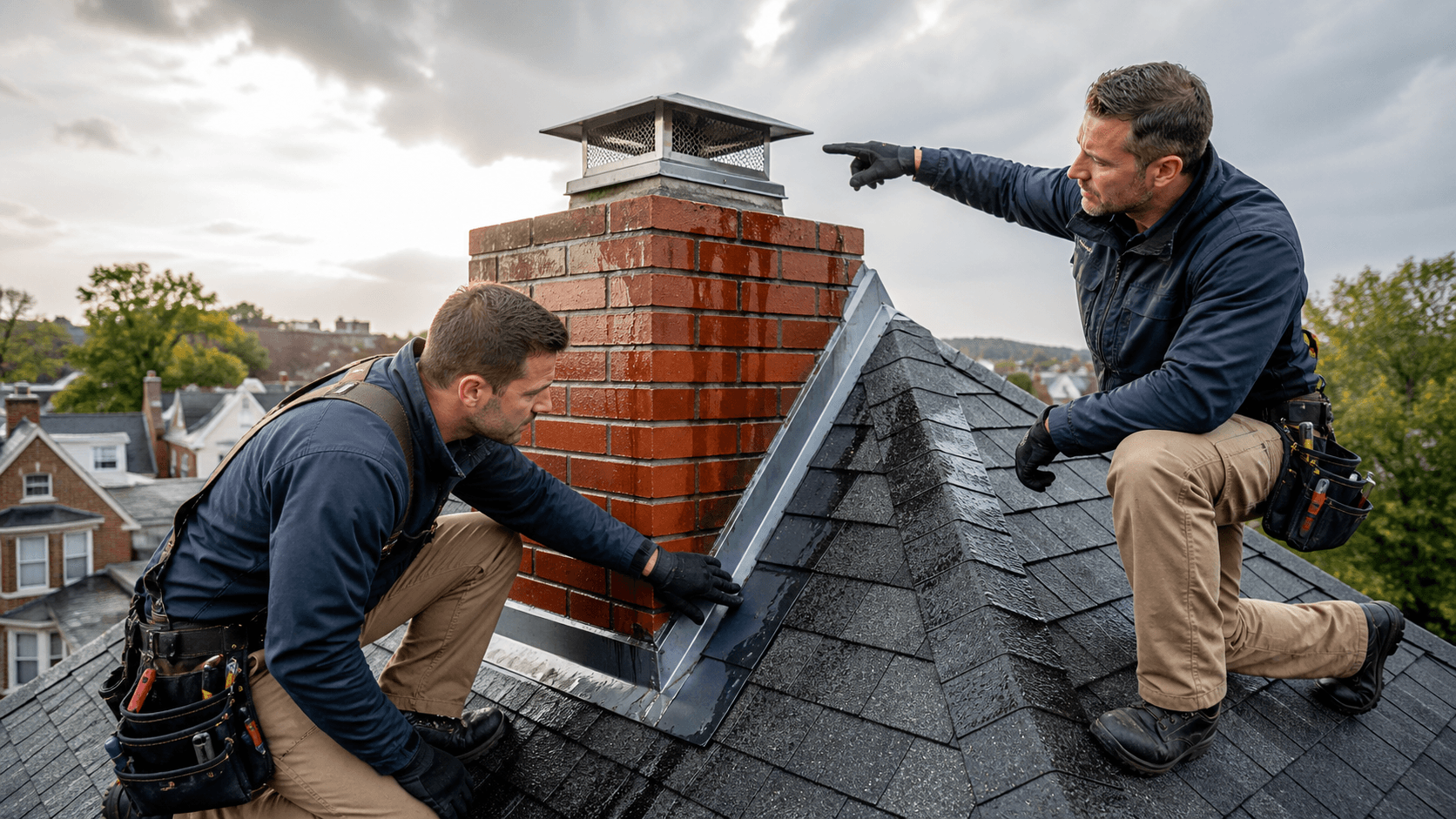
- Inspect flashing, the chimney cap, and the top of the flue liner
Inside, they may look at the firebox, damper, and exposed flue to trace signs of moisture. Tools like moisture meters and detailed photos help show where water is entering and how serious the problem is.
Climbing on a roof is risky, especially when you are not used to working at heights or do not have the right safety gear. On top of that, subtle damage can be easy to miss without training. What looks like a small cosmetic crack to a homeowner might be the start of a deeper split that will open up with the next freeze.
Get Your Chimney Ready for Fall with Expert Help
Late summer and early fall are smart times for homeowners in the Cincinnati area to get chimneys checked and repaired. Crowns have just come through storms, heat, and debris, and colder, wetter weather is on the way. Dealing with crown problems now can help prevent emergency leak calls in the middle of burn season and keep your chimney brick, flue, and interior finishes in better shape.
At Chimney Works SEO, we focus on giving homeowners clear, honest guidance about chimney crown repair versus full crown rebuilds. We inspect the whole chimney system, share photos, explain what we see in plain language, and talk through repair options when they make sense and full replacement when that is the safer path. That way you can plan needed work with confidence before the temperatures drop and your fireplace is working hard again.
Protect Your Chimney With Expert Crown Repair Today
If you are seeing cracks or water damage on your chimney, our team at Chimney Works SEO is ready to help with professional chimney crown repair. We carefully inspect your system, explain what we find, and recommend only the repairs your home truly needs. Schedule an appointment today by using our contact page form so we can restore your chimney's safety and performance.