How Cincinnati's Wild Weather Triggers Roof Leaks
Long dry spells followed by sudden heavy rain are hard on homes in the Greater Cincinnati area. The roof takes the first hit, and the chimney is one of the most common places roof leaks start. Many homeowners only notice a brown spot on the ceiling or a drip in the fireplace when that first big storm finally rolls through.
What most people do not see is the slow damage that built up during the drought. Heat and sun beat down on the chimney and roof, and the materials slowly shift. Sealants around the chimney flashing and crown pull away bit by bit, making small gaps that rainwater will happily find later. In this article, we explain how that process works, what warning signs to watch for, and which chimney leak repairs actually last in our local climate.
From Drought to Downpour: What Happens to Your Chimney
During a long hot stretch, the roof, chimney crown, and metal flashing are basically on low-heat all day. Shingles soften, brick warms up, and metal gets very hot. As the sun hits, everything expands, then cools and shrinks again at night. This slow, steady flexing is hard on the joints where different materials meet.
Sealants and caulks around chimney flashing, counterflashing, and brick joints are the weak link. In dry weather they can:
- Lose the little bit of moisture that kept them flexible
- Turn brittle and chalky at the surface
- Pull away from brick, stone, or metal edges
- Develop tiny hairline cracks you cannot see from the ground
When the first big late-summer or fall storm shows up, those small gaps start working like tiny funnels. Water slips behind flashing or into crown cracks and then spreads along wood and masonry. The result might be:
- A faint stain on a bedroom ceiling near a wall
- A musty odor in the attic that did not used to be there
- Dark rings or damp spots around the chimney chase
So while the leak appears "sudden," the real cause built up over weeks of heat and sun.
How Heat Expansion Shrinks Flashing Sealants
The tricky part around a chimney is that you have several different materials all moving at their own pace. Brick, metal flashing, roof shingles, and sealants do not expand and contract in the same way when they heat up and cool down. On a hot day, metal might move more than brick, and flexible sealant has to stretch between them like a tiny rubber bridge.
Late in the summer, we often see big swings between scorching afternoons and cooler nights. That daily cycle makes sealant beads:
- Stretch during the hottest part of the day
- Relax and shrink again overnight
- Repeat the same motion hundreds of times
Over time, the sealant loses elasticity. It will not spring back as well, so it starts to separate at the edges where it grips brick or metal. Once there is a tiny gap, water has a path.
Common failure points around a chimney include:
- Cracked sealant where the metal flashing meets the brick sides
- Gaps at step flashing where it tucks under shingles along the roofline
- Loose or missing sealant where counterflashing is set into mortar joints
- Dried-out, checked sealant on the chimney crown or around a metal chase cover
When these areas let go, flashing might still be in place, but it no longer has a tight, waterproof seal.
Hidden Roof Leaks Around the Chimney to Watch for
Chimney leaks can be sneaky. Water hardly ever drips straight down from where it enters. Instead, it follows the easiest path along lumber, nails, or brick joints until it finally shows up inside your home.
Subtle signs to keep an eye on include:
- Faint yellow or brown ceiling spots, especially near inside walls
- Peeling paint or hairline cracks over or beside the fireplace
- Slight bulging or buckling in drywall around the chimney chase
- A damp, earthy odor in a room that shares a wall with the chimney
Water can enter at the chimney but appear several feet away on the ceiling because it travels along rafters or roof sheathing before soaking through drywall. That is why homeowners are often surprised when a leak stain in the hallway turns out to be from chimney flashing.
As fall storms ramp up, it helps to do quick checks after a heavy rain:
- Peek into the attic around the chimney and look for dark, damp wood
- Press lightly on insulation near the chimney to see if it feels wet or heavy
- Notice any moldy or sour smell when you open the attic hatch
Catching these clues early gives you a chance to repair the chimney area before you end up with warped framing or serious mold growth.
Quick Fixes vs. Lasting Chimney Leak Repairs
When a leak first shows up, it can be tempting to slap on some caulk or roof tar and call it good. These "band-aid" fixes might slow a drip for a short time, but they rarely last through repeated heat and rain cycles.
Common temporary fixes that usually do not hold up include:
- Smearing generic caulk over cracked flashing joints
- Painting roof cement over old, loose flashing
- Spraying a quick sealant over a damaged crown without addressing cracks
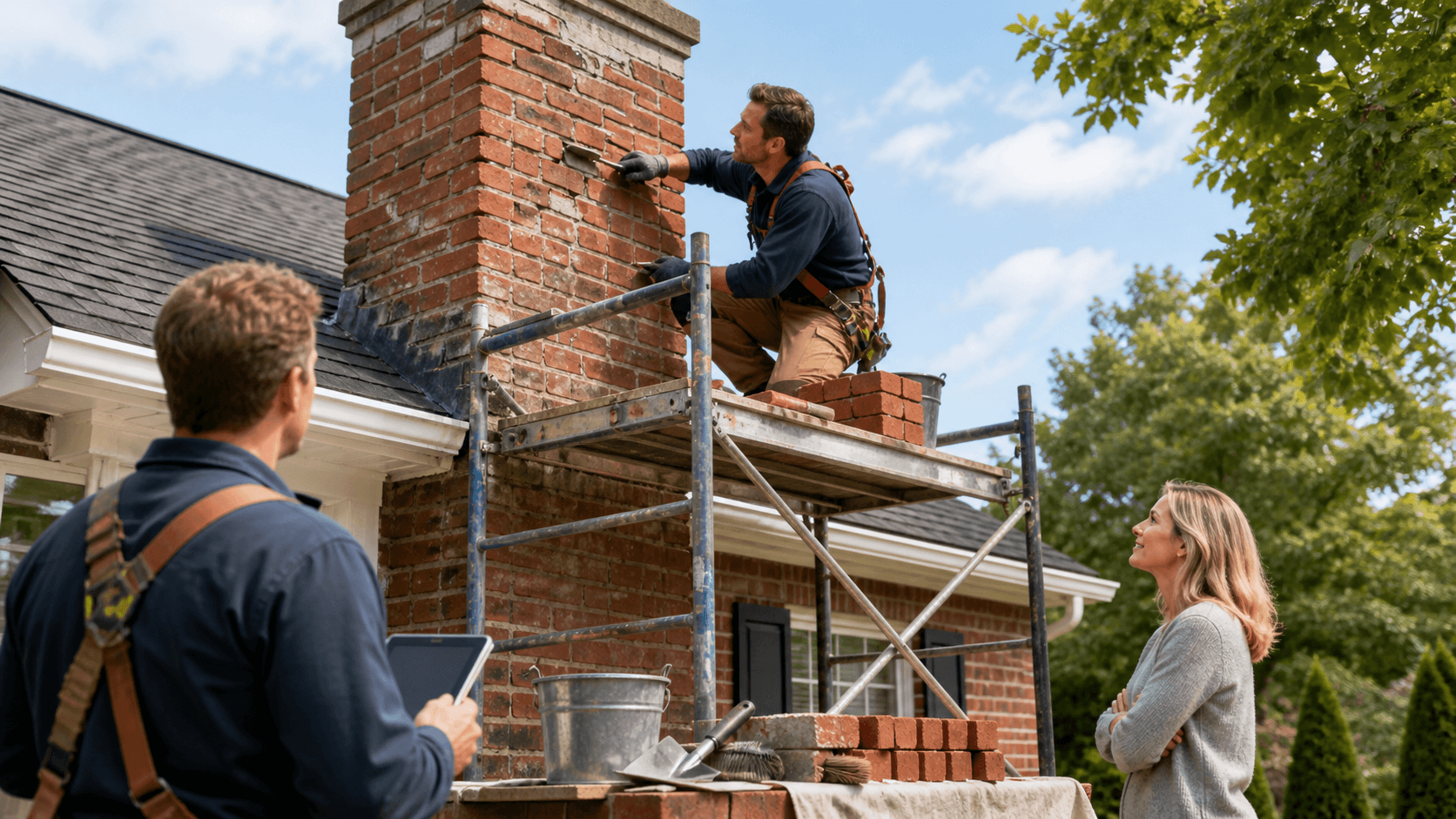
Longer-lasting solutions focus on fixing the design and structure, not just covering the symptom. Stronger options often involve:
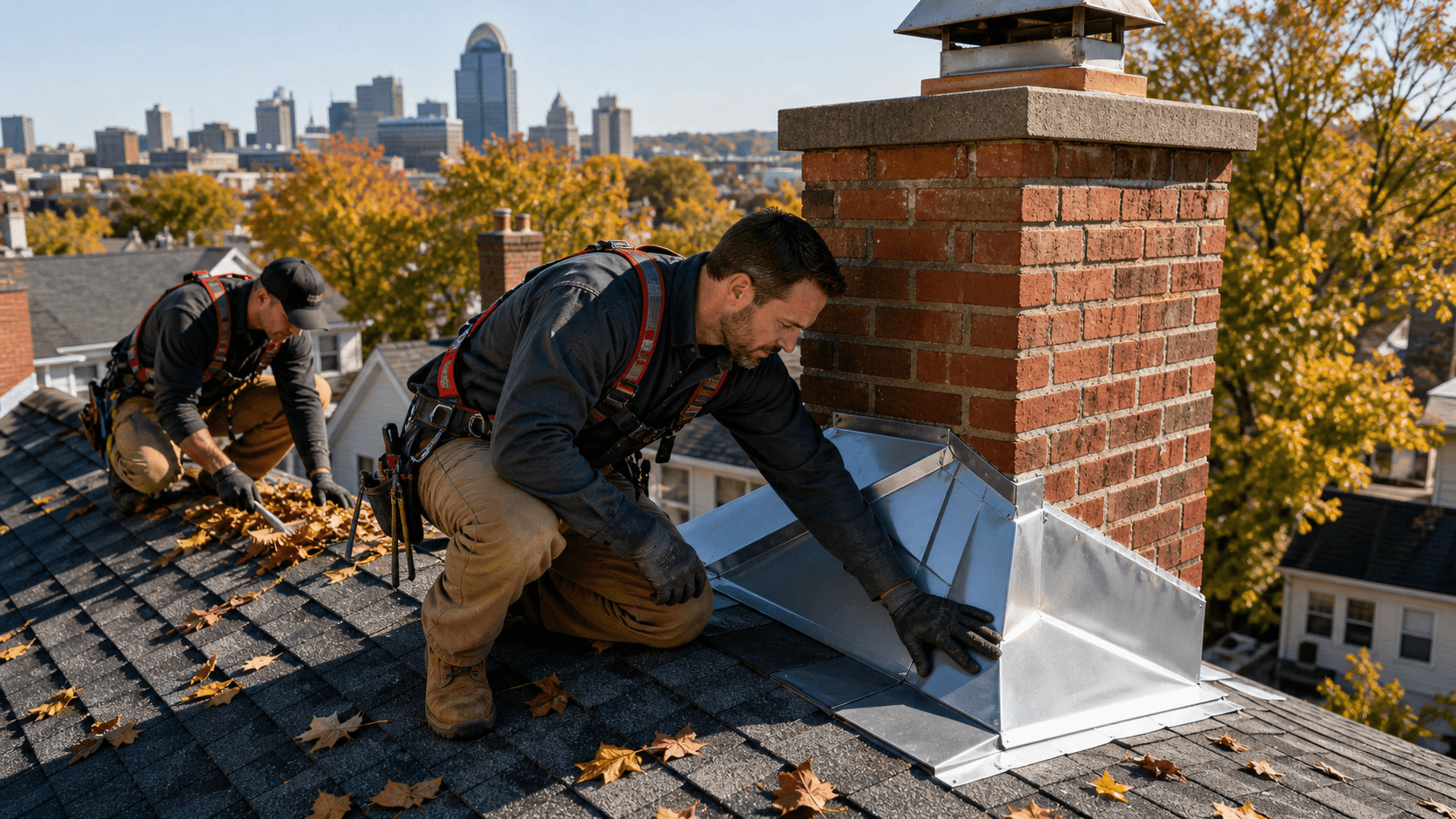
- Replacing worn step flashing and counterflashing so they overlap correctly
- Grinding counterflashing into the mortar joints so it locks into the chimney
- Repairing or rebuilding cracked or crumbling chimney crowns
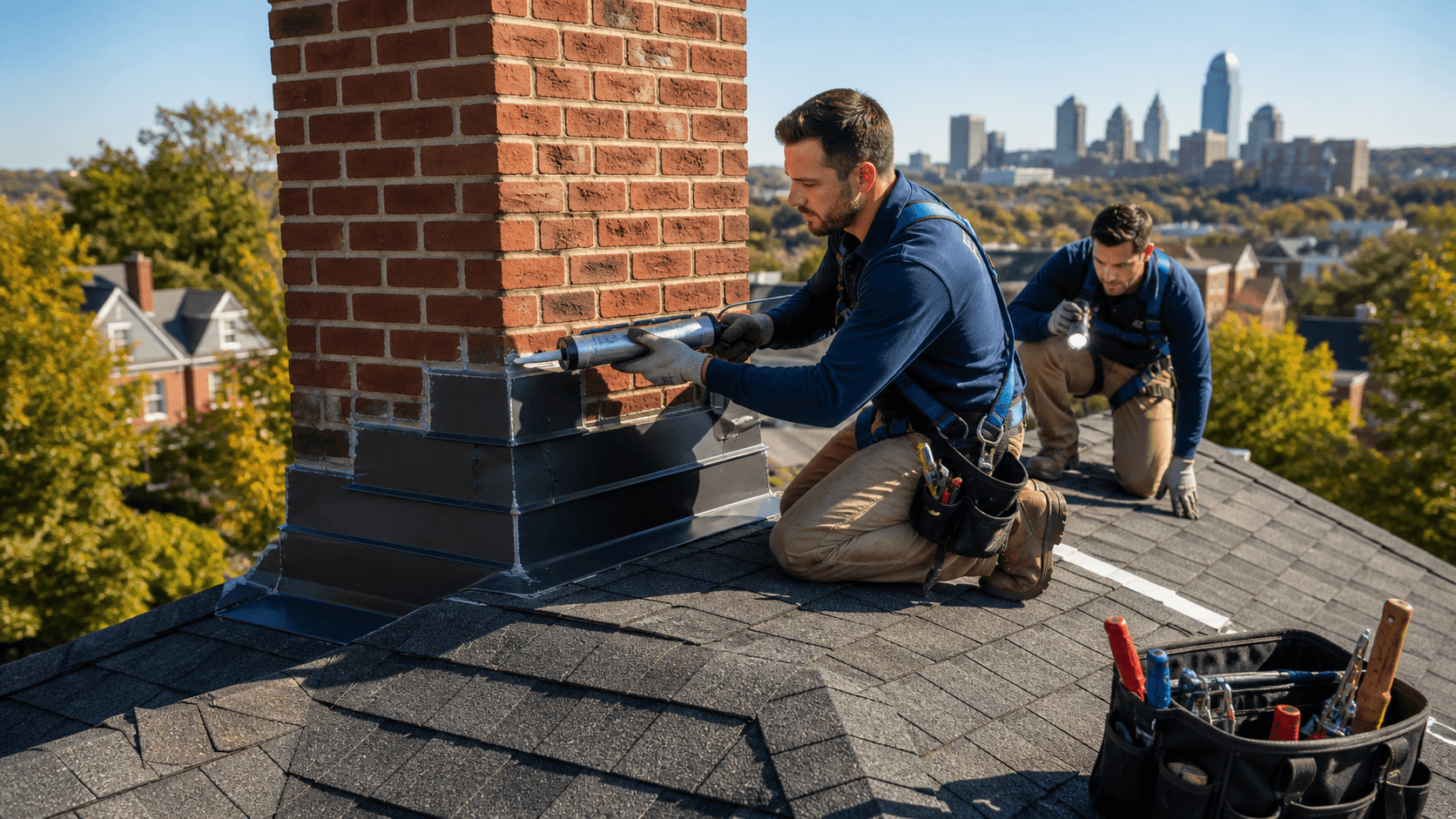
- Using flexible, professional-grade sealants made for chimney and roof movement
- Applying proper waterproofing to masonry to shed water instead of soaking it in
In our Greater Cincinnati drought-to-downpour pattern, repairs that last are the ones that allow for movement and keep water directed away from vulnerable joints. When the flashing system is designed and installed correctly, you do not need thick layers of goop to keep water out.
Fall Checklist to Storm-Proof Your Chimney and Roof
Late summer through mid-fall is a smart time to give your chimney and roof a once-over before the harder rains and freezing temps arrive. A simple checklist can help you spot issues early.
Outside, from the ground or with safe viewing:
- Look along the roofline for sagging spots or wavy shingles near the chimney
- Check chimney bricks for cracks, missing mortar, or white staining on the surface
- Look at the top of the chimney for a damaged crown or rusted metal chase cover
- Make sure gutters and downspouts are clear so water does not back up toward the chimney
Inside the home:
- Scan ceilings and upper walls for fresh stains or hairline cracks
- Look around the fireplace for shifting brick, gaps, or flaking mortar
- Check the attic around the chimney after a storm for damp wood or insulation
A professional chimney and roof leak inspection before peak storm season can spot expansion damage that is hard to see from the ground. Someone who works in Cincinnati, Northern Kentucky, Southeast Indiana, and the Dayton metro area every day understands how local weather affects chimneys and can choose flashing methods and sealants that perform better through heat, heavy rain, and freeze-thaw cycles.
Schedule a Chimney Leak Check Before the Next Soaker
Waiting for the next big downpour to "test" your chimney might feel harmless, but each storm that passes through dried-out, cracked sealant makes the damage a little worse. Water that sneaks in around flashing or through a failed crown can spread into framing, insulation, and ceiling materials long before you see a drip.
At Chimney Works SEO, we focus on finding the real source of roof leaks around chimneys, not just the visible stain. A thorough chimney, flashing, and roof leak inspection can include checking moisture paths, examining flashing design, and recommending repairs that handle our local drought-to-downpour swings. Treating chimney leak prevention as part of your regular fall home-maintenance helps protect your ceilings, framing, and fireplace system before the colder, wetter months set in.
Protect Your Home From Costly Water Damage Today
If you are seeing stains on your ceilings or walls, we can help track down the source and repair related roof leaks before they get worse. At Chimney Works, we carefully inspect your chimney and roofing connection points so you can feel confident about the next heavy rain. Reach out to our team with questions or to schedule a visit through our contact page. Let us help you protect your home and restore your peace of mind.