Stop Roof Leaks Before Fall Rains Arrive
A roof leak around the chimney tends to show up at the worst time, like during the first big fall storm. Water finds the weakest point around the chimney and sneaks in long before you notice a stain on the ceiling or peeling paint on the wall. By the time you see it, there can already be damage inside the roof and attic.
That is why a pre-fall check of your chimney flashing, chimney cricket, and nearby gutters is so important. When we catch small issues before leaf buildup and gutter clogs change how water moves across your roof, we can often stop a leak before it starts. For homeowners around Greater Cincinnati, Northern Kentucky, Southeast Indiana, and the Dayton metro area, this simple step can protect drywall, insulation, and framing as fall rains pick up.
Why Chimney Flashing Fails as Seasons Change
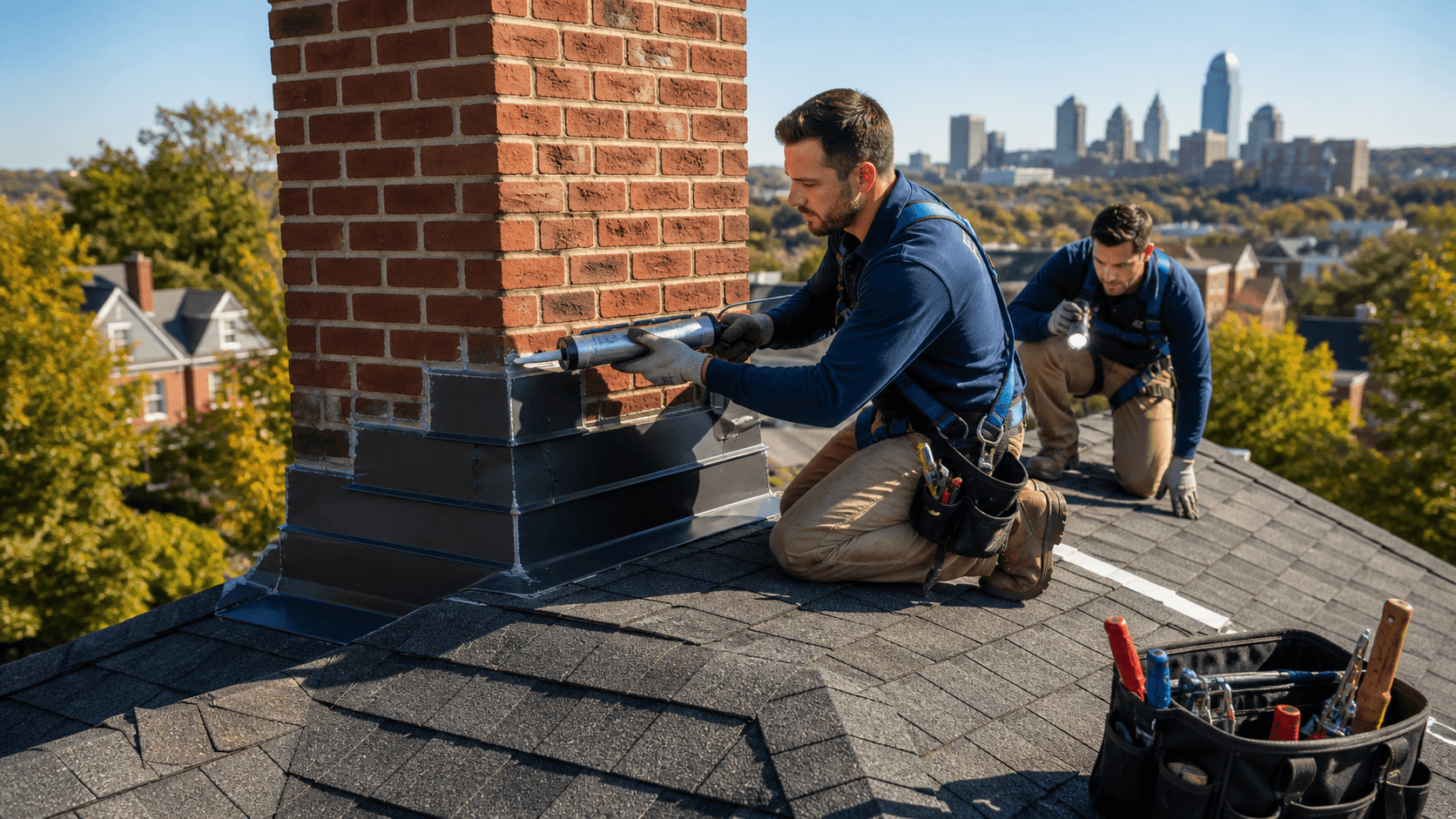
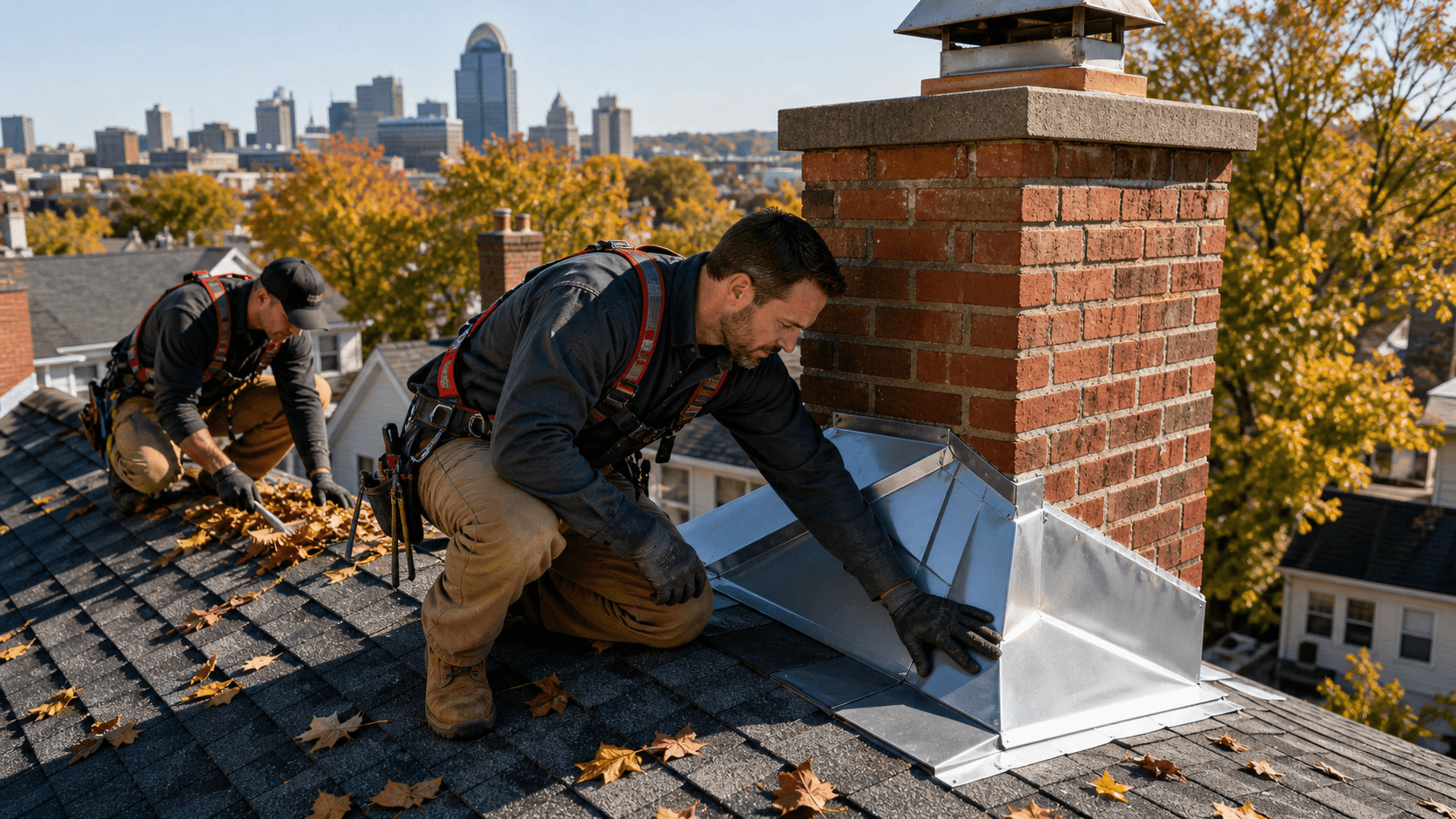
Chimney flashing is the metal that seals the joint where your chimney meets the roof. It works with the shingles, brick, and mortar to create a layered barrier that guides water away from one of the most leak-prone spots on the house. There are usually two parts, step flashing that tucks under the shingles and counter-flashing that is cut into the chimney and overlaps the step flashing.
Season changes are hard on that joint. Common stressors include:
- Hot summer sun that causes metal to expand and contract
- UV exposure that dries and cracks caulk or sealant
- Past ice dams that trapped water and forced it backward under shingles
- Strong winds that pull at flashing edges and loosen fasteners
Over time, those forces create weak points like:
- Cracked or missing sealant where flashing meets brick or shingles
- Rusted or corroded metal that starts to thin or develop pinholes
- Lifted edges that no longer sit flat against the roof
- Gaps between the counter-flashing and masonry where water can run straight inside
Once water finds one of these spots, it can travel along wood framing, nails, and roofing felt. The actual hole can be several feet from where you finally see a wet spot, which is why a professional inspection around the chimney is so important.
Key Flashing Red Flags to Look for This Fall
You do not need to climb on the roof to spot basic warning signs. From the ground, driveway, or a safe window view, you may notice things that suggest the flashing needs a closer look.
Keep an eye out for:
- Wavy, bent, or lifted metal around the base of the chimney
- Gaps where the flashing meets the brick or siding
- Rust streaks running down from the metal
- Dark stains or moss growth on the chimney face beneath the flashing line
Inside the home, a roof leak around the chimney can show up as:
- Brown or yellow spots on the ceiling near the chimney area
- Peeling paint or bubbling drywall around the fireplace wall
- A musty odor in the room after a rain
- Damp or matted attic insulation close to the chimney
- Soft, spongy drywall when you press near a stain
Even tiny cracks around flashing can let in enough water to cause long-term trouble once fall rains and leaf buildup increase the amount of water running across that section of roof. If you notice any of these red flags, it is best to have a chimney professional check the flashing before storms become more frequent.
The Role of a Chimney Cricket in Heavy Rains
On many homes, especially where the chimney is wider, there should be a small, peaked structure behind the chimney called a chimney cricket. It looks like a little saddle that sits on the uphill side of the chimney. Its job is simple: split the flow of water and push it around the chimney instead of letting it slam directly into the back.
Building codes often call for a cricket on wider chimneys because without it, water, leaves, and debris can pile up behind the chimney. When a cricket is missing, undersized, or poorly built, you may see:
- Ponding water that sits behind the chimney after a storm
- Shingles that age faster in that area, curling or losing granules
- Flashing at the back wall wearing out much faster than the sides
- A recurring roof leak around the chimney that keeps coming back even after quick patch jobs
From the ground, signs of a cricket problem can include debris piles lodged behind the chimney, dark staining on the roof in that spot, sagging or sunken-looking shingles, or visible pooling during a hard rain if you can view that area from an upstairs window.
Gutters, Leaves, and Water Paths Around the Chimney
Even if your chimney flashing and cricket are built well, clogged gutters can undo that protection. When gutters near the chimney fill with leaves or shingle grit, water has nowhere to go. It can back up under shingles, spill over the edges, and change direction toward the chimney area.
This is especially common in September and October, when:
- Trees start dropping leaves but the weather is still active
- Rain becomes more frequent but the sun is not as strong, so roofs stay damp longer
- Debris builds quickly in gutters before many homeowners think about cleaning them
Simple pre-fall checks that help protect the chimney area include:
- Making sure gutters closest to the chimney are clear of leaves and mud
- Confirming downspouts near that section are not dumping water toward the chimney base
- Watching during a steady rain to see how water flows around the chimney and whether it races or pools nearby
When gutters work properly, they carry water away from sensitive joints like flashing and crickets, which helps everything last longer.
Professional Pre-Fall Chimney Leak Inspection Checklist
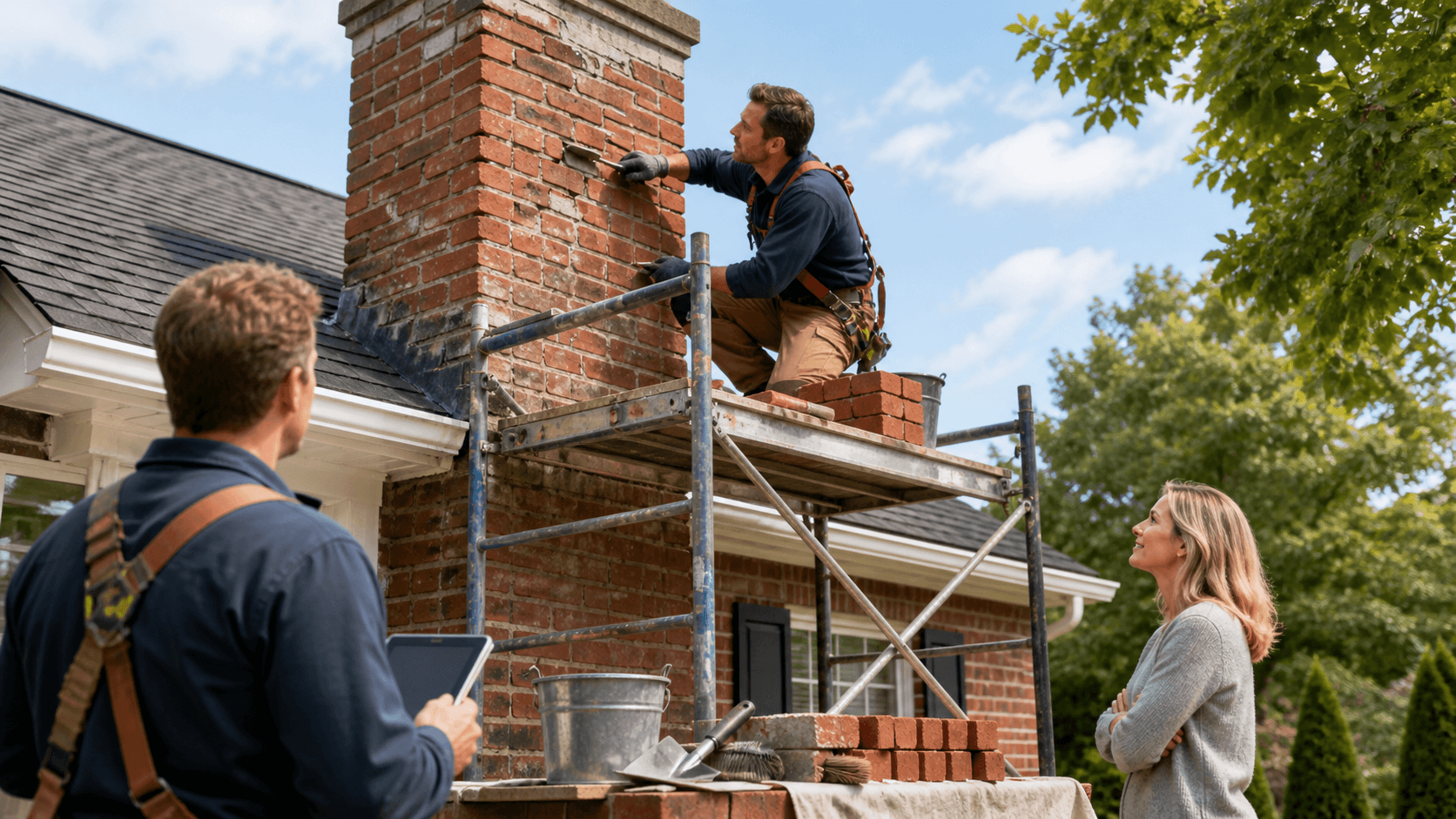
A trained chimney technician has the tools and access to safely inspect areas you cannot see from the ground. During a pre-fall chimney leak inspection, we focus on the full water path, not just one small detail.
Typical checks include:
- Step flashing and counter-flashing for proper overlap, tight fit, and signs of rust
- Sealant at all seams and where metal meets masonry or shingles
- Chimney crown, top mortar, and brick joints for cracks that allow water inside the structure
- Shingle condition around the chimney, especially just uphill and downhill
We also look at how the roof and chimney work together:
- Proper chimney cricket size, shape, and pitch for the width of the chimney
- Signs that water is bypassing the gutter system near the chimney
- Attic areas around the chimney for moisture staining, mold, or hidden rot
Finding a small gap or early rust spot in September is much easier to fix than a full roof leak around the chimney in late fall or winter when everything is cold, wet, and harder to access. A careful pre-fall inspection can save you from emergency repairs during the middle of a stormy season.
Get Started With Your Project Today
If you are seeing stains, drips, or musty odors near your fireplace, now is the time to address a roof leak around the chimney before it leads to costly structural damage. At Chimney Works, we carefully inspect, diagnose, and repair chimney issues so your home stays dry and protected. Reach out to our team with questions or to schedule service through our contact page today.