Stop That Late-Summer Leak Before Fall Rains Hit
A roof leak around the chimney after a late-summer storm is more than a nuisance. It is a warning that something in your chimney system is not doing its job, and the next round of heavy rain could make things worse. When storms roll through the Cincinnati area with heat, humidity, and strong wind, small weaknesses around your chimney can suddenly turn into steady drips inside.
Late-summer storms often bring wind-driven rain that hits the roof from the side, not just straight down. Light spring showers might not have shown any problems, but those sideways sheets of rain will find every gap around your chimney. That is where chimney leak forensics comes in: a simple, step-by-step way to narrow down if the trouble is the wind-driven rain pattern, the flashing, the cricket, the cap, or even damaged masonry.
At Chimney Works & Rocky Mountain Stoves, we spend a lot of time tracking down these stubborn leaks for homeowners in Greater Cincinnati, Northern Kentucky, Southeast Indiana, and the Dayton metro area. We know how fast a "small leak" can turn into damaged ceilings, mold, or rotten roof decking once fall and winter arrive.
First Clue: Where and When the Water Shows up
The first step is not on the roof; it is inside your home. The location and timing of the water are big clues about the true source of a roof leak around the chimney.
Pay close attention to details like:
- Does the stain show up on the ceiling, on the wall next to the chimney, or right around the firebox opening?
- Do drips only appear during strong, sideways rain with wind, or any time it rains at all?
- Is the moisture worse on one side of the house when storms hit from a certain direction?
Water does not always show up directly under the entry point. It can travel along rafters, drywall, or framing and then drip several feet from where it came in. That is why a stain "near" the chimney might still be caused by a problem behind it or at the flashing line.
Before calling a professional, it helps to document what you see. If it is safe, note:
- Photos of stains or drips, especially during or right after a storm
- How quickly surfaces dry out once the rain stops
- Any musty smell near the fireplace or chimney wall
These clues give a clear starting point when someone comes out to inspect.
Wind-Driven Rain vs. Chimney Cap Failures
The chimney cap on top of your flue is your first defense against rain, animals, and debris. A proper cap helps keep direct rain from falling straight into the flue and also helps keep sparks and embers inside the system where they belong.
When the cap is the problem, you may notice:
- Water dripping straight down into the firebox during or right after storms
- Rust streaks or dark water marks running down the outside of the chimney or chase
- A damp, sooty smell or a rusting damper that shows up soon after heavy rain
- A cap that looks bent, missing, or undersized when you look from the yard
Wind-driven rain can also beat even a decent but poorly sized cap. If the cap is too small, set too low, or cheaply made, strong gusts can shove rain sideways under it or bounce water up into the flue. Inside the house, this may look like a roof leak around the chimney, but the water is actually entering from above and running down the inside of the flue or chase before it shows up.
A professional can check cap size, height, and condition, and see if wind is blowing rain past it instead of over it.
Flashing Red Flags Around the Roofline
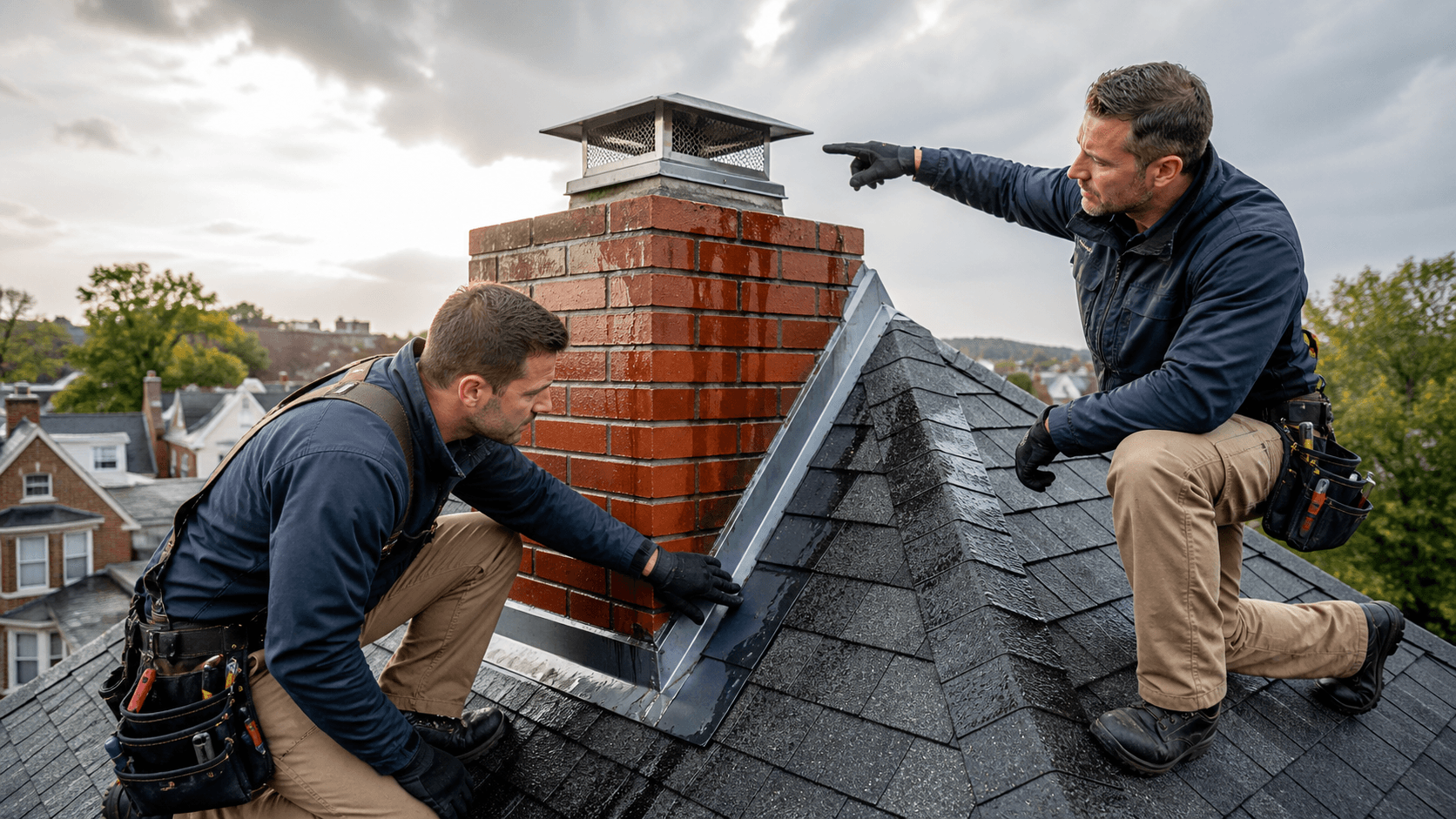
Flashing is the metal that seals the joint where the roof meets the chimney. On most sloped roofs in our area, you will find two parts working together: step flashing under the shingles and counter flashing cut into or attached to the chimney surface. Together, they are meant to guide water away and keep it on top of the roofing, not under it.
Summer weather can be hard on flashing. Common problems include:
- Metal pulled loose by strong wind or uplift at the corners
- Roof sealant drying, shrinking, and cracking in the hot sun
- Small dents, gaps, or nail holes from hail, branches, or other debris
From the ground, you might be able to see rusted or lifted flashing, or shingles that are curling or missing right next to the chimney. Inside the attic, there may be water stains, dark areas, or even daylight at the sheathing near the chimney stack. Any of these signs point to a likely flashing leak, especially if water shows up on ceilings close to the chimney, not just inside the firebox.
When the Cricket or Saddle Is the Silent Culprit
Behind a wide chimney on a sloped roof, building codes often call for a cricket, also known as a saddle. This is a small, peaked structure that splits water and sends it around the chimney instead of letting it slam into a flat wall and sit there.
When the cricket is missing or failing, you may notice:
- Chronic dampness or rot at the back side of the chimney where you cannot easily see from the yard
- Piles of shingle granules, leaves, and other debris stuck behind the chimney after storms
- Ice dams in winter in the same spot where late-summer leaks tend to show up
If the cricket has the wrong pitch, is too low, or is not tied into the roof correctly, water can back up behind the chimney. Over time, it sneaks under shingles and into the roof decking. Inside the home, that leak usually appears as staining or soft spots "around the chimney," often a bit behind it, which can confuse the source if you only look from the front.
Seasonal Timing, Local Storms, and Masonry Damage
Our local late-summer pattern often includes high humidity, hot days, and powerful storms that dump a lot of water in a short time. Masonry chimneys soak up moisture like a sponge. When bricks and mortar joints are already loaded with water, those big storms can push even more moisture into tiny cracks.
Here are signs that the chimney structure itself is letting water in:
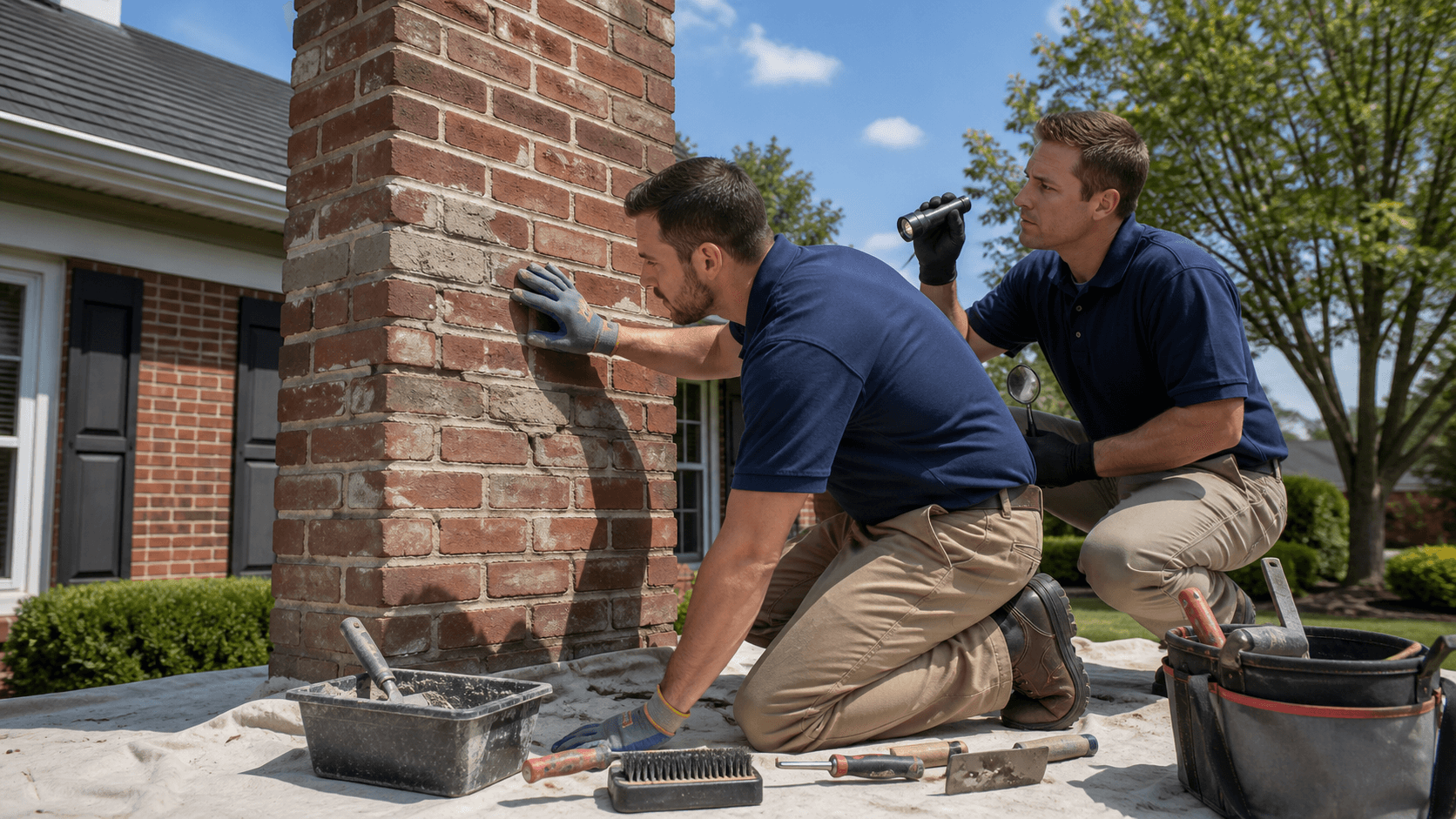
- Flaking or popping brick faces, known as spalling, on any side of the chimney
- Eroded or missing mortar joints that look washed out or crumbly
- Moss, algae, or white powdery deposits on the surface, which show ongoing moisture
- A cracked crown on top of the chimney or a gap where the crown meets the flue tile
Storm water can work through these weak points, then move down inside the masonry shell. You may see damp patches on the wall near the chimney, stains on the ceiling next to it, or moisture around the firebox long after the rain ends. Over time, this trapped moisture can damage both the chimney and nearby framing.
Call in the Pros Before the Next Big Storm Rolls Through
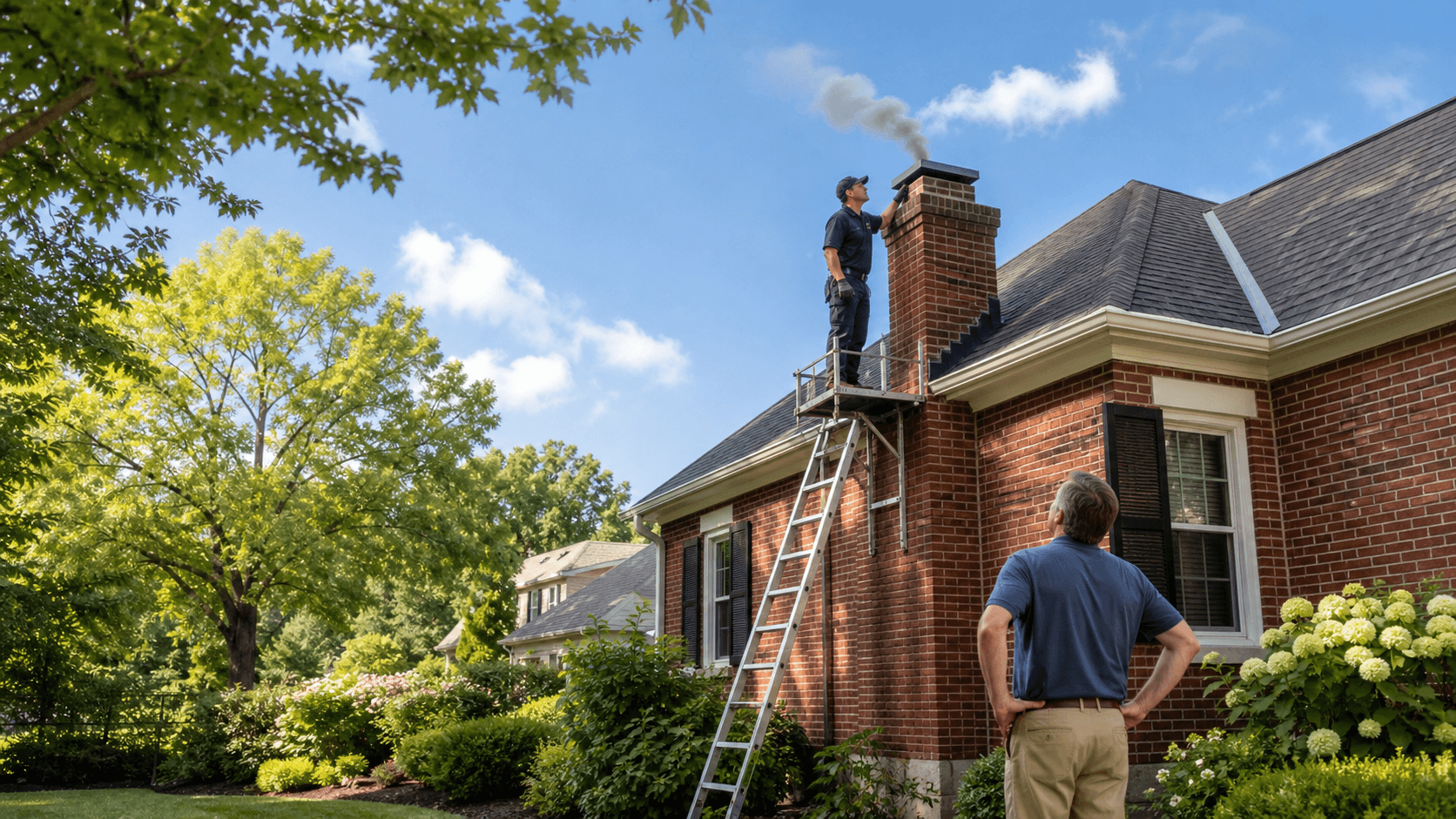
When a leak shows up around your chimney, guessing at the cause is risky. A careful leak inspection looks at the whole system: the cap, crown, flue, masonry, flashing, shingles, cricket, and even the attic framing and insulation around the chimney. At Chimney Works & Rocky Mountain Stoves, we approach it like a puzzle, starting with the evidence inside, then matching it to what we see on the roof and chimney exterior.
Waiting through "one more storm" often leads to bigger problems, like mold in hidden spaces, sagging or stained ceilings, ruined insulation, and rotted roof decking around the chimney. As late-summer storms roll through and cooler weather gets closer, it is smart to track down what is really causing that roof leak around the chimney and get it fixed before the busy heating season and freeze-thaw cycles add even more stress to your home.
Get Started With Your Project Today
If you are seeing stains, drips, or musty smells near your fireplace, let Chimney Works SEO inspect and repair the roof leak around the chimney before it causes costly structural damage. Our team will assess the problem, explain your options clearly, and complete the repairs with long-lasting materials. To schedule an appointment or ask a question, simply contact us and we will follow up promptly.