Cincinnati Weather Triggers for Chimney Waterproofing
Chimneys in the Greater Cincinnati area put up with a lot. Freeze-thaw winters, strong spring storms, and long, sticky summers all push moisture into brick and mortar, then keep it there. That constant wet-dry cycle slowly wears down the structure and can lead to leaks, odors, and costly repairs.
Our goal is simple: help you understand how local weather affects your chimney, what warning signs to watch for, and how to time chimney waterproofing so it protects your home before damage grows. For homeowners in Cincinnati, Northern Kentucky, Southeast Indiana, and Dayton, smart timing is just as important as the work itself.
How Freeze-Thaw Cycles Damage Brick and Mortar
Water is sneaky. It seeps into tiny pores and hairline cracks in brick and mortar. When temperatures drop below freezing, that trapped water turns to ice and expands. Each freeze-thaw cycle pushes a little harder on the surface, and over time that stress:
- Widens small cracks into larger gaps
- Causes the face of the brick to flake off, called spalling
- Weakens mortar joints so bricks feel loose or hollow
- Opens up new paths for even more water to enter
In our area, the highest risk runs from late fall through early spring. Wet weather in autumn followed by fast cold snaps can be especially tough. The chimney sits out in the open, so it feels those swings more than most parts of the house.
This is why late summer into early fall is a smart time to deal with cracks, worn mortar joints, and missing or damaged chimney caps. When we:
- Repair mortar that has started to crumble
- Replace damaged or loose bricks
- Make sure a proper cap is in place
we give the chimney a stronger shell before the freeze-thaw cycle ramps up. Adding chimney waterproofing to the exterior surface helps block water from soaking in, which cuts down on how much moisture is available to freeze in the first place. Taken together, these steps can significantly extend the life of the chimney structure.
Spring Storms, Heavy Rains, and Hidden Chimney Leaks
Once winter eases up, spring storms bring a different kind of stress. Heavy rains, high winds, and long, soaking showers find every weak point in a chimney system. Common trouble spots include:
- Deteriorated or cracked chimney crowns
- Missing, damaged, or rusted chase covers on factory-built chimneys
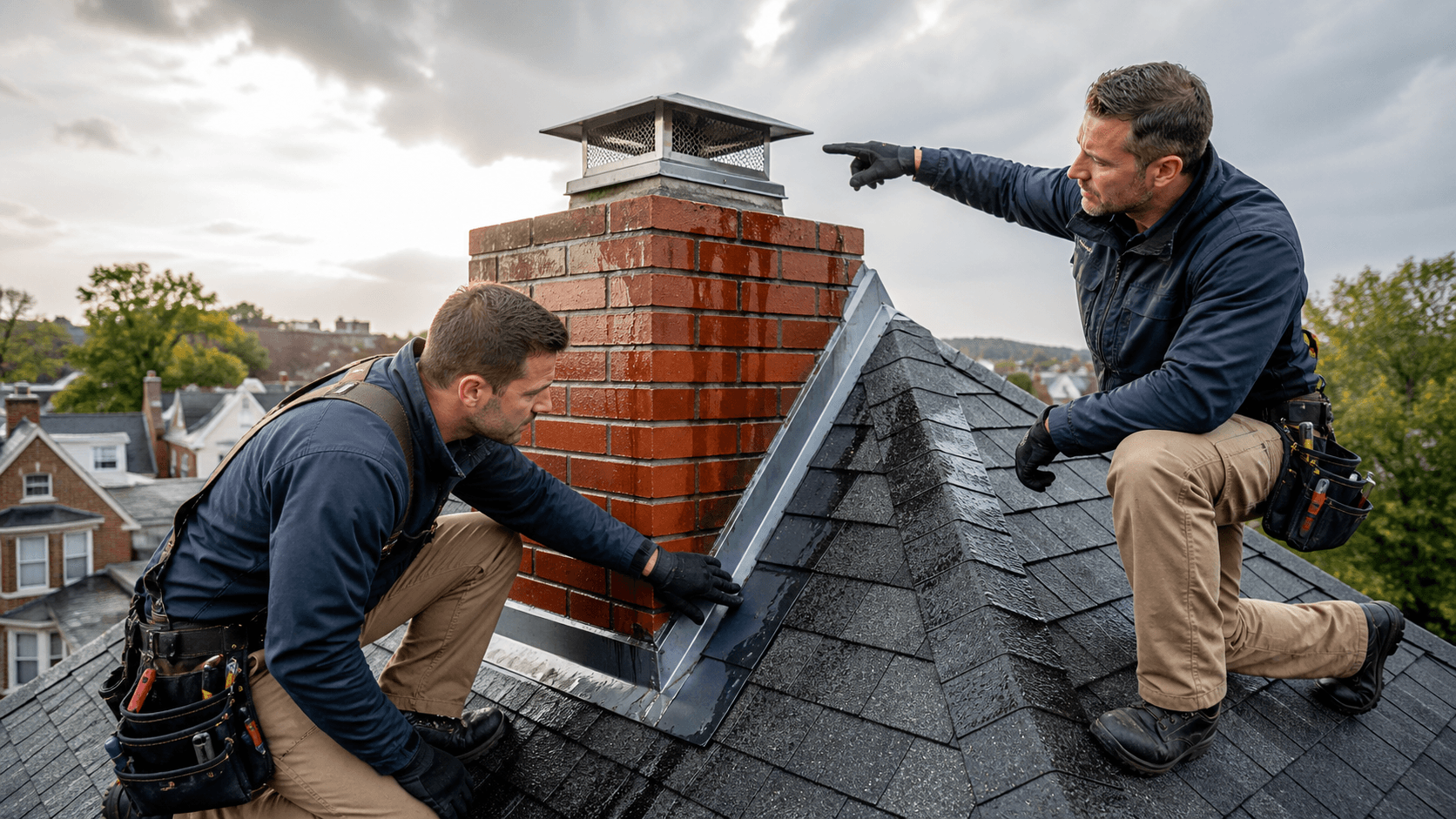
- Flashing that has pulled away from the roof or cracked over time
- Porous brick that has no chimney waterproofing protection
Water often follows the easiest path. It may not drip straight down into the fireplace. Instead, it can run along framing, insulation, or drywall before it finally shows up where you can see it.
After a strong spring rain, many homeowners notice warning signs like:
- Brown or yellow stains on ceilings or walls near the chimney
- A musty or damp odor inside the firebox
- Rust spots on the damper, fireplace doors, or firebox panels
- White, chalky deposits on the outside of the chimney, called efflorescence
These signs mean water is getting in somewhere, even if you do not see an active drip. A professional leak inspection in late spring or early summer is a smart move. That timing allows us to:
- Track down the exact entry points
- Repair crowns, chase covers, or flashing
- Apply chimney waterproofing to protect masonry before the next round of storms
Catching leaks early often prevents more serious damage to framing, interior finishes, and the chimney itself.
Humid Summers and Slow, Silent Moisture Damage
Cincinnati summers are hot and humid, and your chimney feels it. When the air holds a lot of moisture, brick and mortar dry out more slowly. Even without heavy rain, masonry can stay slightly damp for long stretches, which leads to:
- Slow moisture absorption into already weakened mortar
- A stale or moldy smell around the fireplace area
- Softer joints that crumble more easily under pressure
Inside the chimney, humidity can also build up. Energy-efficient homes often have less natural air movement. If the fireplace is not used much, or if the damper stays closed for long periods, moisture can sit inside the flue. That trapped humidity may cause:
- Condensation on metal parts, leading to rust
- Corrosion on dampers, firebox panels, and other components
- Flaking or surface damage on clay flue tiles
Good ventilation and a healthy, intact chimney system help manage this. A proper cap keeps direct rain out while still allowing air to move. A sound crown and flashing system keep water from entering at the top and at the roofline. Breathable chimney waterproofing products add another layer of defense, blocking liquid water from soaking in but still allowing vapor to escape from inside the masonry. This balance is especially important during muggy summer months.
When to Prioritize Chimney Waterproofing in Cincinnati
If you are trying to figure out the best time to plan chimney waterproofing, it helps to think seasonally. For our climate, a simple schedule works well:
- Late summer into early fall is the ideal window for inspections and repairs
- Once repairs are complete, chimney waterproofing can be applied in warm, dry weather
- The goal is to be ready before the first hard freezes arrive
To decide how urgent your chimney needs attention, look for these signs:
- Visible brick damage, like flaking faces, cracks, or missing chunks
- Past leaks, even if they seemed minor or stopped on their own
- Water stains indoors near the chimney or around the fireplace opening
- An older chimney that has never been professionally waterproofed
- Recent roof work, which can disturb or expose chimney flashing
If you recognize any of these, it is smart to move chimney waterproofing and related chimney work toward the top of your to-do list. Timing also matters for product performance. The materials used for chimney waterproofing and masonry repair need certain temperature and moisture conditions to cure well and last. That is why we plan around stretches of heavy rain, extreme heat, or bitter cold to give the chimney the best long-term protection.
Protect Your Chimney Before the Next Weather Shift
Weather in the Cincinnati region will always be a bit unpredictable, but your chimney does not have to suffer because of it. Addressing moisture entry and chimney waterproofing before problems grow is almost always easier and less disruptive than dealing with major leaks, structural repairs, or a partial rebuild later.
At Chimney Works, we work with homeowners throughout greater Cincinnati, Northern Kentucky, Southeast Indiana, and Dayton to spot freeze-thaw damage, track down leak sources, and manage humidity issues inside chimney systems. By pairing careful inspection with the right repairs and well-timed chimney waterproofing, we help your chimney stand up better to whatever the next season brings.
Get Started With Your Project Today
Protect your chimney before minor moisture issues turn into expensive structural damage. At Chimney Works SEO, we provide expert chimney waterproofing to help extend the life of your masonry and keep your home safe. If you are ready to address leaks, staining, or brick deterioration, reach out so we can evaluate your chimney and recommend the right solution. Have questions or need to schedule an appointment now? Just contact us and we will follow up promptly.