Stop Summer Storms From Turning Chimneys Into Leak Traps
Hot, sticky days followed by fast afternoon storms are normal around Cincinnati. What many homeowners do not see is how those temperature swings slowly pull chimney flashing apart and set up a roof leak around the chimney. Water might not show up inside until the damage is pretty far along.
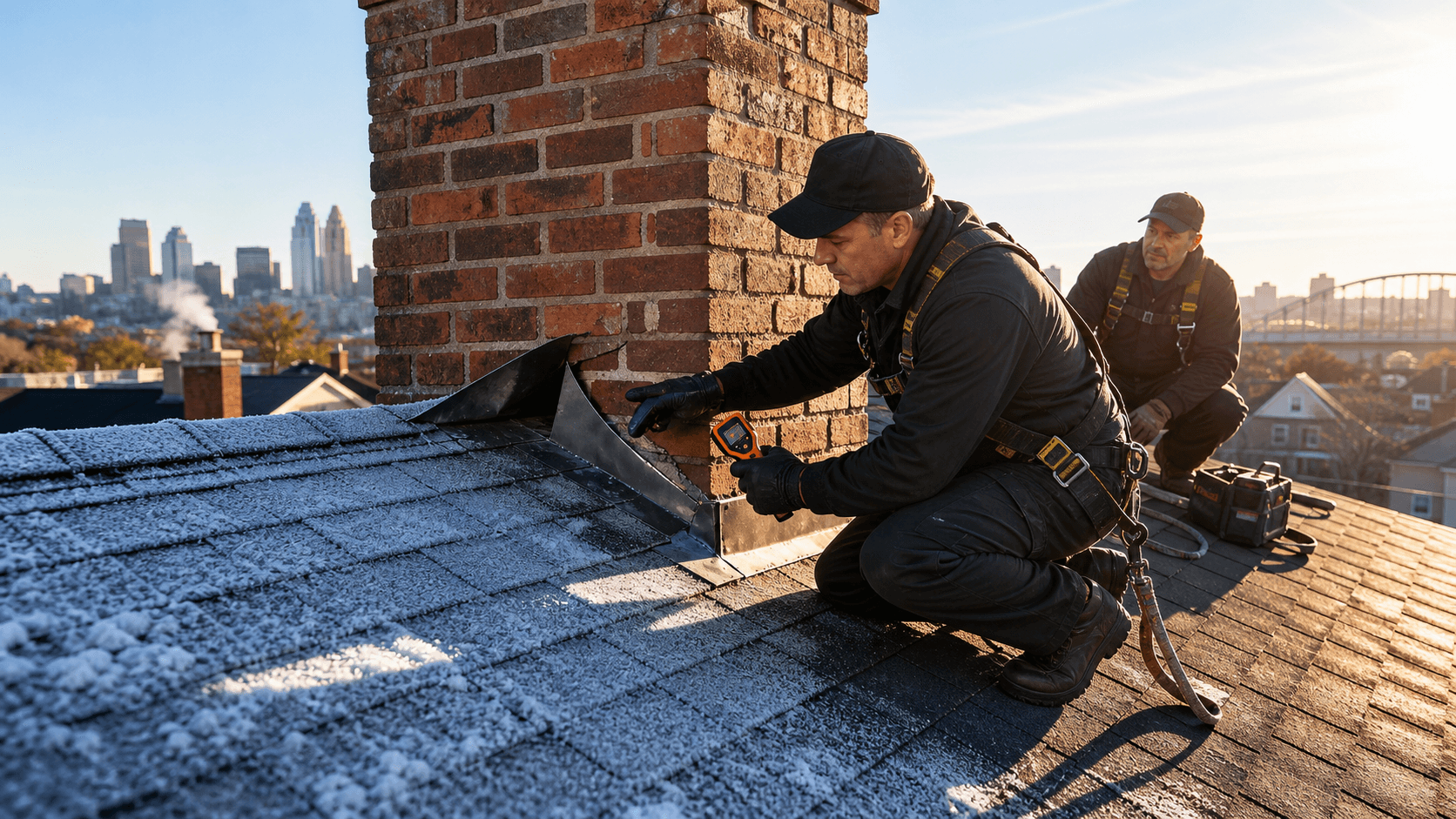
Flashing is the metal wrapped where your chimney meets the roof. Sealant is the bead of caulk or roofing goop used to close small gaps and keep water out. Together they act like a rain jacket around the base of the chimney so water cannot slide under shingles and into your home. Mid-summer is a smart time to have this area checked and repaired before late-summer downpours and fall systems push water into every weak spot.
How Heat-Wave Expansion Breaks Chimney Flashing
On a hot day, your roof can feel like an oven. Metal, brick, and shingles all heat up and expand, then cool and shrink at night. The problem is, each material moves at a different rate. Dark shingles and metal flashing can get very hot very fast, while the chimney masonry stays cooler inside.
All that constant movement can cause small but serious problems around the chimney:
- Nails slowly back out and no longer hold flashing tight
- Flashing edges warp or twist slightly out of place
- Tiny gaps open between metal and brick or between metal and shingles
- Sealant stretches, separates, and then cracks
These changes are usually too small to spot from the ground at first. Over time, though, they give water easy paths to follow. During a storm, wind-driven rain will find any opening. What starts as a slow drip can turn into a clear roof leak around the chimney.
Homeowners often do not notice until they see:
- Light brown stains on ceilings or walls near the chimney
- A faint water line in a corner of an upstairs room
- Damp insulation or wood around the chimney in the attic
By the time these signs show up, there has already been repeated leaking into your roof system.
Why Sealants Fail Faster in Cincinnati Weather
Sealants and caulks are helpful, but they do not last forever, especially in our kind of weather. Summer sun beats down on dark roofs, and that high heat bakes sealant. UV rays from the sun break down the surface, making it dry, chalky, and brittle. When the sealant hardens, it loses its flexibility and starts to crack or pull away from the surfaces it should be gripping.
Then, as seasons change, freeze-thaw cycles add more stress. Any water that has worked into tiny cracks in sealant or mortar can freeze, expand, and make those cracks wider. Over and over, this opens the way for more water and more damage.
Common installation mistakes make all of this worse, such as:
- Using the wrong kind of caulk or roofing sealant
- Piling on a thick bead of caulk instead of installing proper metal flashing
- Smearing sealant over loose or rusted flashing to hide problems
Old or failing sealant often acts like a bandage over a deeper wound. Under that layer, you might have rusted metal flashing, a chimney crown that is cracked and letting water run toward the flashing, or gaps where the brick and mortar are breaking down. Water can travel behind these areas long before you ever see a steady drip inside.
What to Inspect Around Your Chimney Before the Next Storm
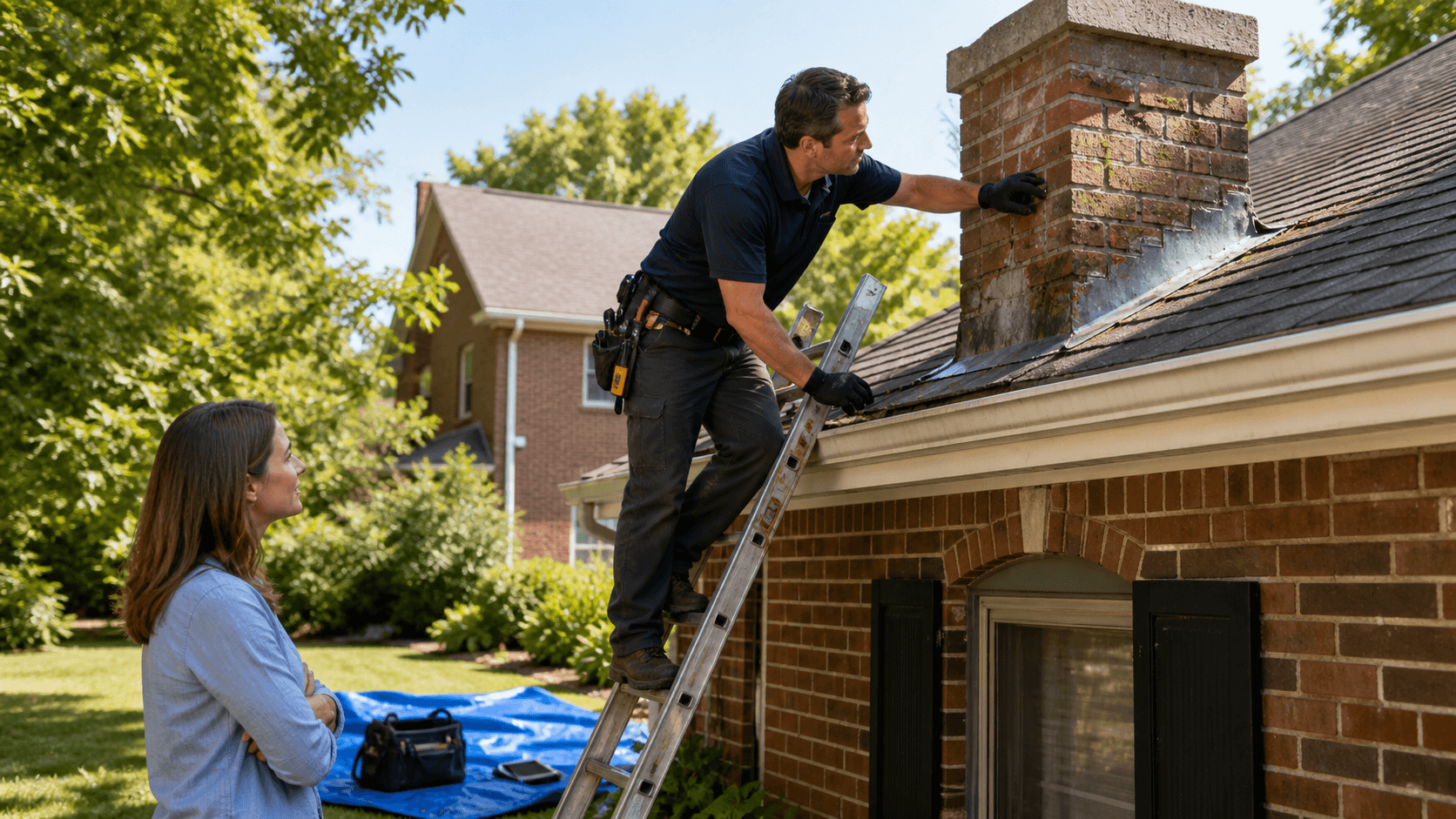
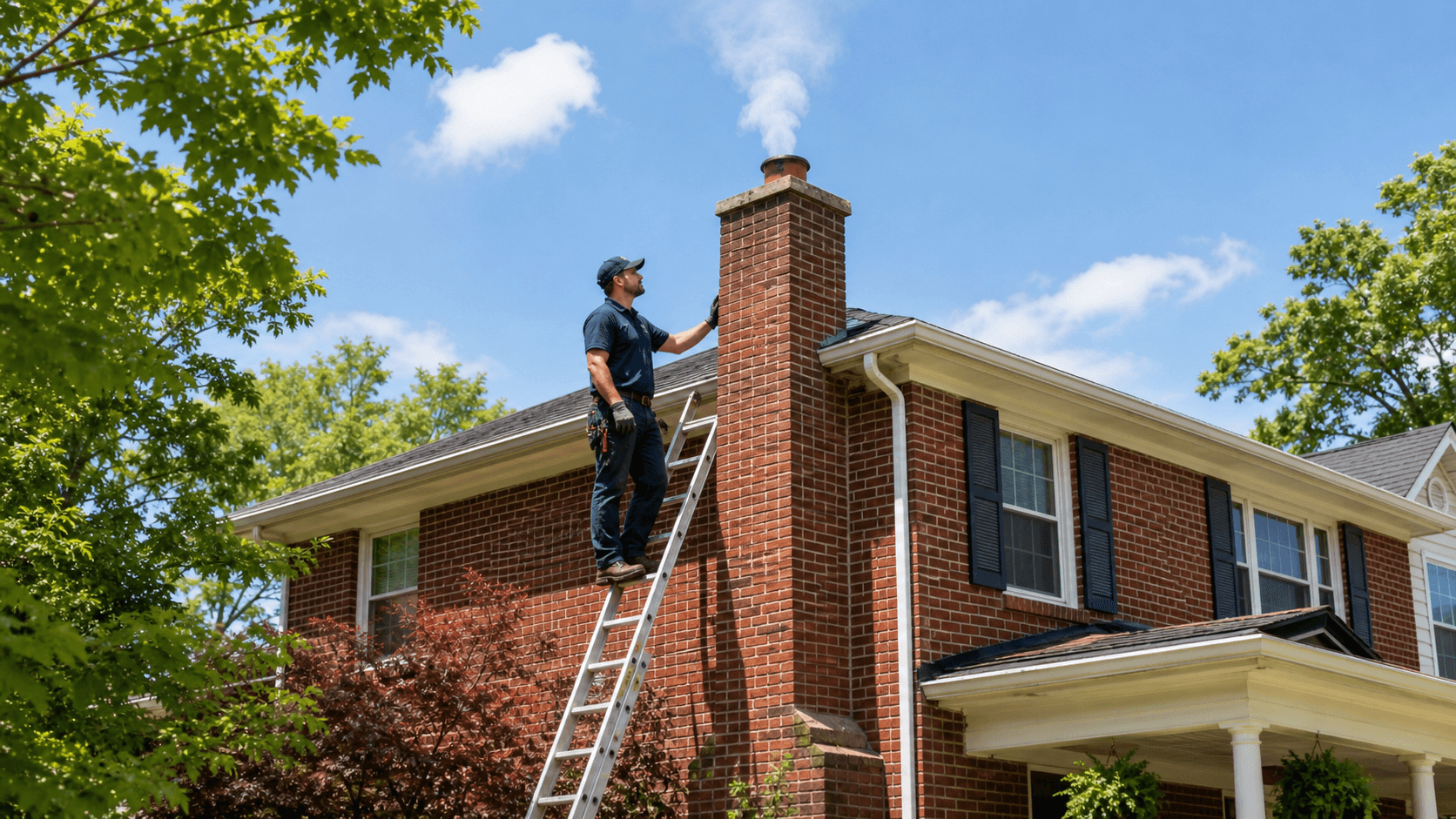
There are a few basic checks you can safely do from the ground or with binoculars. You do not need to climb on the roof to spot many warning signs. Look closely around the base of the chimney where it meets the roof.
From the outside, watch for:
- Shingles that look lifted, curled, or missing near the chimney
- Rust streaks on the flashing or stains running down the chimney face
- Flashing that looks bent, loose, or separated from the brick or siding
- Gaps in the step flashing along the shingle lines or missing top counter flashing
- Crumbling mortar joints or a cracked chimney crown on top
- A missing or damaged chimney cap
Inside the home, red flags for a roof leak around the chimney include:
- Brown or yellow stains on ceilings or walls close to the chimney
- Peeling paint or bubbling drywall in upper rooms
- Musty or damp smells near the fireplace or upstairs hallway
- Dark, damp, or soft wood in the attic around the chimney
It is fine for homeowners to watch for these signs and to check rooms and the attic with a flashlight. But climbing ladders, walking on steep roofs, or trying to patch flashing and masonry is not safe as a DIY job. Work that involves the roof, brick structure, and chimney system is better handled by trained professionals who know how water behaves around chimneys.
Repair Options That Actually Last in Midwest Climates
Quick fixes are tempting when you see a gap or small crack. It is easy to think a tube of caulk will solve it. Sadly, smearing more sealant over a problem usually just traps moisture and buys a little time, while the real damage continues.
Longer-lasting repairs often include:
- Removing and replacing damaged step flashing along the shingles
- Installing solid counter flashing into the chimney mortar joints
- Rebuilding or properly sealing a cracked chimney crown so water sheds away
- Using compatible, high-performance sealants only where they are truly needed
Good chimney and roof repairs take thermal movement into account. Metals that resist corrosion handle Cincinnati rain and humidity better. Proper overlap and fastening leaves room for the normal expand-and-contract cycles without opening new gaps. When chimney work is combined with a broader look at the roof and masonry, it helps prevent repeat leaks and protects the inside of the home as well as the outside structure.
Why a Chimney Pro Beats a One-Size-Fits-All Roofer
A simple roofing patch can stop a drip for a while, but a chimney is its own system. It includes the flue, chimney crown, masonry, flashing, and often the fireplace or insert inside. All of these parts can affect how and where water gets in.
A full chimney-focused evaluation will look for things like:
- Missing or undersized saddle or cricket behind a wide chimney that lets water pool
- Cracks in the crown that send water straight toward the flashing lines
- Damaged or misaligned flue tiles or chimney components that let moisture into the structure
- Signs of moisture in the attic framing or insulation around the chimney
Roofers handle a lot of roof surfaces, but chimney-specific issues are easy to overlook if that is not their daily work. An experienced chimney company that works across areas like Cincinnati, Northern Kentucky, Southeast Indiana, and the Dayton metro area understands how local storm patterns, snow loads, and temperature swings stress a chimney and its flashing over time.
Schedule a Mid-Summer Flashing Check Before Fall Rains
Mid-summer is a smart window to get ahead of problems. The roof is usually clear of snow and ice, and small issues in flashing and sealant can be spotted and fixed before heavy mid-summer rain and fall fronts test every seam. Catching weak spots early helps avoid stained ceilings, mold growth in hidden spaces, and damage that can shorten the life of your roof.
At Chimney Works, we work with homeowners across our region to inspect, repair, and upgrade chimney systems so they stand up to local temperature swings and fast-moving storms. A focused chimney and flashing check can give you peace of mind that the area around your chimney is ready for the next round of rain, not waiting to turn into the next roof leak around the chimney.
Protect Your Home From Costly Water Damage
If you suspect a roof leak around the chimney, addressing it quickly can prevent structural damage and mold issues. At Chimney Works, we carefully inspect, diagnose, and repair the problem so your home stays safe and dry. Reach out today and let us schedule an expert evaluation that fits your timeline. If you are ready to get started, simply contact us to set up an appointment.