Stop Mystery Summer Drips Before They Damage Your Home
Water spots near a chimney in the middle of a hot Cincinnati summer can be confusing. There was no big storm, the sky is clear, but your ceiling has a new stain or your fireplace smells damp. It feels like a roof leak around the chimney, yet the timing does not make sense.
We see this kind of thing all the time in our area. In the summer, not every "chimney leak" is really a problem with the chimney or roof. Other parts of the home can send water to the same spot and make it look like the chimney is to blame.
In this post, we will walk through the most common summer leak look-alikes: AC condensation, attic humidity, and bathroom or kitchen venting issues. We will also share simple, low-risk ways to tell them apart from a true chimney leak, and explain when it is time to bring in a professional to keep your home safe and dry.
Why Summer Makes Roof Leaks Around the Chimney So Tricky
A real roof leak around the chimney often shows up as:
- Brown or yellow stains on the ceiling close to where the chimney passes through
- Bubbling or peeling paint or drywall tape lines near the chimney chase
- Damp drywall on the wall where the chimney runs, sometimes with a musty smell
- Moisture around the fireplace face, mantel, or inside the firebox after a rain
In Cincinnati, Northern Kentucky, Southeast Indiana, and the Dayton area, summer adds a twist. High humidity, strong sun, and constant AC use create a lot of temperature changes inside your home. That mix can cause:
- Condensation on cold AC lines and equipment
- "Sweating" ductwork or metal parts in the attic
- Moist air getting trapped in the attic and turning into water on cooler surfaces
Water is lazy. It always looks for the easiest path. It can run along framing, pipes, or the outside of a chimney chase, then show up at a weak point near the chimney even if the real source is several feet away. That is why guessing can lead you in the wrong direction. A slow AC drip or attic moisture problem can be hiding behind what looks like a simple roof leak.
AC Condensation Clues That Imitate Chimney Roof Leaks
Central AC systems pull humidity out of the indoor air. That moisture turns into condensation at the air handler and along the cold lines. When everything works right, it drains safely outside. When something is off, that water can end up in the attic or walls and run toward the chimney area.
Common AC condensation problems that can mimic a roof leak around the chimney include:
- A clogged condensate drain line backing up into the overflow pan
- A cracked or rusted drain pan that lets water spill onto framing
- Uninsulated or poorly insulated refrigerant lines dripping onto nearby wood
- Air handlers or ducts placed close to the chimney chase with no drip protection
Homeowner checks that are usually safe from inside the home or attic include:
- Look around the AC air handler for wet insulation, dark spots on wood, or active drips
- Find the condensate drain line and see if it is kinked, disconnected, or obviously blocked
- During a hot day when the AC runs constantly, check if stains or damp spots get worse
If the problem seems to show up more when the AC is running hard, there is a good chance your cooling system is at least part of the issue. Avoid opening any electrical panels or moving wiring. If equipment is hard to reach, high up, or near electrical parts, it is safer to let an HVAC professional inspect it. Once that is checked, a chimney and flashing inspection can confirm whether water is also getting in from outside.
Attic Humidity and Poor Ventilation Masquerading as Chimney Leaks
On hot, sticky days, a poorly vented attic can turn into a giant sauna. Warm, moist air gets trapped, then condenses on anything a little cooler, including:
- Metal chimney parts
- Roof sheathing around the chimney
- Rafters and trusses near the chimney chase
That water can drip down into insulation, run along framing, and finally show up as a stain around the chimney or on the ceiling below.
Signs that point more to attic humidity than a direct roof leak include:
- Damp or matted insulation spread over a wide area, not just at the chimney
- A musty smell that hits you across most of the attic
- Rust on nail points sticking through the roof deck or on metal connectors
- Light condensation or dark patches on the underside of the roof deck after very humid days, even when it has not rained
Some safe checks most homeowners can do:
- During daylight, look around the attic for obvious beams of light at roof penetrations or gaps
- Check that soffit vents are not blocked by insulation and that ridge or roof vents are open
- Set up a small dehumidifier or increase airflow in the attic for a short time and see if stains stop growing or feel less damp
If moisture seems focused right around the chimney, along the flashing lines, or on the chimney structure itself, that is a good reason to have both the chimney and roof area inspected by a professional.
Bathroom and Kitchen Vents That Dump Moisture Near Chimneys
Bathroom fans and kitchen range hoods are supposed to move moist, steamy air outside. Sometimes, though, the ducts do not make it all the way out. They might:
- End inside the attic instead of at a roof or wall cap
- Terminate just under the roof deck near the chimney
- Use long runs of flexible duct that sag, hold water, and leak at joints
All that trapped steam can condense on cooler surfaces, including chimney masonry, metal chimney pipe, or nearby framing. Over time, it creates stains and damp spots that look a lot like a roof leak around the chimney.
Telltale clues that venting might be the culprit:
- Stains or dampness that get worse after long showers or heavy cooking
- Insulation around duct runs that feels damp or smells musty
- Flexible ducts with low spots holding water or dark stains at joints
- Ducts that seem to end near the chimney chase instead of at a proper vent cap outside
You can safely:
- Turn on bathroom or kitchen fans and feel along accessible duct sections for air leaks
- Look, without cutting anything, to see if ducts continue all the way to a vent at the roof or wall
- Note any moisture trails that seem to start at vent ducts and move toward the chimney
If you spot loose ducting, strange vent routes, or clear signs that moisture is traveling toward the chimney, it is best to have a qualified contractor correct the venting and have the chimney area checked for damage.
When It Is the Chimney and How Pros Protect Your Home
Of course, sometimes the problem really is the chimney. Some red flags for a true chimney-related roof leak include:
- Staining or dampness that lines up with rain or snow, not AC or shower use
- Visible gaps, lifted edges, or rust at the chimney flashing on the roof
- Crumbling or missing mortar joints, spalled bricks, or loose brick faces
- A cracked, broken, or missing chimney crown or cap
- Water inside the firebox, on the hearth, or on the facing right after storms
When professionals inspect a suspected roof leak around the chimney, a careful, step-by-step approach helps separate chimney issues from look-alikes. That usually includes:
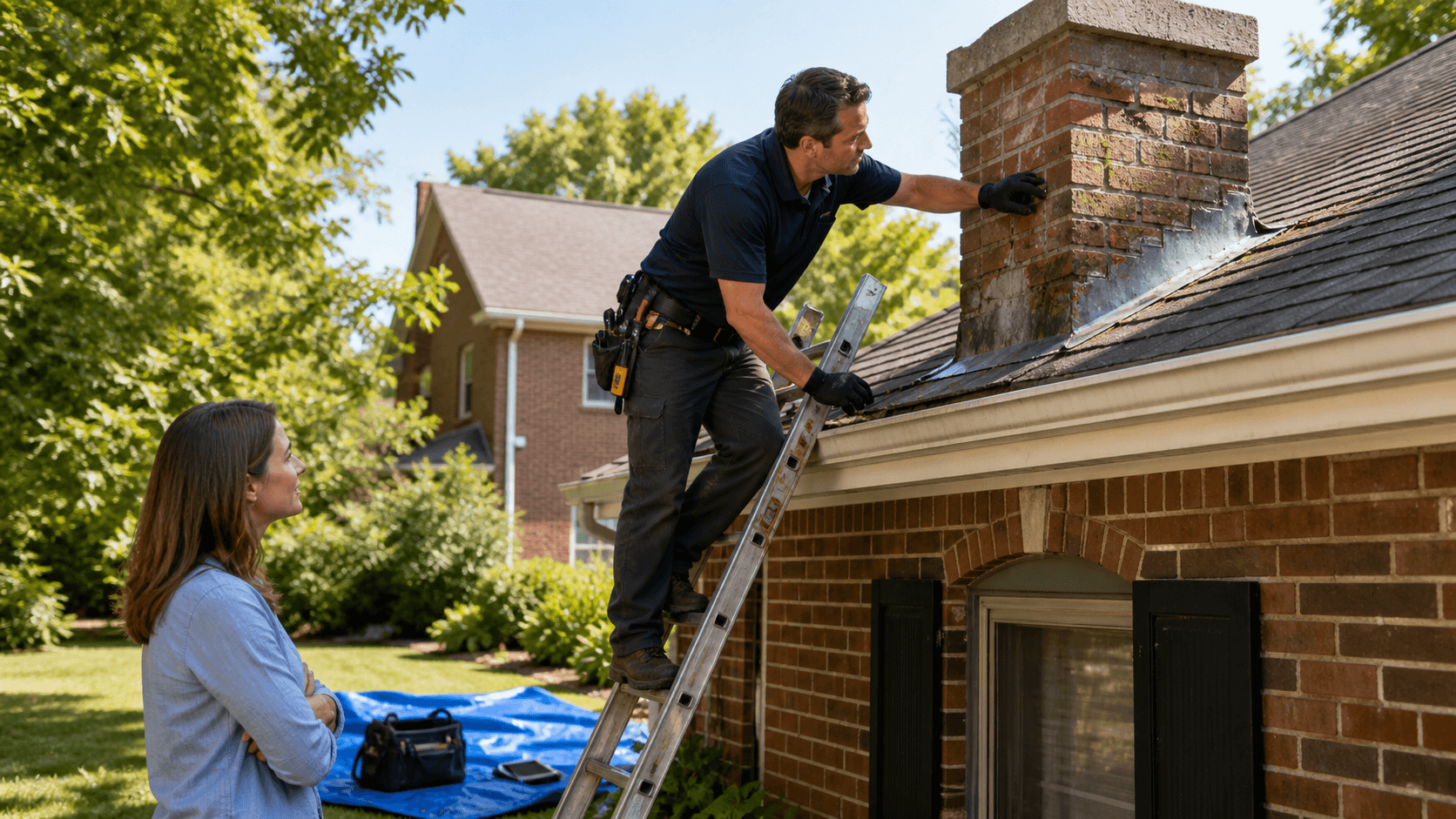
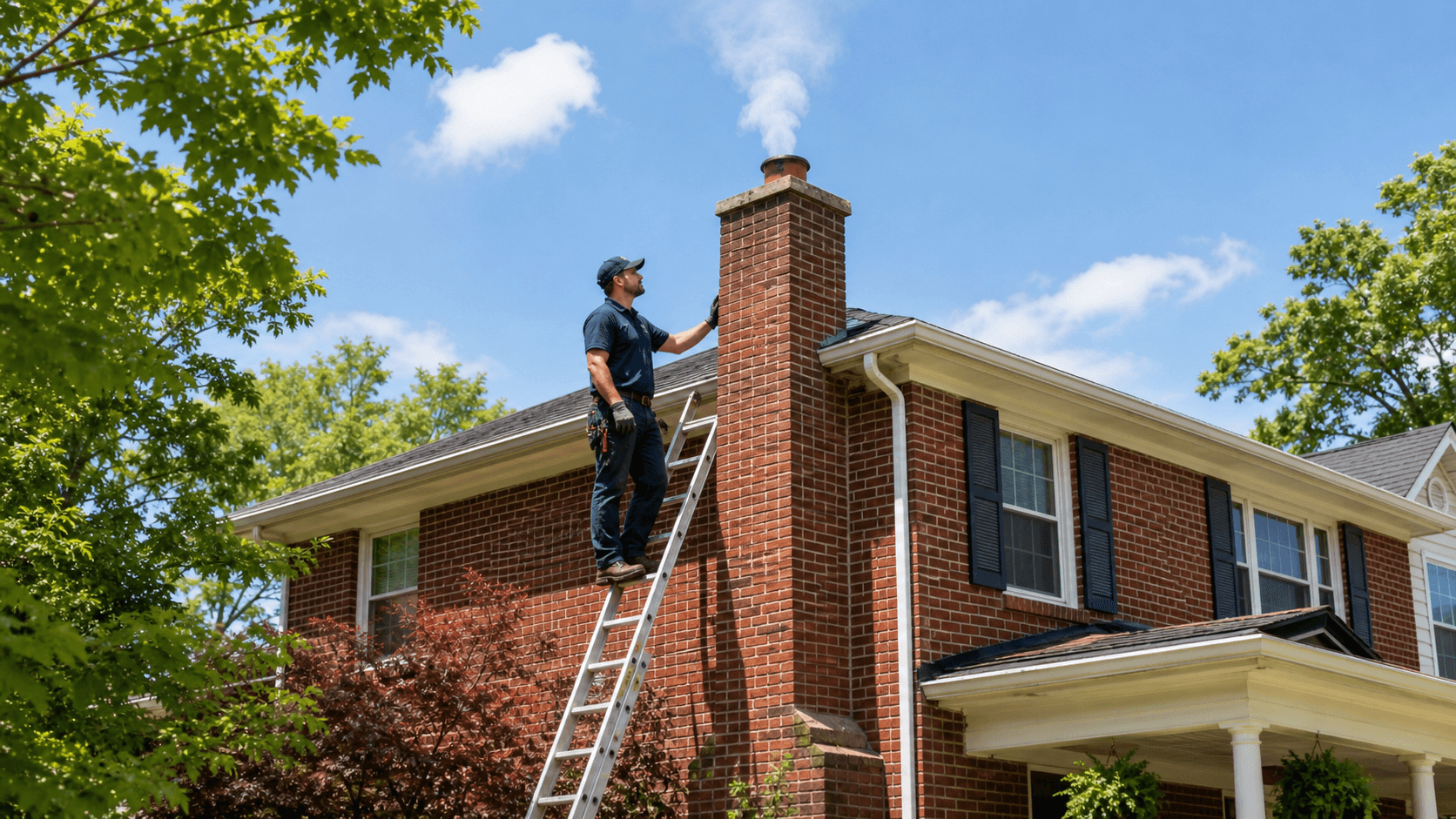
- A close visual check of the chimney exterior, flashing, and cap from the roof when it is safe
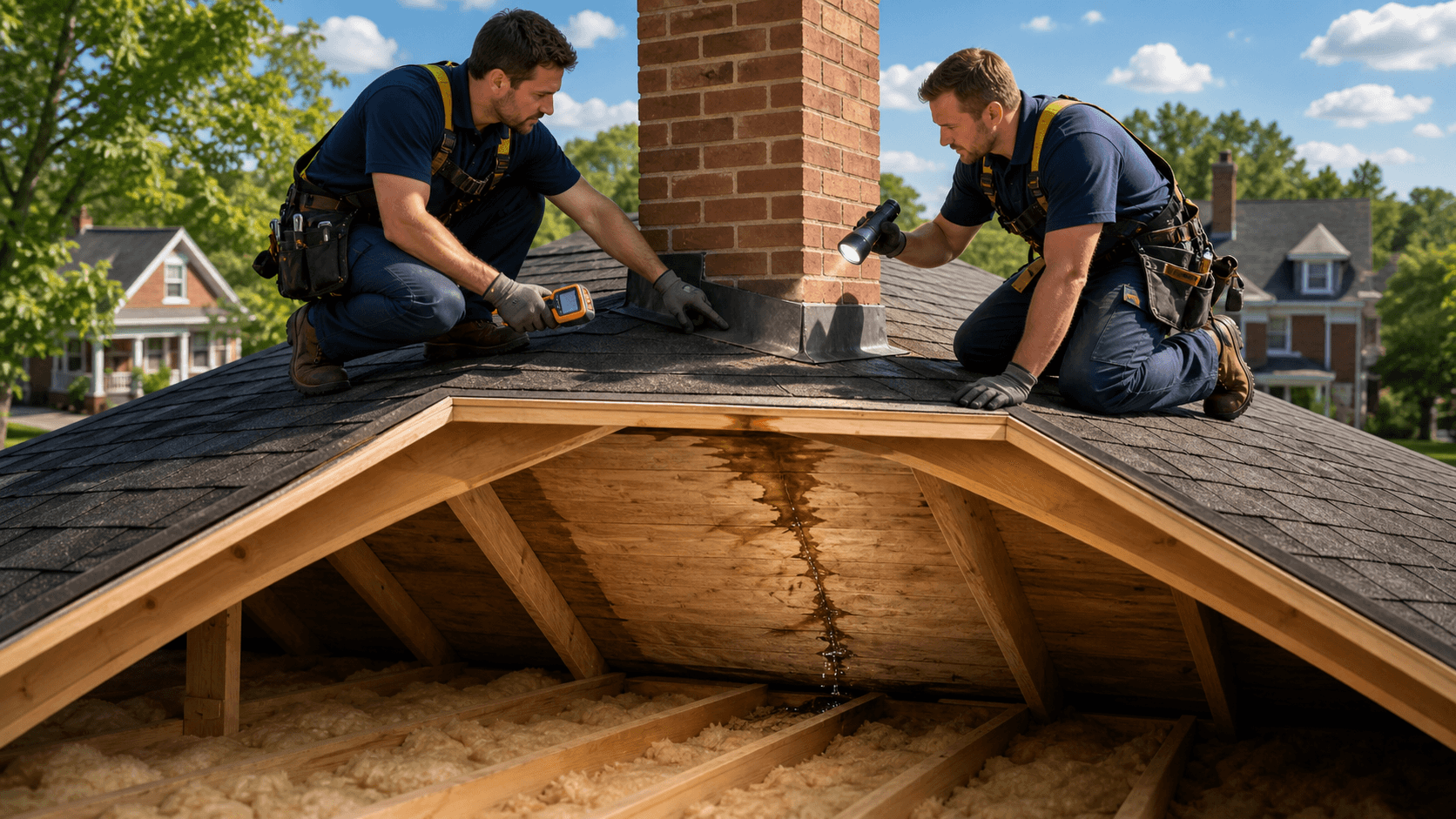
- An attic inspection around the chimney chase, roof deck, and nearby framing
- Tracing water paths on wood and masonry to see where moisture first appears
- In some cases, controlled water testing to see how and where water enters
Summer moisture around the chimney is not something to ignore. Even slow drips can lead to mold, damaged framing, and costly repairs later. By understanding the common summer leak look-alikes in our region and knowing what signs to watch for, you can help point the inspection in the right direction and protect your home from long-term damage.
Protect Your Home From Costly Water Damage Today
If you are seeing stains, dampness, or bubbling paint near your chimney, let Chimney Works find and fix the source before it gets worse. Our technicians will quickly diagnose any roof leak around the chimney and provide a long-term repair solution that fits your home and budget. To schedule an inspection or ask questions about your options, simply contact us and we will follow up promptly.