Early Leak Detection Can Save Your Chimney and Roof
A small brown spot on the ceiling after a storm does not look like a big deal. Many homeowners see that stain, assume a shingle lifted or a nail popped, and plan to deal with it later. Then the next storm rolls through, the stain spreads, the paint starts to bubble, and it becomes clear that the problem is bigger than a loose shingle. Roof leak detection often shows that the real trouble is hiding around the chimney.
In Cincinnati, Northern Kentucky, Southeast Indiana, and the Dayton areas, late summer and early fall storms are great at finding weak spots. Heavy rain, gusty winds, and quick temperature swings can push water into tiny openings around the chimney long before heating season starts. By the time you are ready to light that first fire, moisture may have already been sneaking in for weeks.
That is why professional roof leak detection is such a smart, preventative step. When someone trained looks closely at how water is getting in, the inspector is not just checking shingles. They are protecting both the roof structure and the chimney system so you are not stuck with emergency repairs once colder, wetter weather returns.
Why Roof Leak Detection Often Leads to the Chimney
Water always takes the path of least resistance, and it rarely shows up right where it gets in. A stain might appear in a hallway, while the actual leak starts at the chimney on the other side of the roof. That is one reason it is so hard for homeowners to tell if a leak is from the roof surface, the flashing, or the chimney itself.
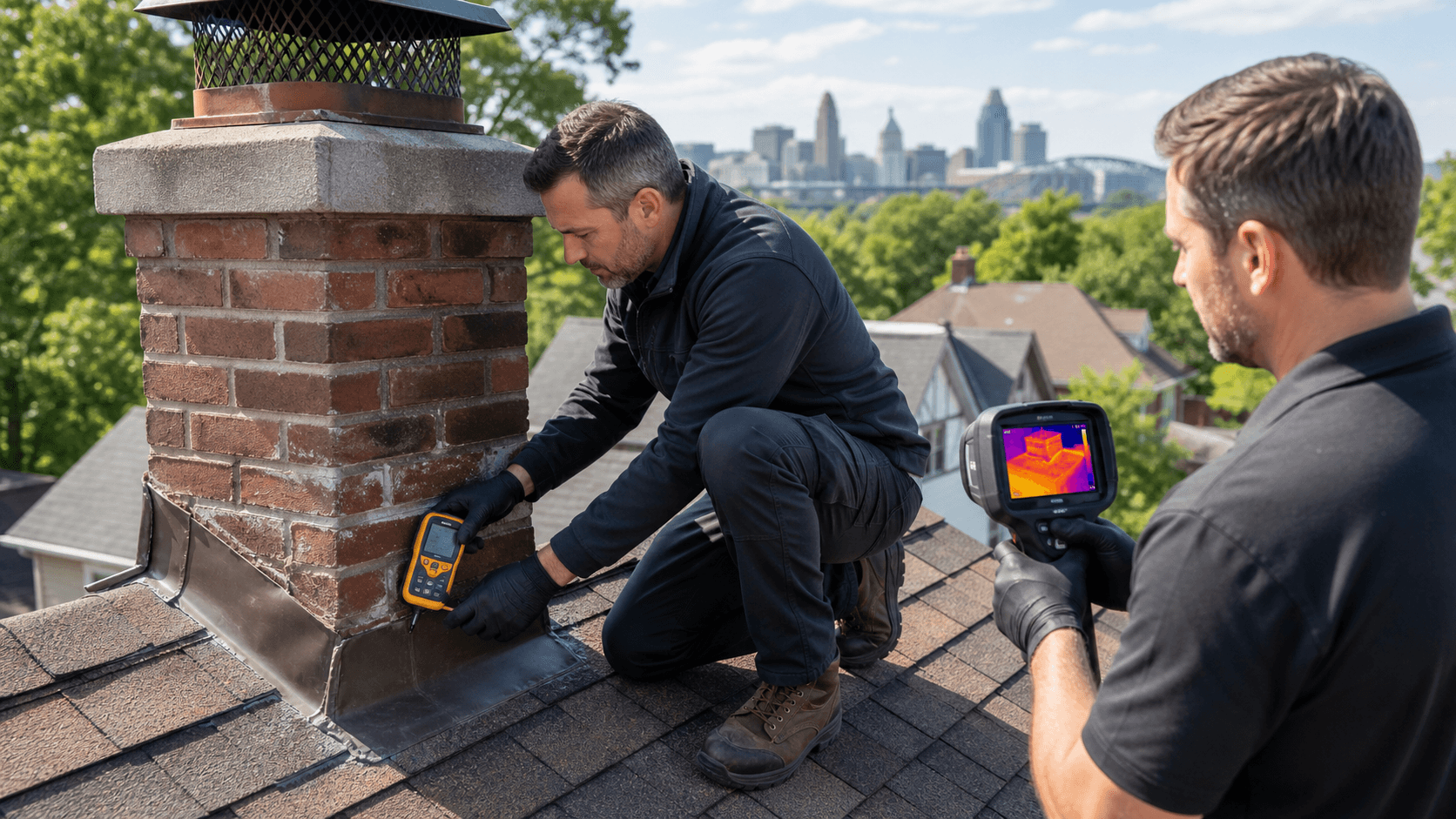
When we track down a leak, we follow the water. That means:
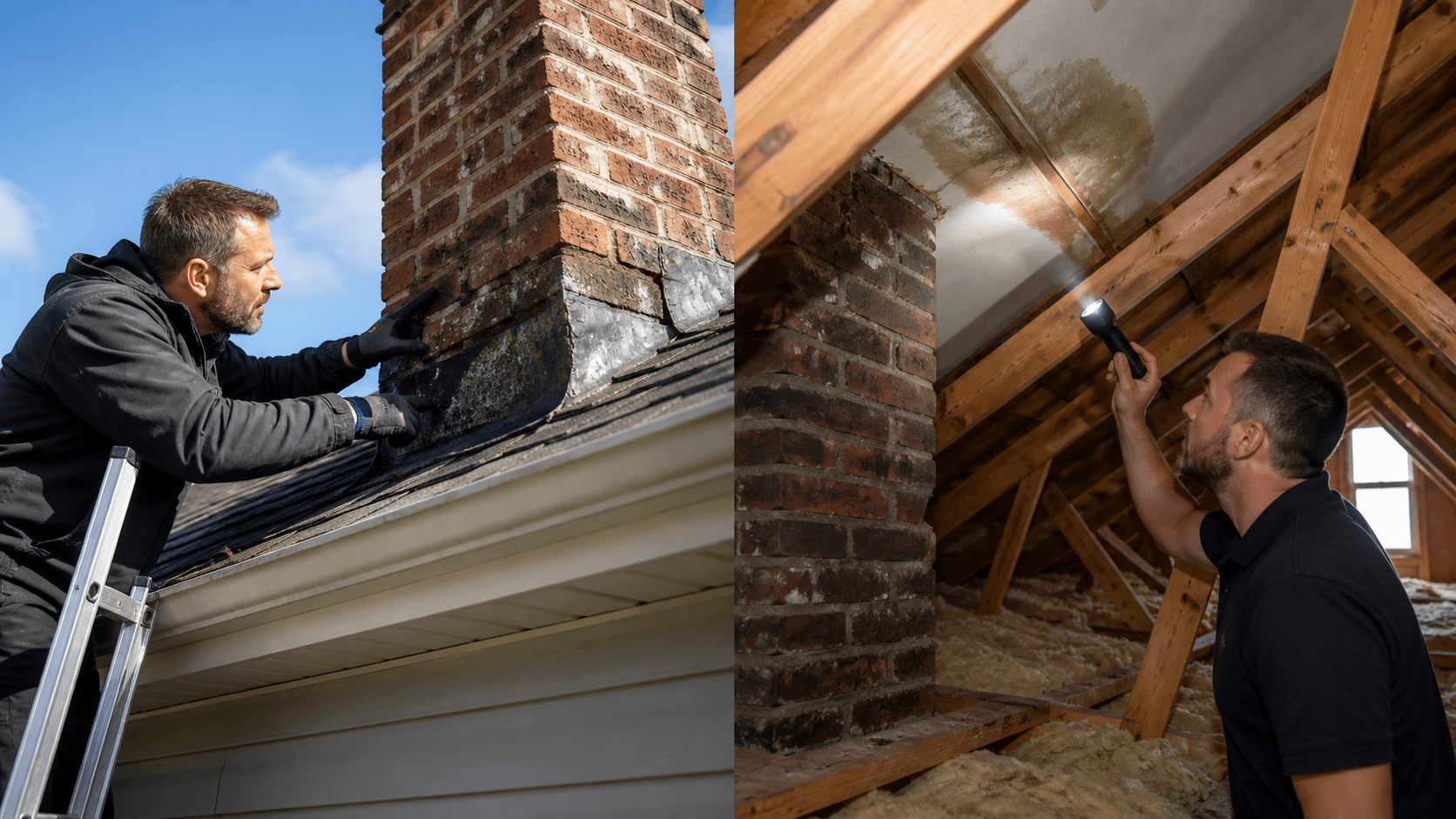
- Inspecting the roof area around the chimney for damaged shingles, dips, or soft spots
- Checking the metal flashing that seals the gap where the roof and chimney meet
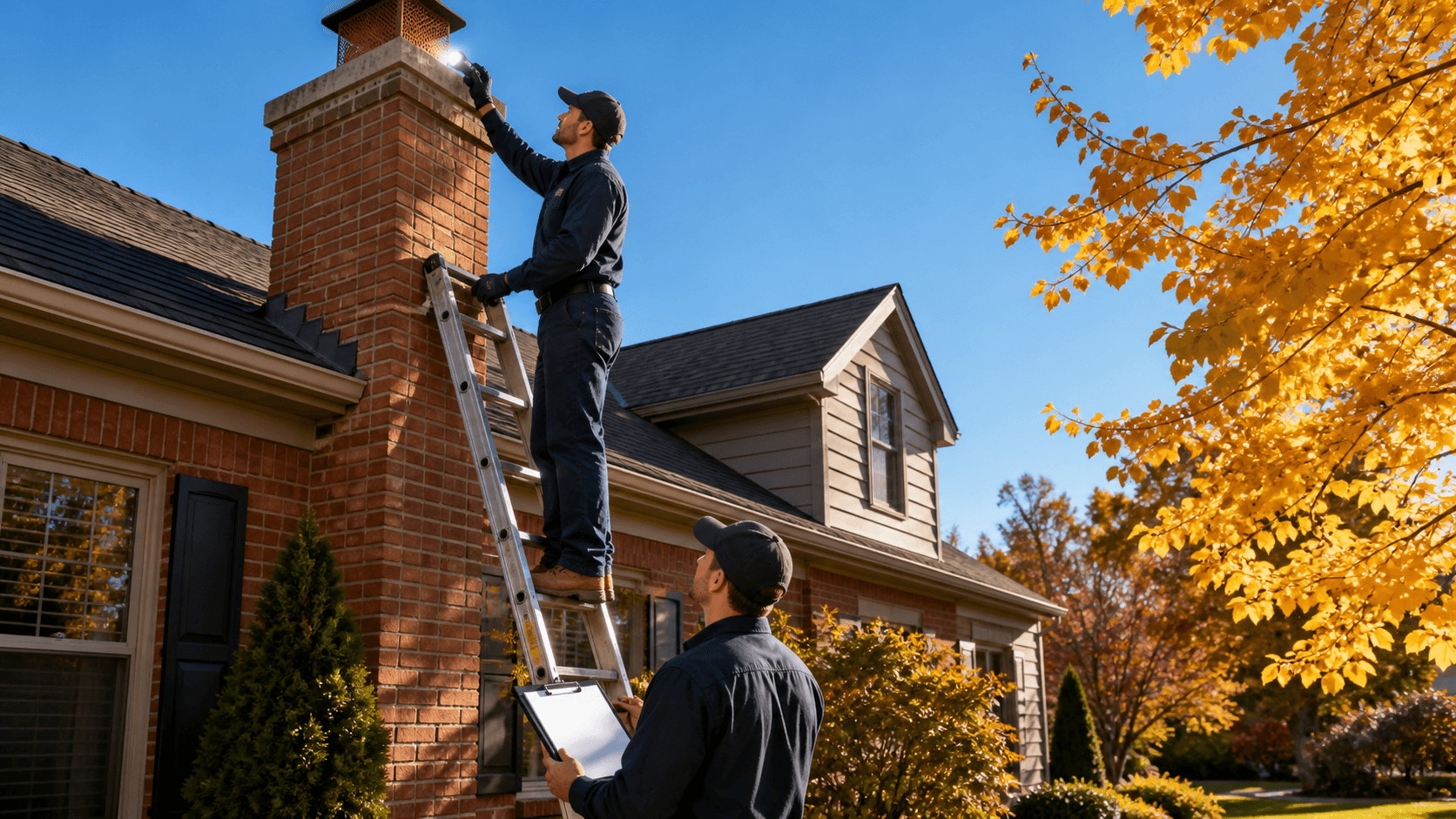
- Looking at the chimney cap and crown for cracks, gaps, or missing pieces
- Examining the attic and framing for wet wood, stained insulation, or moldy smells
- Checking the interior flue and firebox for rust, damp spots, and staining
Roofers are very good at spotting roof surface issues, but chimney leaks are often sneaky. Small gaps in mortar, a cracked crown, or a missing cap can be easy to overlook if you are not focused on chimneys every day. Having a chimney specialist involved in roof leak detection helps catch those subtle masonry and flue problems before they turn into bigger headaches.
Hidden Chimney Damage Roof Leaks Commonly Reveal
Once we start tracing a roof leak, we often uncover chimney damage that has been quietly building for some time. A few of the most common problems include:
- Cracked or failed chimney crown
The crown is the concrete or masonry top that sheds water away from the chimney. Tiny cracks in the crown can pull in water each time it rains. That moisture then runs down the inside of the chimney or into the masonry below the roofline. You might see this as:
- Brown or yellow ceiling stains near the chimney
- Peeling paint or bubbling drywall around the fireplace
- Musty or damp odors in the room where the fireplace sits
- Damaged or missing flashing
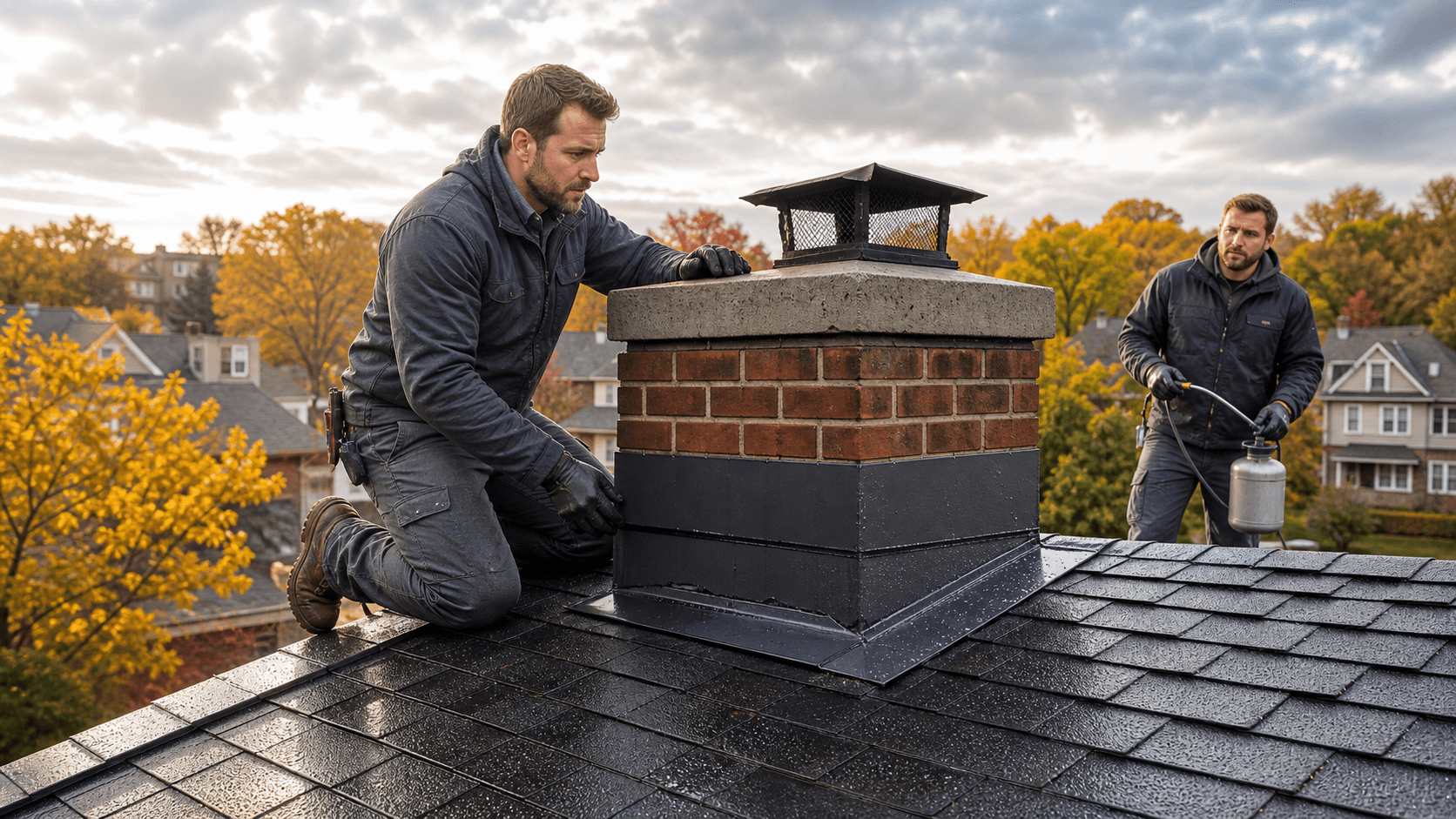
Flashing is the metal that wraps around the base of the chimney where it meets the roof. In our local climate, with repeated storms and temperature changes, flashing can loosen, rust, or pull away from the brick. When that seal fails, water can slip under shingles, into the attic, and down interior walls before you ever see a drop inside.
- Spalled and crumbling brick or mortar
When brick faces start to pop off or mortar joints crumble, that is called spalling. Wet late-summer and fall weather, followed by freeze-thaw cycles, are rough on masonry. Water soaks into the brick and mortar, freezes, expands, and slowly breaks the surface apart. Those damaged areas soak up even more water, which can then move into nearby walls and ceilings.
What starts as a mystery stain is often your house trying to tell you that the chimney needs help.
How Moisture Inside the Chimney Puts Your Home at Risk
A damp chimney is not just a cosmetic problem. Ongoing moisture inside the system can create real risks for your home and family.
On the structural side, water can:
- Rust metal components like damper parts and fireplace doors
- Weaken mortar joints so bricks shift or loosen
- Rot nearby wood framing and roof decking
- Eventually destabilize the chimney, leading to partial rebuilds or full rebuilds
Inside your home, a leaky chimney can also affect comfort and air quality. Damp, dark spaces are perfect for mold. Musty smells, discoloration, and a lingering "wet" feeling near the fireplace are all warning signs. Moisture can also interfere with airflow, which may cause smoke to back up into the room and make your fireplace harder to light and keep burning.
Hidden water entry around the chimney can hurt energy efficiency too. Wet insulation loses its ability to do its job, and gaps around the chimney can create drafts. Over time, the original leak area may grow, as moisture spreads into nearby framing and drywall. By the time you see a large stain, the damage behind it might already be wide.
Seasonal Timing Matters for Leak Checks and Chimney Care
While leaks can show up any time, there are some clear advantages to handling roof leak detection and chimney inspections in late summer and early fall in Ohio, Kentucky, and Indiana. The weather is usually warm and more stable, which makes it safer and easier to work on roofs and masonry. There is also a little breathing room before steady fall rains and winter freezes arrive.
Taking care of leak checks before fireplace season helps you:
- Confirm that your fireplace or stove is ready to use
- Catch hidden water damage before it grows
- Address any draft or smoke issues while the weather is still mild
- Plan repairs on a normal schedule instead of in an emergency rush
For homes with open fireplaces or stove installations, including Rocky Mountain Stoves, a dry and sound chimney is key to good performance. When repairs are needed, this is also the best time for preventative upgrades like:
- Installing new or improved flashing around the chimney
- Repairing or rebuilding a damaged crown
- Applying professional-grade waterproofing to masonry surfaces
- Installing or replacing chimney caps to keep out rain and debris
All of these steps work best when they are done before temperatures drop and the system is in heavy use.
Take Roof Leak Warning Signs Seriously
Ceiling stains, wall discoloration near the chimney, damp smells, and white, powdery deposits on brick called efflorescence are not just cosmetic issues. They are early warning signs that water has already found a way in. When roof leak detection leads back to the chimney, it is often catching a problem while there is still time to fix it before it spreads.
Treat those signs as your cue to bring in professionals who understand both roofs and chimneys. A careful inspection can pinpoint the true source of the leak, reveal any hidden chimney damage, and give you a clear plan to get everything back into safe, dry shape. Handling it before the next big storm means you can head into burn season with more peace of mind and a chimney system that is ready to work the way it should.
Protect Your Home With Expert Roof Leak Detection Today
If you have noticed stains on your ceiling or suspect hidden moisture around your chimney, we can help pinpoint the source before it leads to costly damage. Our specialized roof leak detection service is designed to find and fix problems quickly so your home stays dry and safe. Reach out to Chimney Works SEO with your questions or to schedule an inspection, or simply contact us to get started.