Stop That Roof Leak Around the Chimney Before It Spreads
A roof leak around the chimney almost never stays small. Water that slips in around the bricks or flashing can travel far from the original problem. It can show up as stained ceilings, peeling paint, or warped trim in rooms that seem nowhere near the chimney.
The chimney is a weak spot because several parts meet in one tight area. Roofing, masonry, flashing, sealants, and sometimes siding all come together there. If even one piece fails, water can find a way in. That is why a careful, professional diagnosis is so important when anything looks or feels off around your chimney.
In this article, we will walk through the biggest warning signs, the most common causes of a roof leak around the chimney, and how chimney specialists track down and fix leaks before they snowball into mold, rot, and expensive structural repairs. If you live around Cincinnati, Northern Kentucky, Southeast Indiana, or the Dayton metro area, this is especially important before the weather turns colder and wetter.
Hidden Dangers of a Chimney Roof Leak in Late Summer
Late summer and early fall bring strong pop-up storms to the Ohio River Valley. Wind-driven rain can easily push water into even tiny gaps where the roof and chimney meet. The problem is, you often do not see the damage right away.
Water can quietly soak into:
- Roof decking around the chimney
- Insulation near the chimney chase
- Framing members in the attic or walls
- The tops of nearby ceilings
By the time a brown stain shows on a bedroom ceiling, the materials above it may have been damp for a long time. That trapped moisture is a perfect setup for mold growth in attics, wall cavities, and around the chimney breast. It can also weaken the wood framing that supports your roof.
There is another risk many homeowners do not think about: water around wiring or recessed lights. When a leak travels along rafters or joists near electrical lines or light fixtures, it can create unsafe conditions and hidden damage that only gets worse with time.
Leaks that start during heavy summer storms often get worse when the seasons change. Freezing temperatures, snow, and ice can open up cracks and gaps even more. What was a slow leak in August can turn into an active, indoor drip in January. That is why late summer is such a smart time to have a professional look at any suspicious signs near your chimney.
Common Causes of a Roof Leak Around the Chimney
A roof leak around the chimney usually comes down to a combination of roofing and masonry issues. The tricky part is that the visible drip might be far from the actual entry point.
Here are some of the most common causes we see:
- Failing flashing
- Cracked or damaged chimney crowns
- Masonry problems in the bricks and mortar
- Roof design issues around the chimney
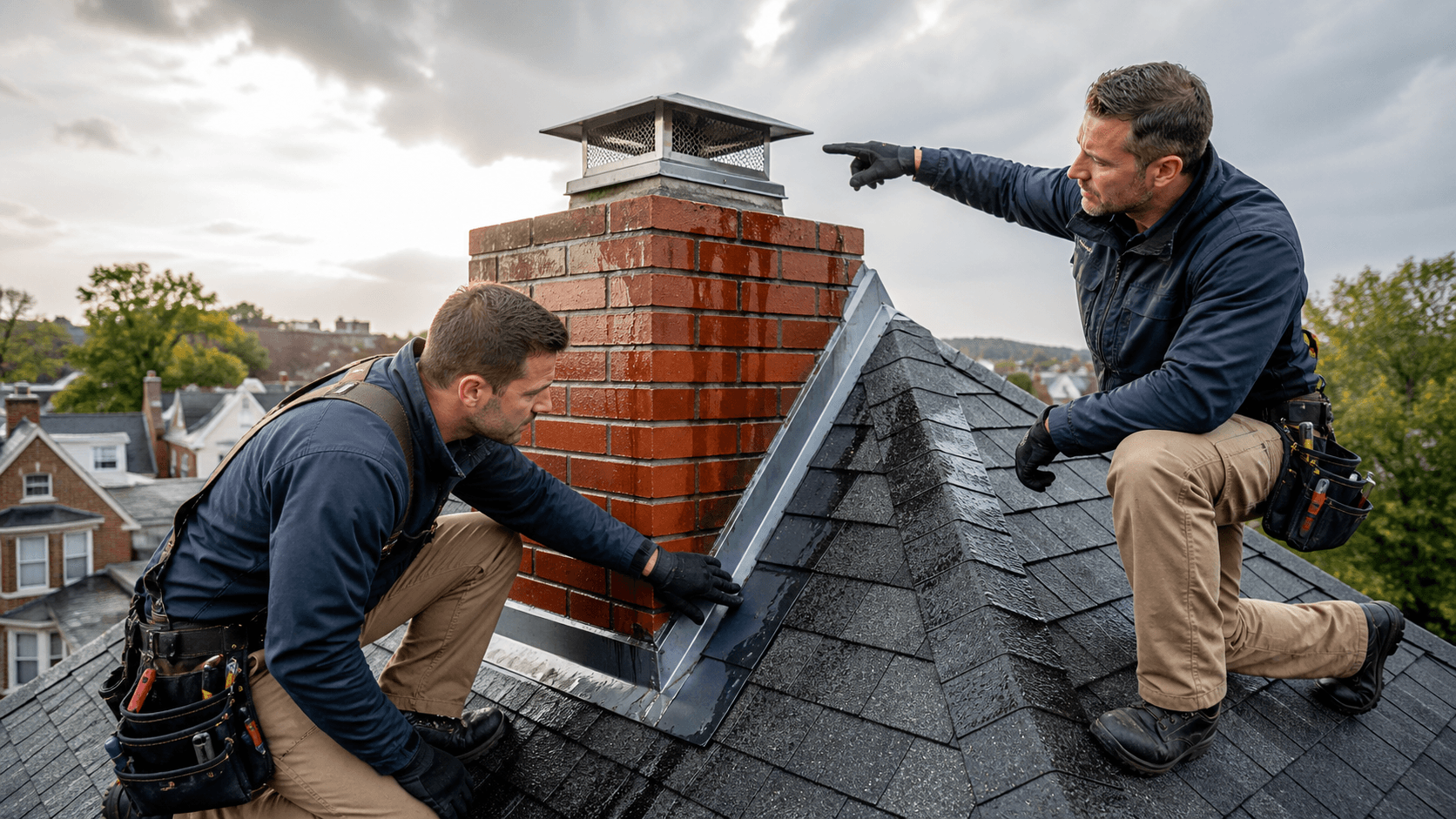
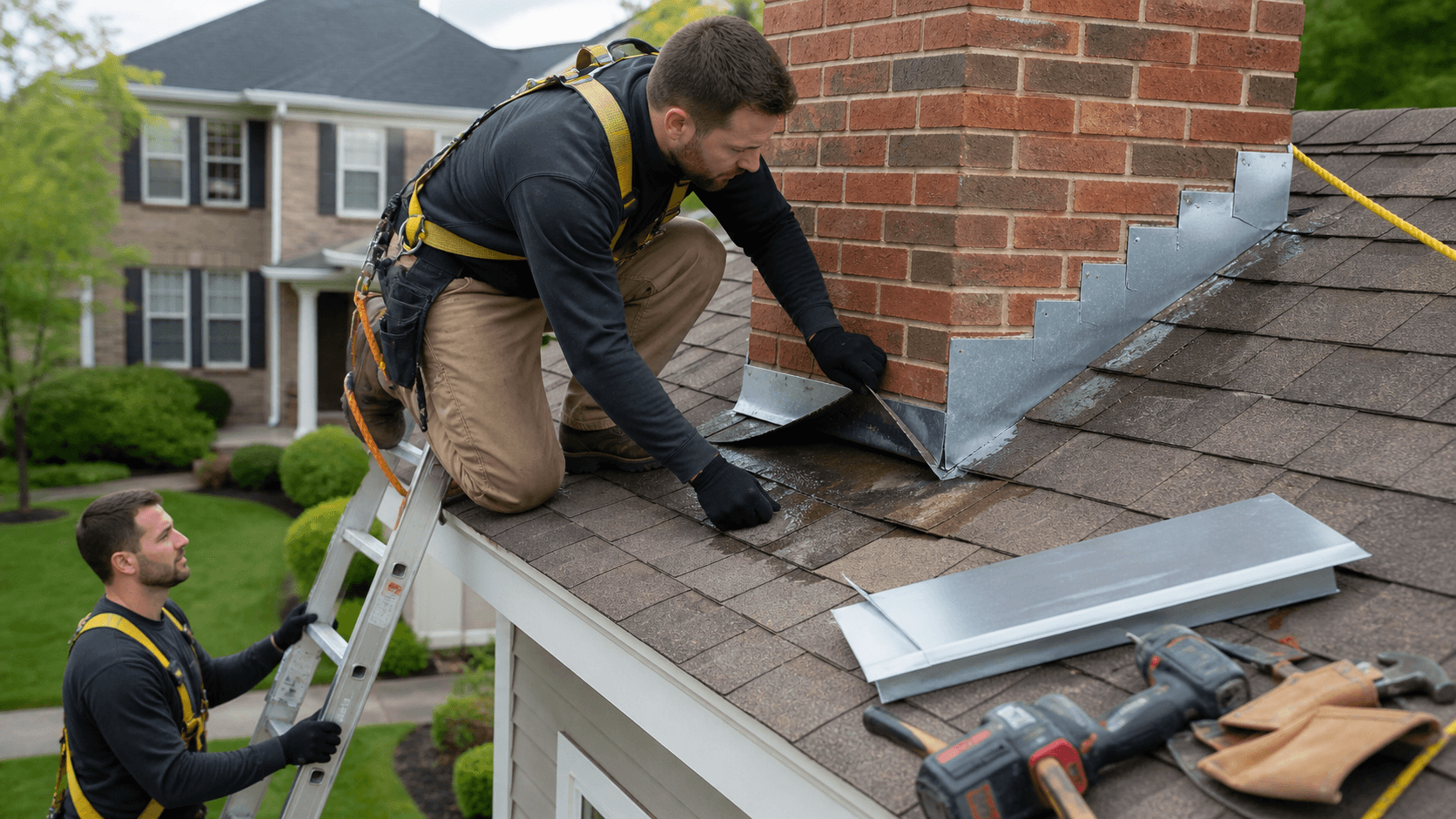
Flashing failures are one of the top culprits. Step flashing and counter-flashing should overlap correctly and fit snugly to both the chimney and the shingles. When flashing is rusted, bent, poorly installed, or torn by storms, water can slip underneath and travel along the roof deck into the house.
Masonry and crown issues are another big source of trouble. A chimney crown is the concrete or mortar cap at the very top. When it cracks, flakes, or pulls away from the brick, water can run straight down inside the structure. Spalled bricks, missing mortar joints, and porous masonry can soak up rain and slowly release it into the roof system or interior walls.
Roof and design vulnerabilities also play a part. Areas to watch include:
- Aging or curled shingles around the chimney
- Low-slope roof sections right behind the chimney
- Roof valleys that clog with leaves and debris
- Missing, undersized, or poorly built chimney crickets
A cricket, sometimes called a saddle, is a small, peaked structure behind the chimney that splits water and pushes it around the sides. Without a proper cricket, water ponds behind the chimney and finds every tiny opening.
Red Flags That Mean Your Chimney Leak Cannot Wait
Some warning signs around your chimney mean it is time to act fast, not wait until next season. A leak that is active or getting worse rarely fixes itself and often causes damage in hidden spots.
Inside your home, watch for:
- Brown or yellow ceiling spots near the fireplace or chimney
- Peeling paint or bubbling drywall above mantels
- Musty or damp smells around the chimney breast
- Dark streaks or water marks on attic rafters next to the chimney
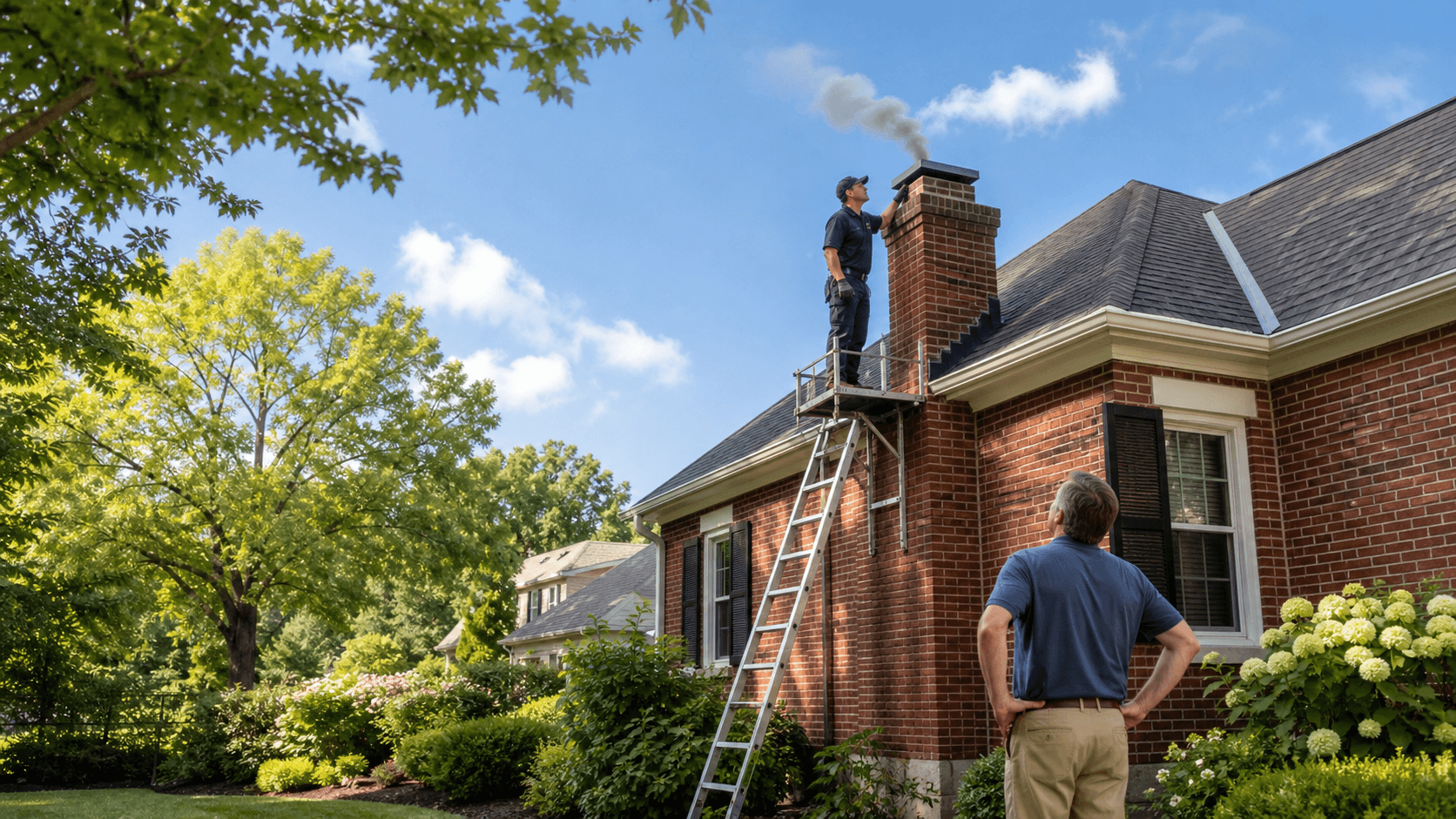
On the outside, take a slow walk around your home and look for:
- Rust stains running down the chimney face
- Flashing that is lifted, cracked, or pulling away
- Visible gaps where the roof meets the chimney
- Missing mortar or crumbling brick joints
- Moss, algae, or heavy staining only around the chimney area
Certain signs mean the problem has moved from "keep an eye on it" to "needs urgent attention." These include:
- Active dripping during or right after rainstorms
- Sagging or bowing ceilings near the chimney
- Soft, warped, or cracked interior trim or mantel surrounds
- Visible daylight in the attic around the chimney where there should be solid roofing
Homeowners around Cincinnati, Northern Kentucky, Southeast Indiana, and Dayton who see any of these should not wait. The water you see is usually just a small part of what is happening out of sight.
How Chimney Pros Diagnose and Fix Roof Leaks for Good
Finding the true source of a roof leak around the chimney takes time and a methodical approach. Throwing more caulk at the problem is not a real fix and often traps water where you cannot see it.
A professional chimney team will usually:
- Inspect the roof surface, shingles, and flashing in detail
- Examine the chimney crown, bricks, mortar joints, and chimney cap
- Check the attic around the chimney for staining, mold, and wood damage
- Look at interior walls and ceilings for water paths and patterns
Sometimes, controlled water testing is used. That means carefully spraying different areas in a set order to see exactly when and where water shows up inside. In some cases, cameras or moisture meters also help trace the leak path.
Once the source is clear, repairs can be targeted instead of guesswork. Common solutions include:
- Removing and replacing damaged or poorly installed flashing
- Re-stepping flashing layers so they shed water correctly
- Rebuilding or sealing a cracked chimney crown
- Tuckpointing, which means grinding out bad mortar and packing in new
- Repairing or replacing nearby shingles and underlayment
- Installing or improving a chimney cricket behind the chimney
To keep leaks from coming back, a good chimney pro will also talk about long-term protection. That might include:
- Applying professional-grade waterproofing products to masonry
- Making sure you have a properly fitted chimney cap
- Addressing ventilation issues that keep roof areas damp
- Setting up regular chimney sweeping and safety inspections so small problems are caught early
Taking this bigger view helps protect not only the chimney, but also your roof, attic, and living spaces.
Protect Your Home Before Fall Rains Hit
As summer shifts toward fall in our area, storms often bring harder, longer rains. That can quickly expose any weak spots around your chimney. Having a late-summer chimney and roof evaluation gives you time to fix issues before cold rain, snow, and ice start working on those same trouble spots.
Homeowners can help by keeping a simple eye out between visits from a pro. After strong storms, it is smart to:
- Check the attic near the chimney for new stains or damp insulation
- Look at ceilings and walls around the fireplace for fresh marks
- Step back in the yard and scan the chimney from the ground
- Make a note of any musty smells that seem stronger after rain
If something does not look or feel right, do not ignore it. A roof leak around the chimney is one of those problems that costs far less to fix when it is found early. With the right inspection, repairs, and ongoing care, your chimney can do its job safely while your roof, attic, and living spaces stay dry and protected as the seasons change.
Get Started With Your Project Today
If you are seeing stains on the ceiling or damp walls near your chimney, now is the time to address a roof leak around the chimney before it causes more costly damage. At Chimney Works SEO, we carefully inspect your chimney and roof interface, explain what we find, and recommend only the repairs you truly need. Our team can schedule service at a time that works for you and provide clear pricing upfront. To request an appointment or ask a question, simply contact us today.