Stop Chimney Leaks Before They Ruin Summer Plans
Chimney leaks have a way of showing up at the worst times. Summer storms roll through Middletown and the Miami Valley, and suddenly there is a brown stain on the ceiling, a musty smell in the family room, or water dripping into the firebox. While you are trying to relax, travel, or host cookouts, your chimney is quietly soaking up water.
Many homeowners grab a quick waterproofing spray or masonry sealant from the hardware store and hope it will solve everything. The problem is that the wrong product, or the right product used at the wrong time, can trap water inside the brick and actually make leaks worse. Some issues need to be repaired first, or no sealant in the world will help.
In this article, we break down common myths about chimney waterproofing in Middletown, OH, and walk through what really needs to be checked before anything is sprayed on your masonry. The goal is simple: keep water out, protect your home, and get your chimney ready long before fall fires return.
Why Summer Is Prime Time for Chimney Water Damage
Late spring and summer storms in our area can dump a lot of rain in a short time. Strong winds push water sideways, driving it into tiny cracks in your chimney crown, mortar joints, or flashing. What stayed dry in winter can start leaking once those heavy storms hit.
Warm days and cooler nights are tough on masonry too. Brick and mortar expand as the temperature rises, then contract when it cools down. If your chimney already has hairline cracks or weak mortar, this daily movement can cause:
- Wider gaps along mortar joints
- New cracks in the crown on top of the chimney
- Loose or flaking brick faces
All of this makes it easier for water to get in. The good news is that summer is usually the best time for inspections and exterior work. Mortar and crown materials set better in warmer, drier weather. It is easier to spot problems when there is no snow or ice in the way, and there is time to fix things before you start using the fireplace again.
Popular Chimney Waterproofing Myths in Middletown
There are a few chimney waterproofing myths we hear again and again. Believing these can lead to wasted money and bigger repairs later.
Myth 1: "Any masonry sealer from the hardware store will work"
Not all sealers are the same. Some products are film-forming, which means they create a hard, plastic-like layer on the surface of the brick. That layer can block the chimney's ability to breathe. When moisture inside the masonry cannot escape, it stays trapped. Once colder weather returns and that trapped water freezes, you can get:
- Spalling brick faces that pop or flake off
- Cracked mortar joints
- Faster breakdown of the chimney structure
Myth 2: "Waterproofing spray will fix my leak"
Most chimney leaks do not start on the brick itself. They often come from:
- A cracked or crumbling crown on top of the chimney
- Loose, rusted, or poorly installed flashing where the chimney meets the roof
- A damaged or missing chimney cap or chase cover on prefab chimneys
If you only coat the outside brick, you are treating the symptom, not the cause. Water will usually find another way in until the real entry point is repaired.
Myth 3: "My chimney looks fine, so I do not need waterproofing"
Early water damage is often hidden inside the chimney or behind walls. You might not see anything odd on the outside, but you could notice:
- Musty or "wet" odors from the fireplace after a storm
- Rust on damper parts, fireplace doors, or gas components
- Stains on ceilings or walls near the chimney
These are warning signs that water is already at work, even if the brick still looks okay from the yard.
What to Inspect Before Any Chimney Waterproofing
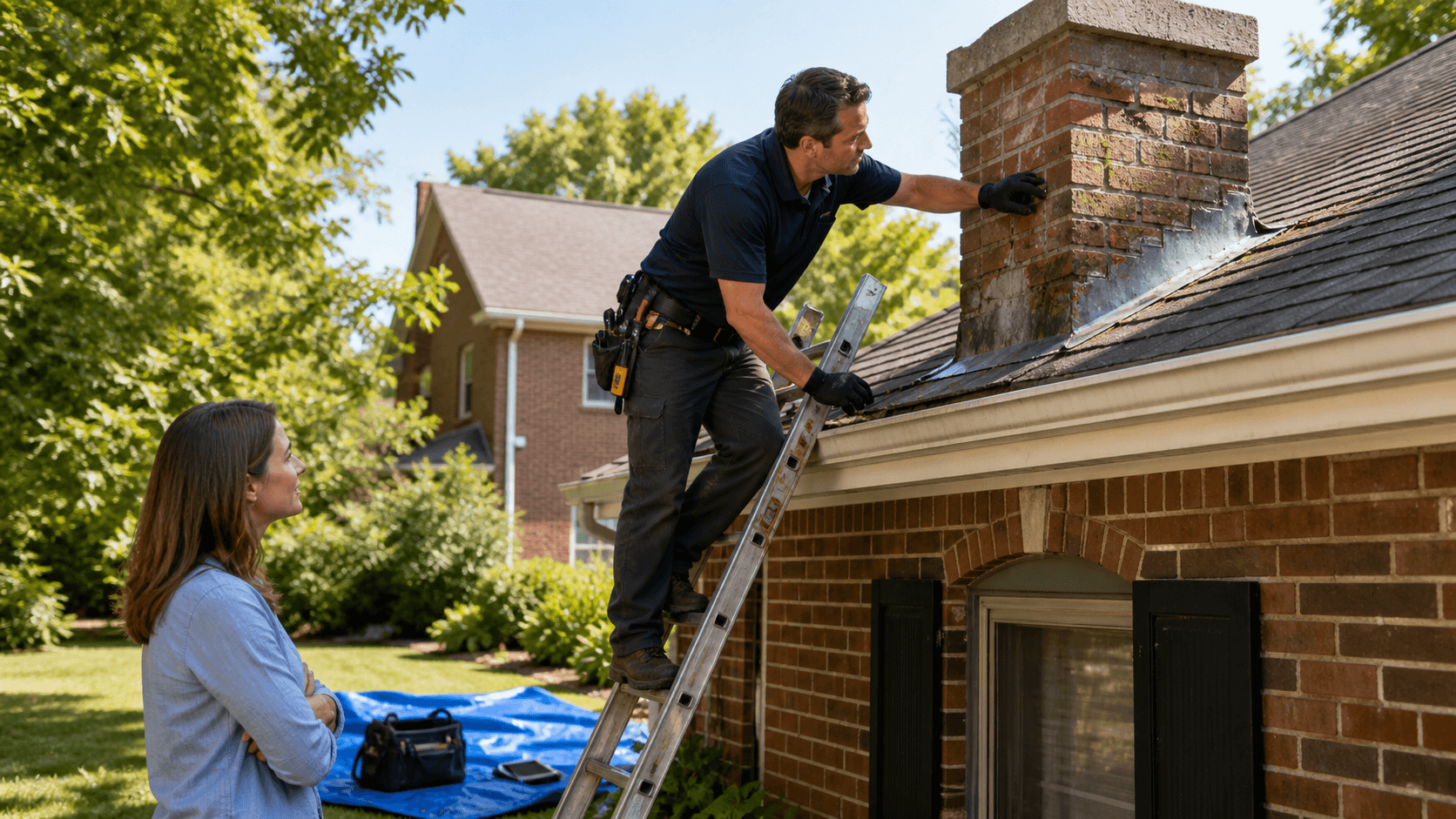
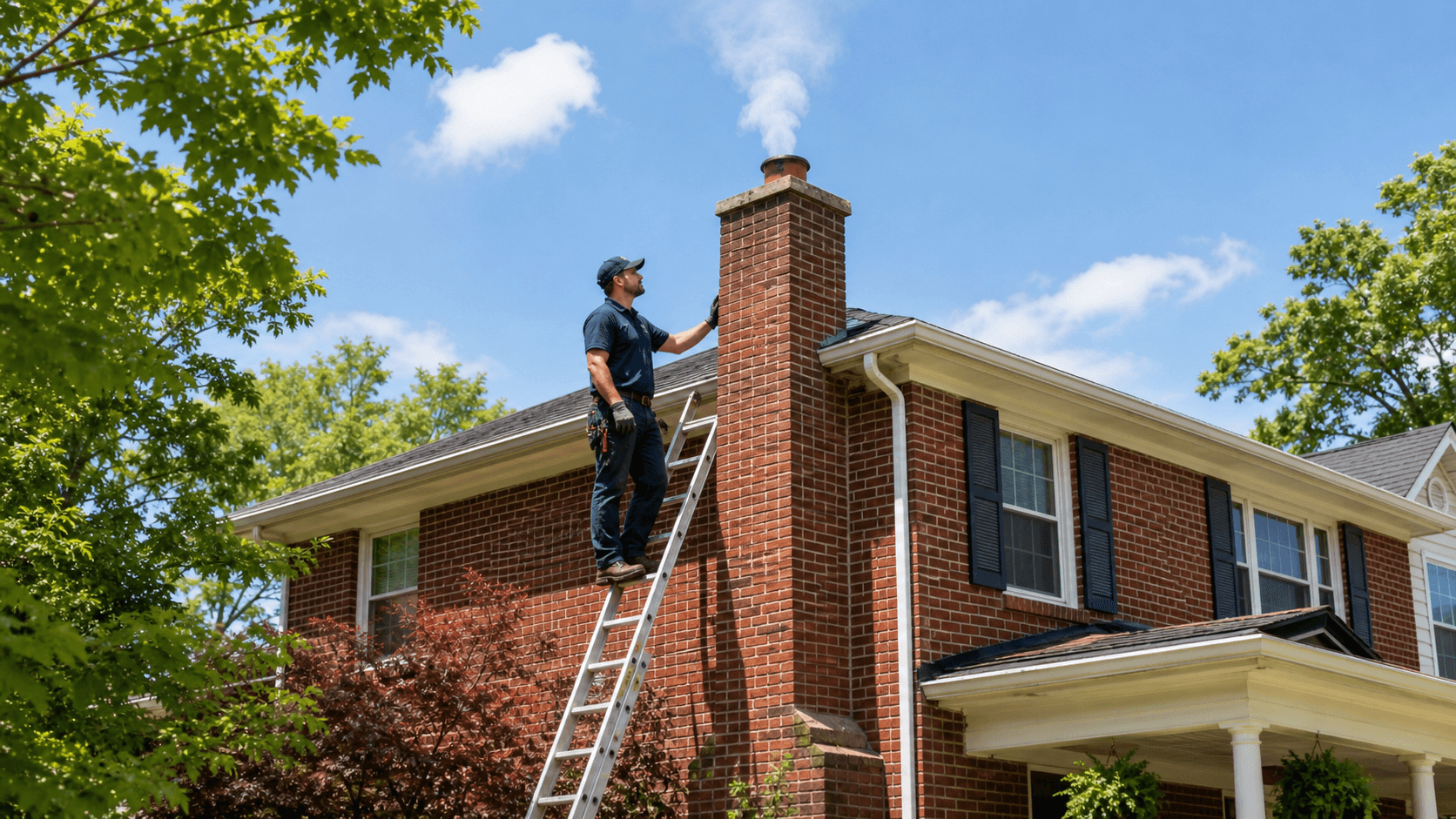
Before anyone sprays a product on your chimney, a trained chimney professional should inspect the entire system, top to bottom. Waterproofing should never be the first step. It should be the finishing touch after repairs are done.
Key areas that need to be checked include:
- Chimney crown for cracks, gaps, low spots, or crumbling concrete
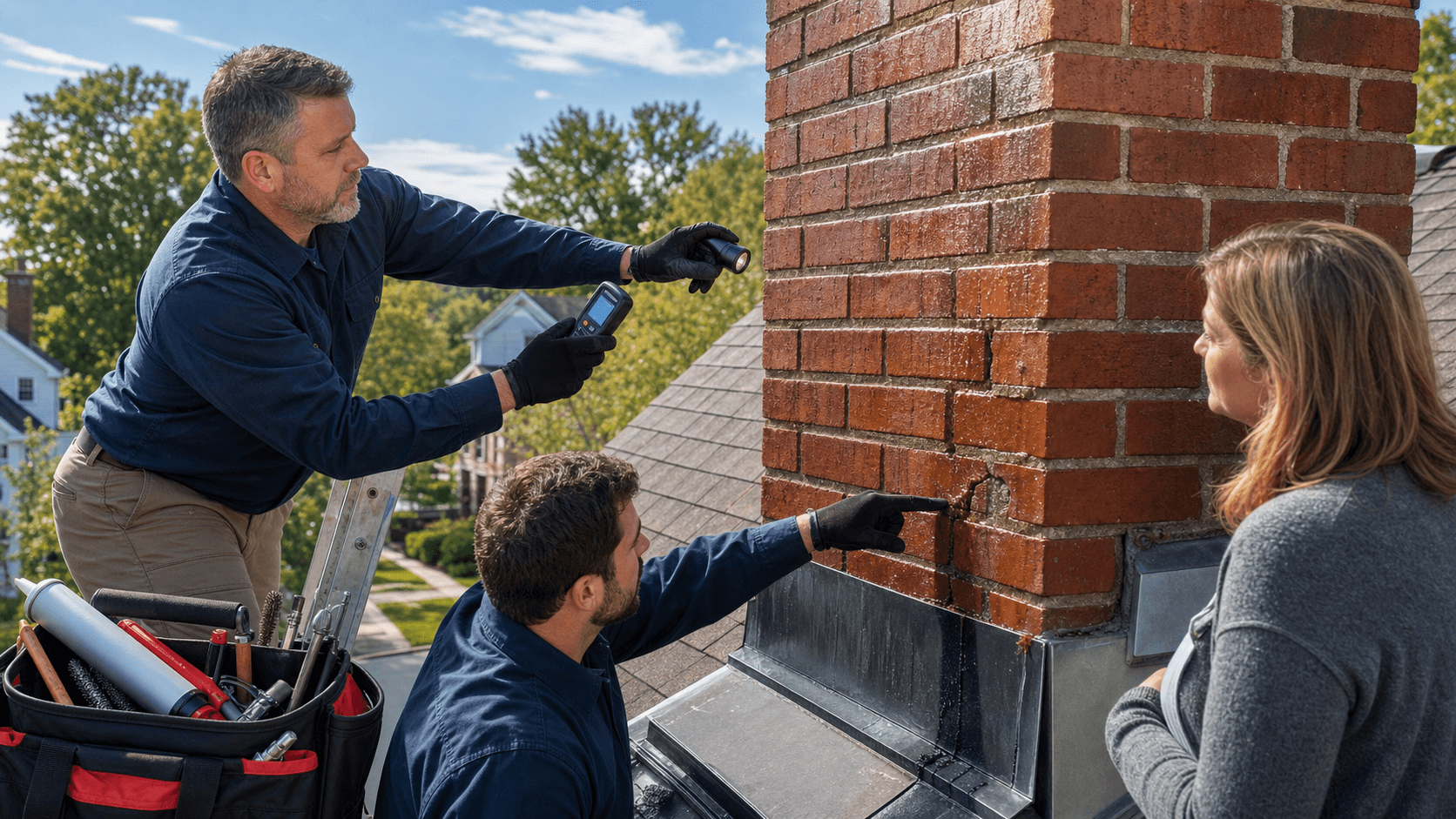
- Mortar joints for missing, powdery, or recessed mortar
- Chimney cap for damage, poor fit, or missing screen
- Flashing for rust, loose sections, gaps, or dried-out sealant
- Bricks for signs of spalling, soft spots, or heavy staining
- Chase covers on factory-built units for rust, holes, or poor slope
If there are structural or safety issues, such as loose bricks, missing mortar, or concerns with the liner, those must be corrected first. Waterproofing cannot fix weak masonry. It should protect sound materials, not hide problems that will keep getting worse.
When Sealant Helps vs. When It Hurts
The type of product used on your chimney matters a lot. In general, there are two broad categories.
Breathable, vapor-permeable water repellents:
These are designed for masonry. They soak into the brick and mortar and help repel water from getting in, but they still allow trapped moisture vapor to escape. When used properly on a sound chimney, they help slow down water absorption and extend the life of the brickwork.
Non-breathable coatings:
These sit on top of the surface and form a skin. They may look good at first because water beads on the outside, but moisture inside the wall cannot get out. This is where you see peeling, spalling, and new cracks as water pushes against that hard shell.
Professional chimney waterproofing in Middletown, OH, makes sense when:
- The crown is repaired or rebuilt and shaped to shed water
- Mortar joints are solid and have been tuckpointed where needed
- The chimney cap or chase cover is in good condition and properly sized
- Flashing is tight and sealed
On the other hand, waterproofing should be delayed or avoided when:
- The chimney is heavily damaged and really needs partial or full rebuilding
- The chimney has already been painted or coated with non-breathable products
- There is an active leak and the source has not been clearly found and fixed
In these cases, adding more product can trap water or hide the true condition of the chimney.
Fix These Leak Sources Before You Waterproof
Think of waterproofing as a raincoat for your chimney. It only works if the chimney underneath is sound and put together correctly. Before any spray is applied, the focus should be on repair work that actually blocks water paths.
A solid priority list looks like this:
- Chimney crown repair or replacement
Fix cracks, fill gaps, and reshape the crown so water runs off instead of pooling.
- Tuckpointing and brick repair
Remove loose or failed mortar, pack in fresh mortar, and replace loose or badly spalled bricks.
- Chimney cap or chase cover
Install or repair a properly sized cap that keeps out rain, animals, and debris. For factory-built fireplaces, make sure the metal chase cover is rust-free and sloped.
- Flashing and roof connection
Re-seal or re-flash where the chimney meets the roof so wind-driven rain cannot work underneath.
These pieces work together as a system to keep water out. Skipping straight to waterproofing spray can create a false sense of security. The chimney might shed some surface water, but hidden leaks will keep going.
Photo documentation from a professional sweep is very helpful here. Clear pictures from the roof and interior can show exactly where water is getting in and what needs to be repaired before any waterproofing is added.
Secure Your Chimney Before Fall Fires Return
Summer is the perfect window to get ahead of chimney problems. When storms roll through Middletown and nearby communities, they can reveal weak spots. Catching those issues now means less stress when it is time to light the first fire later in the year.
A simple plan is to start with a proper inspection, then review written findings and photos so you understand the leak sources. From there, complete the key repairs to the crown, mortar, cap, chase cover, and flashing. Once the chimney structure is in good shape, a professional-grade, breathable waterproofing treatment can add long-term protection and help keep your home drier and safer for seasons to come.
Protect Your Chimney And Home From Water Damage Today
If you are noticing leaks, staining, or crumbling masonry, now is the time to schedule professional chimney waterproofing in Middletown, OH. At Chimney Works, we carefully inspect your system, explain what we find, and recommend only the solutions you truly need. Reach out to our team with any questions or to set up an appointment through our contact page.