Protect Your Middletown Chimney Before Summer Storms
Water is one of the biggest enemies of a chimney. When it gets into small cracks and gaps, it can break down brick, rust metal parts, and let leaks spread into ceilings and walls. In a place like Middletown, where we see plenty of rain and strong summer storms, that can turn a small problem into a big headache.
Late spring and early summer are great times to look over your chimney. The weather is usually mild, the roof is easier to access, and you have time to fix issues before heavy rain hits. A simple visual check can help you spot warning signs and decide when it is time to call in a chimney professional.
In this article, we will walk through an early summer waterproofing checklist focused on four key areas: the chimney crown, mortar joints, flashing, and chimney cap. When you know what to look for, you can help protect your Middletown home and get ahead of damage before it spreads.
Start at the Top with a Careful Crown Inspection
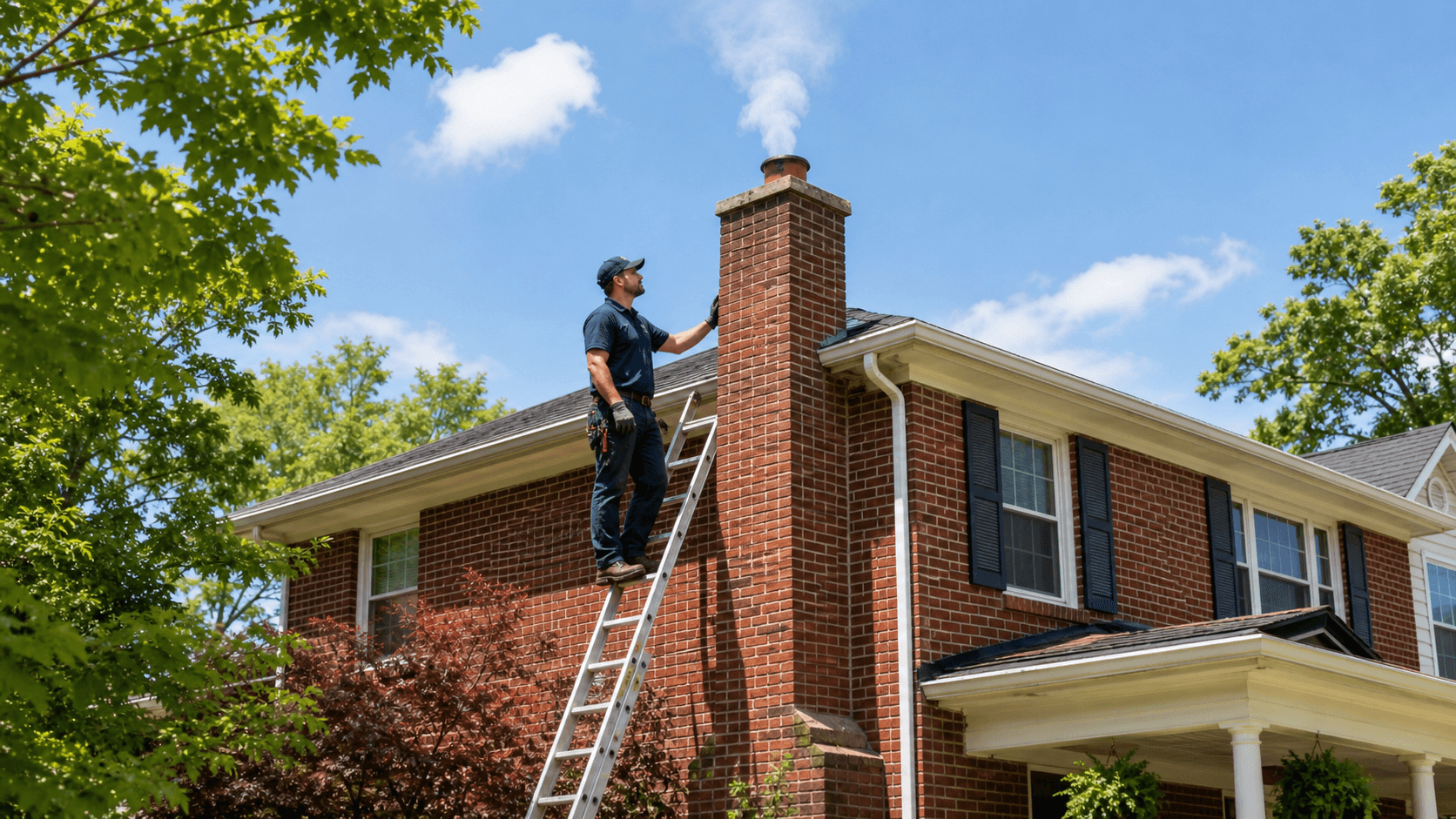
The chimney crown is the concrete or mortar slab that sits on top of your masonry chimney, around the flue tiles. Its job is to shed water away from the bricks below. During quick summer downpours, the crown is the first surface that takes the hit.
Common problems that show up on crowns include:
- Hairline cracks across the surface
- Crumbling or broken edges
- Low spots where water can pool
- Crowns that are flat or sloped inward instead of away from the flue
From the ground, you may be able to see the crown using binoculars. Look for dark lines, broken corners, or places where the crown looks rough and uneven. If you see:
- Visible gaps or wide cracks
- Exposed brick edges where the crown has broken off
- Pieces of concrete on the roof below the chimney
that is a sign to bring in a chimney professional. Any major damage should be repaired before waterproofing products are applied. Putting sealer over a badly cracked crown can trap water inside those cracks and make the damage worse over time.
Check Mortar Joints for Gaps and Crumbling
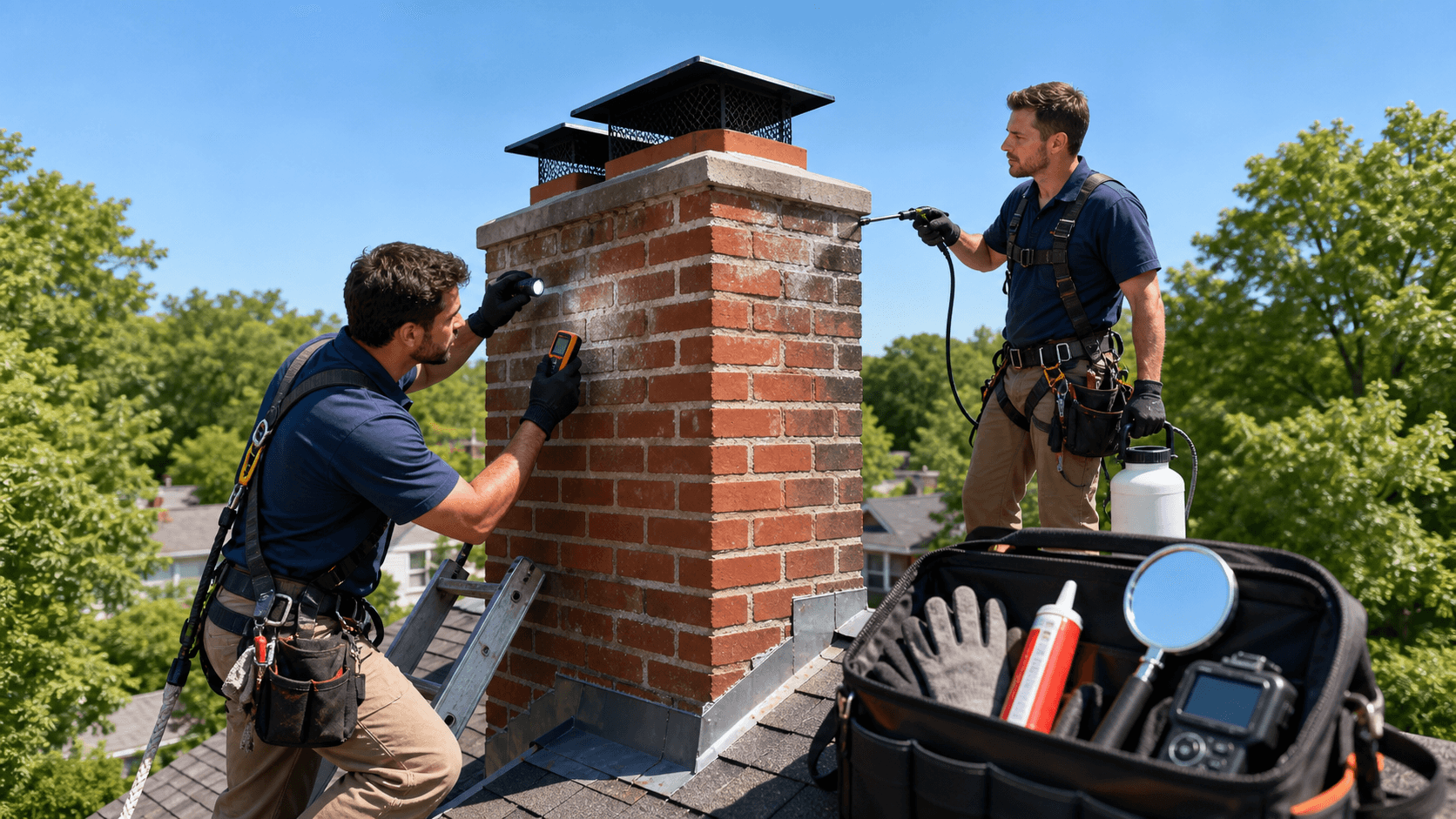
Mortar joints are the lines of mortar between each brick. They hold the chimney together and keep water from slipping into the structure. In the Middletown area, we deal with freeze-thaw cycles in colder months and heavy spring rains, both of which are tough on mortar.
Here are warning signs to look for along the chimney stack:
- Missing or recessed mortar lines that sit deeper than the surface of the brick
- Mortar that looks sandy, chalky, or easily brushed away
- Loose or wiggling bricks when touched
- White, chalky streaks on the brick (efflorescence)
Efflorescence shows that water has been moving through the masonry and bringing salts to the surface. That means moisture is already getting into the brick and mortar.
Deteriorated mortar joints need to be repaired, often through a process called tuckpointing or repointing. This involves removing the weak mortar and packing in new, properly mixed mortar. If this step is skipped and a waterproofing sealer is applied to failing joints, that sealer can simply hold water inside the chimney structure instead of keeping it out. That is why mortar repair usually comes before any chimney waterproofing in Middletown, OH.
Inspect Flashing Where Roof and Chimney Meet
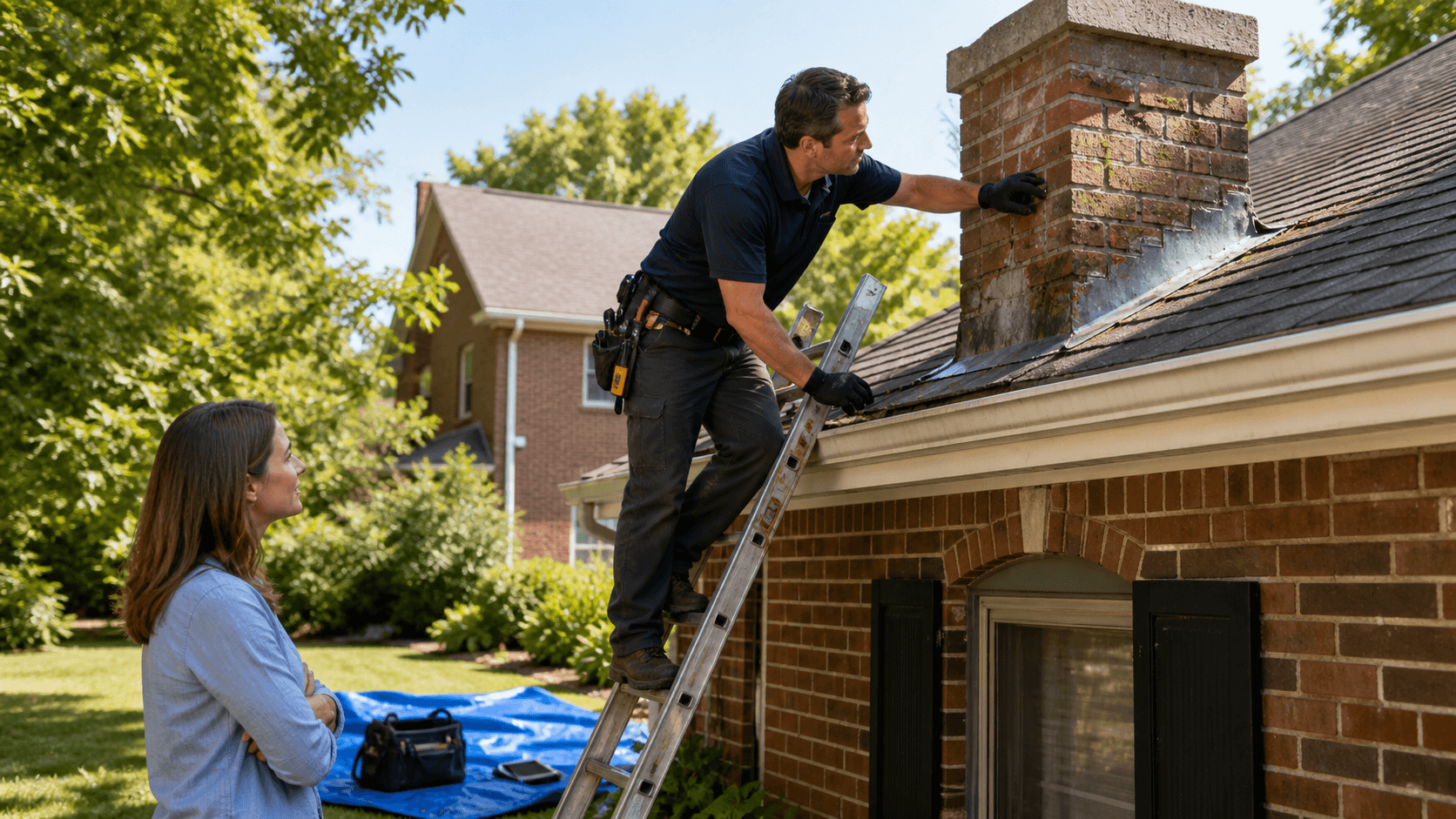
Flashing is the thin metal installed where the chimney meets the roof. Its job is to form a watertight bridge between two very different surfaces: brick and roofing material. Because water naturally runs toward this joint, it is a common source of leaks, especially during strong summer storms.
From the ground or roof edge, some homeowners can safely look for signs of flashing problems, including:
- Metal flashing that is rusted, bent, or pulled away from the brick
- Old caulk or sealant that is cracked or missing
- Shingles near the chimney that look cupped, worn, or stained
Inside the home, it also helps to peek in the attic on a rainy day and check the area around the chimney for:
- Dark spots or stains on rafters
- Damp insulation near the chimney side
- Brown rings or soft areas on ceilings close to the chimney
Proper chimney flashing is usually made up of two parts: step flashing, which tucks under each shingle course, and counterflashing, which is built into the chimney mortar joints. If either of these is missing, damaged, or installed wrong, water can sneak in even if the rest of the chimney looks fine. Flashing repairs should be handled by a professional before you consider any chimney waterproofing work complete.
Evaluate Your Chimney Cap and Rain Protection
People often mix up the crown and the cap, but they are different pieces. The masonry crown is the solid top surface of the chimney. A chimney cap is usually a metal cover that sits over the top of the flue opening. Both help keep water out, but the cap also helps block animals, leaves, and other debris.
When you look up at your chimney, check for:
- A missing cap or open flue tile at the top
- A cap that looks crooked or loose
- Bent or rusted mesh on the sides of the cap
- Heavy soot, bird nests, or other blockages in the mesh
- Visible gaps where the cap meets the flue tile
If the cap is the wrong size, badly rusted, or missing, rain can fall straight down the flue and into the fireplace or smoke chamber. Wind-driven rain can travel even farther and show up as leaks around walls or ceilings near the chimney. A properly sized, professionally installed cap is an important part of long-term chimney waterproofing in Middletown, OH, especially before the stormy season picks up.
Seal the Deal with a Professional Chimney Checkup
To sum up your early summer checklist, you want to pay attention to:
- Chimney crown condition: no major cracks, gaps, or crumbling
- Mortar joints: no missing mortar, soft joints, or heavy efflorescence
- Flashing: no rust, lifted edges, or stains inside the attic or ceilings
- Chimney cap: present, solid, and well-fitted with clean mesh
All repairs to crowns, mortar, flashing, and caps should come before any waterproofing product is applied. Chimney waterproofing is not just about spraying something on the outside. Professional-grade masonry sealers are designed to be breathable, so they let moisture inside the brick escape while still blocking most water from getting in. Many common DIY products do not breathe well and can seal moisture inside the masonry, which can speed up damage instead of stopping it.
For homeowners in Middletown, Cincinnati, NKY, SE Indiana, and the Dayton metro area, working with a chimney professional helps make sure inspections are safe, repairs are done correctly, and the right type of waterproofing is used. At Chimney Works, we focus on protecting your chimney from water so it can serve your home for many years with fewer leaks, less brick damage, and more peace of mind when the summer storms roll through.
Protect Your Chimney From Costly Water Damage Today
If you are starting to notice leaks, staining, or crumbling masonry, now is the time to schedule professional chimney waterproofing in Middletown, OH. At Chimney Works, we carefully inspect your system, address existing issues, and apply proven waterproofing solutions to help extend the life of your chimney. Our team will walk you through your options so you know exactly what to expect before any work begins. To request an appointment or ask questions, simply contact us and we will follow up promptly.