Protect Your Home Fast After a Summer Storm
A strong summer storm blows through. The rain pounds, and later that night you notice a new water spot on the ceiling near your chimney. Maybe there is a slow drip by the fireplace or a damp, musty smell that was not there before. That is often the first hint that you may have a roof leak around the chimney.
Leaks in this area are very common after heavy rain, high winds, or hail. The chimney sticks up through your roof, so wind-driven water, loose shingles, and stressed flashing all meet there. When storms roll through Ohio, Northern Kentucky, and southeastern Indiana, this is one of the first places many roofs show trouble.
Our goal here is to walk through safe, short-term things you can do to protect your home until a professional can inspect and repair the problem. We will focus on basic emergency tarping, simple temporary patches, and indoor protection, all with safety at the top of the list. Quick action can limit damage, but lasting repairs and real leak tracking should always be done by trained chimney and roofing pros.
How to Spot a Roof Leak Around the Chimney Safely
A lot of chimney-area leaks first show up inside the house. After a storm, take a slow walk through the rooms near your chimney and look and smell for changes.
Common indoor warning signs include:
- New yellow or brown stains on ceilings or walls close to the chimney
- Damp spots or streaks on the fireplace face or mantel
- Bubbling or peeling paint, soft drywall, or swollen trim
- A musty or earthy smell, especially right after rain
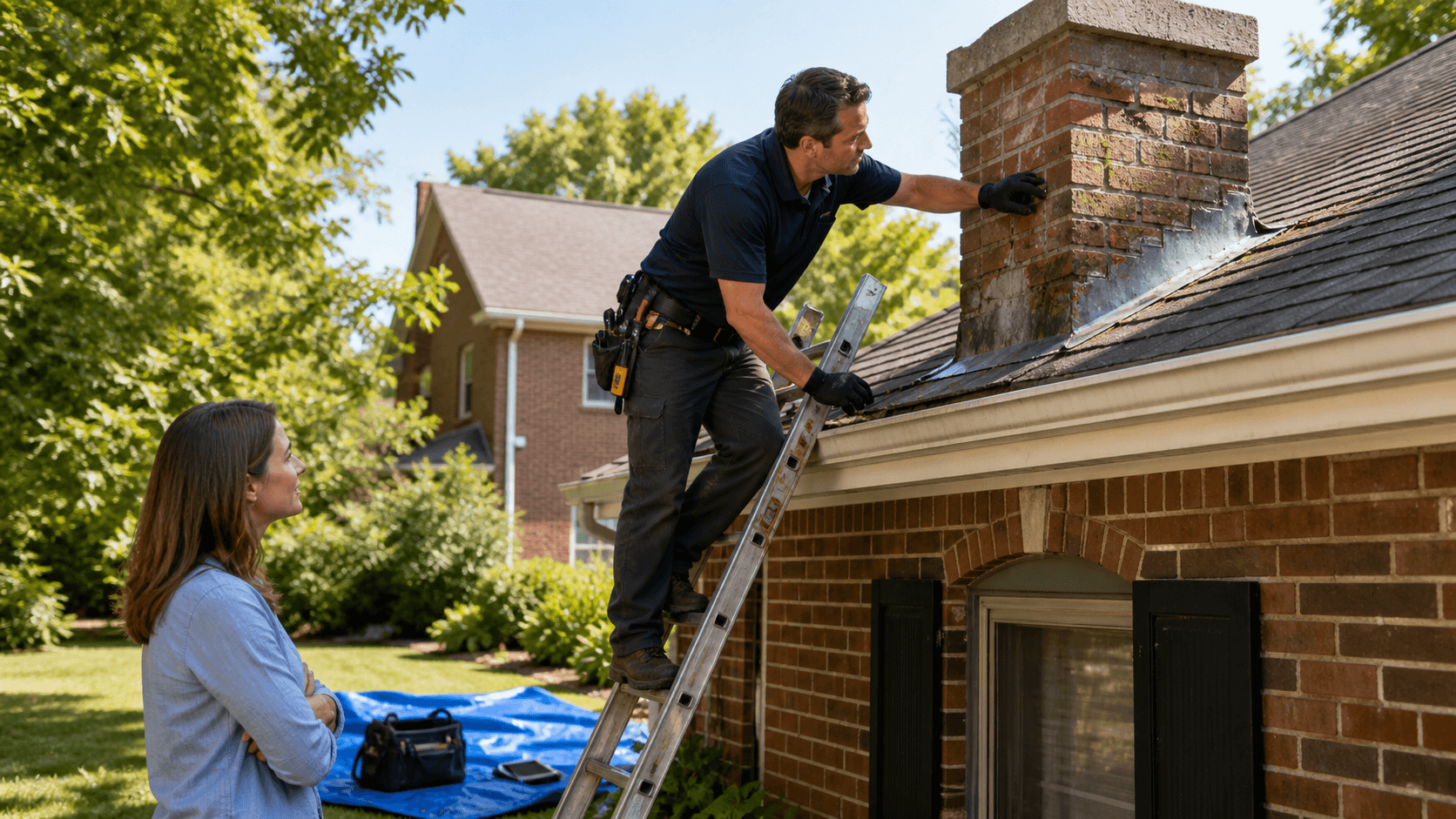
Then do a safe check outside, without climbing on the roof. From the ground or from an upstairs window, look closely around the chimney area.
Watch for:
- Missing, cracked, or curled shingles near the chimney
- Metal flashing that looks bent, lifted, rusted, or pulled away
- Gaps where the chimney meets the roof, or mortar joints that look cracked
- A damaged or broken chimney crown on top of the masonry
- Leaves or debris piled where water could back up instead of flowing away
If you see any of these signs, you may have a roof leak around the chimney. If it is dark, still raining, very windy, or your roof looks steep or damaged, stay off the roof. Use binoculars if you have them, walk the yard, and make notes or photos. In many cases, that is enough information until a professional can come out.
Safety Rules Before You Climb or Attempt Any Patch
If you feel you must do temporary work on the roof, stop and think about safety first. A leak is frustrating, but no quick fix is worth a fall.
Before you even set a ladder, make sure you have:
- Sturdy shoes with good grip, not sandals or bare feet
- Work gloves and eye protection
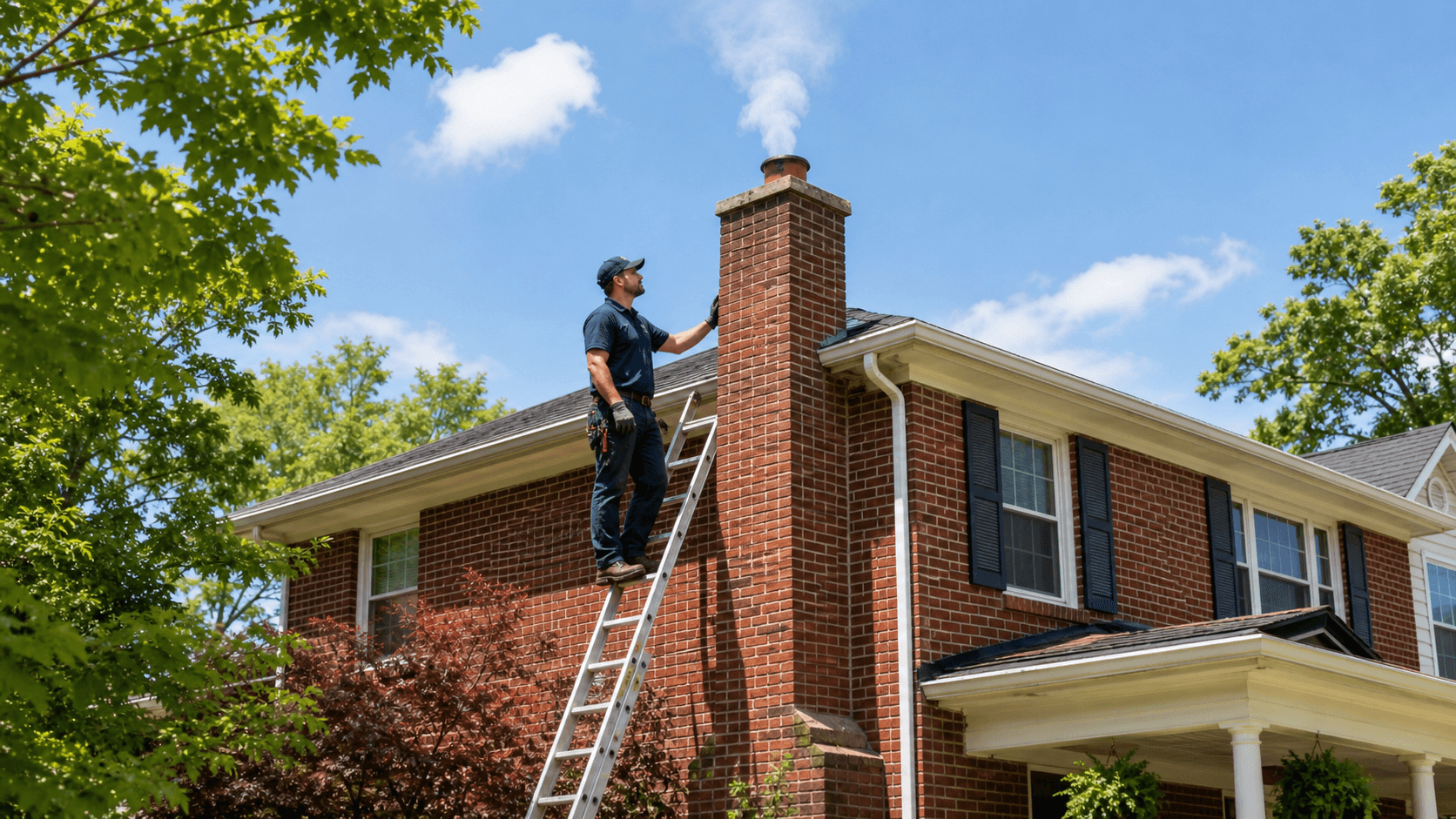
- A solid ladder on flat, firm ground, angled correctly and tied or braced
- Another adult at home to hold the ladder and check on you
- Dry conditions, no wet shingles, no active lightning, and no strong wind
Stay far away from power lines, damaged trees, or any part of the roof that looks saggy or broken. If the roof looks wavy, if sections have caved in, or if large limbs have hit near the chimney, that is a sign of possible structural damage that should only be checked by pros.
If you are not comfortable with heights or you have a very steep or tall roof, it is better to stay indoors. You can still take simple steps to protect your home:
- Place buckets or containers under drips
- Move furniture, rugs, and electronics out of the way
- Lay towels or plastic sheeting on the floor to catch splashes
- Turn off power to light fixtures that are actively dripping
These steps are much safer than climbing into a risky spot when you are unsure.
Emergency Tarping Options for Chimney Area Leaks
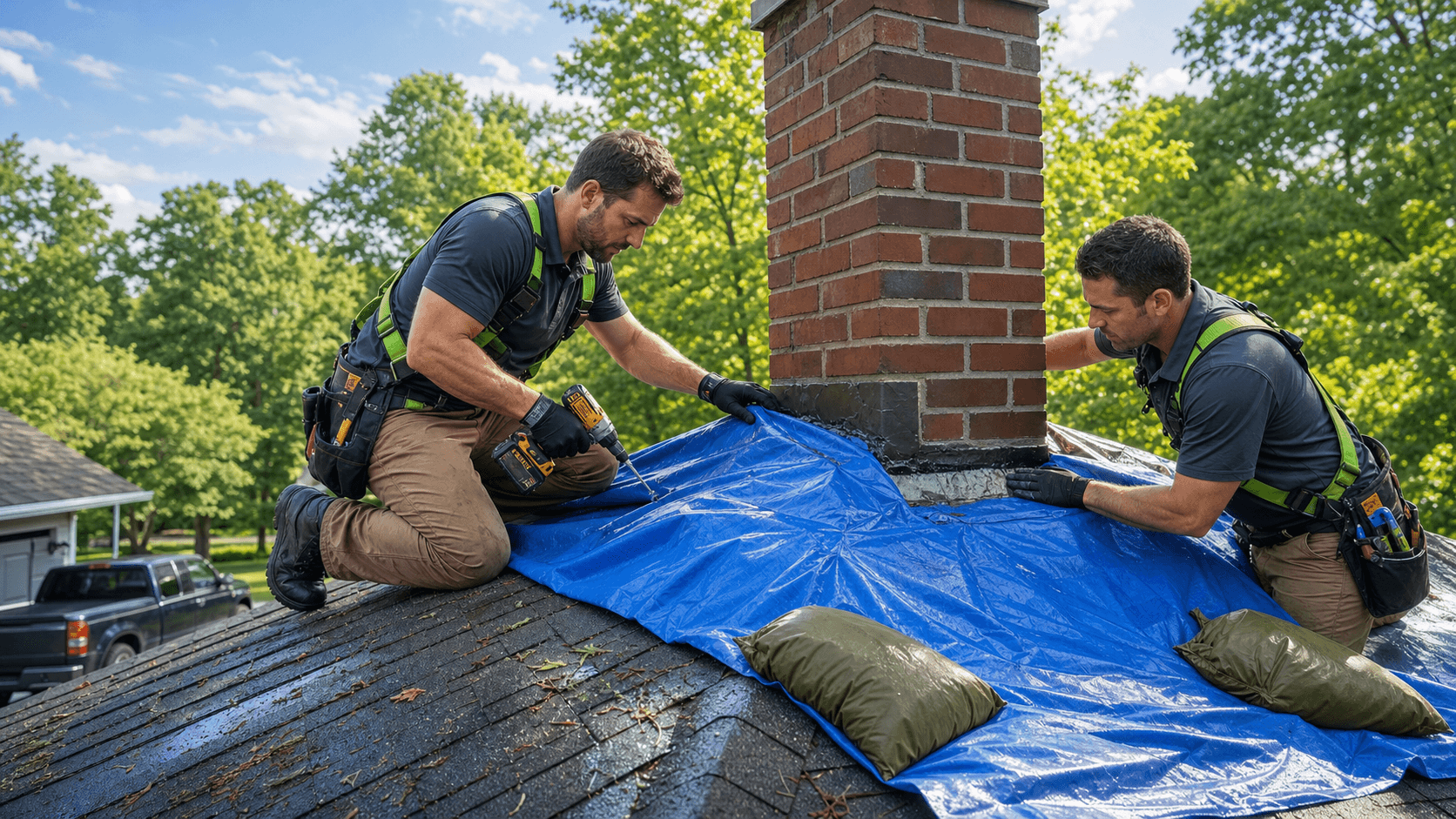
Tarping is one way to slow a leak for a short time if the damage is small and the roof is safe to walk. It can help when you have: missing shingles near the chimney, a small area of cracked shingles, or flashing that looks slightly lifted but not completely torn away.
Basic materials many homeowners use include:
- A thick plastic tarp or roofing tarp
- Several 2x4 boards or similar straight boards
- Roofing nails or exterior screws with washers
- A utility knife or scissors
- A hammer or drill
Choose a tarp big enough to extend several feet above, below, and to each side of the suspected leak area. Bigger is better, within reason, because water can travel before it shows up inside.
A simple, general tarping method looks like this:
- Start at the ridge line above the chimney area if you can reach it safely.
- Lay the tarp so it runs from high on the roof down over the problem section, keeping it smooth and tight.
- Place a 2x4 along the top edge of the tarp and roll the tarp around the board once, then secure that board into the roof above the leak.
- Pull the tarp tight down the roof and secure the sides in a similar way with boards, staying several inches away from the chimney itself.
- Check that water will shed off the tarp and flow down the roof, not toward the chimney or under the tarp.
Try not to drive fasteners right into the area that is already leaking. The goal is to cover and shed water, not create new holes where water can sneak in.
Temporary Patch Ideas for Flashing and Small Gaps
Sometimes the leak seems to come from a tiny gap near the chimney instead of a whole area of missing shingles. In those cases, a small, careful patch may help slow the water if done very gently.
For very short-term sealing, some homeowners use:
- Roofing cement for small pinholes or tight seams
- Exterior-grade urethane or silicone sealants
- Waterproof repair tape designed for outdoor use
These products can sometimes be applied along the edge of the metal flashing or into a hairline crack where the chimney meets the roof. Use a light hand, and only on areas you can clearly see. Avoid spreading sealant over large, unknown areas or blocking natural paths where water is meant to drain out, such as the lower edge of step flashing.
Inside your home, focus on containing water until help arrives:
- Tape plastic sheeting to the ceiling or wall to guide drips into a bucket
- Layer towels in leak-prone spots and change them often
- Cover furniture and flooring with plastic or old sheets
- Mark or photograph exactly where drips and stains show up
Those notes will help a professional track the true source of your roof leak around the chimney more quickly, since water often shows up far away from where it enters.
When to Call Chimney Works for Professional Repair
Temporary fixes are just that, temporary. If you see any of the following, it is a clear sign the problem needs professional attention:
- Dripping that continues or gets worse during storms, even after tarping
- Stains that spread across ceilings or down walls
- Visible cracks in chimney masonry or the concrete crown on top
- Flashing that is loose, missing, or fully separated from the chimney
- A leak that appears during more than one rainy day
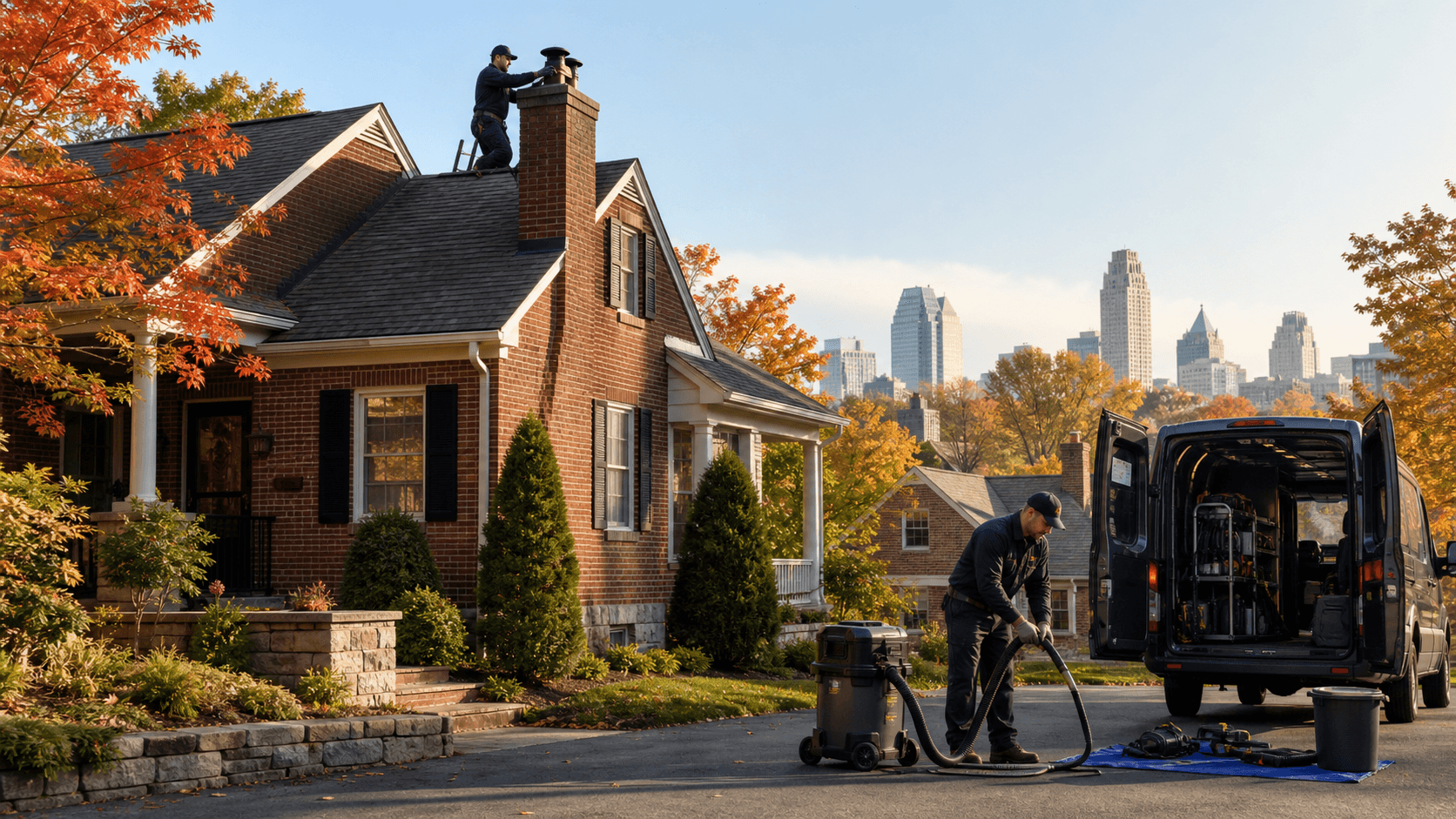
When our team at Chimney Works inspects a chimney-adjacent leak, we look at the full system, not just one spot. That can include checking the flashing, shingles, chimney cap, crown, and masonry, and making sure the fireplace and venting parts are working together the way they should. We work to find the actual entry point and recommend repairs that protect both the chimney and the roof around it.
While you wait for a visit, keep your tarp or patch in place, keep the area as dry as you can inside, and keep taking notes or photos after each storm. The more details you have, the easier it is to track patterns and get to the real cause of the leak. With safe temporary steps and a solid professional repair, you can get back to enjoying your fireplace without worrying every time the forecast calls for heavy rain.
Protect Your Home From Costly Water Damage Today
If you are noticing stains, damp walls, or a roof leak around the chimney, our team at Chimney Works can find the source and fix it before it spreads. We use proven repair methods and quality materials to restore your chimney and protect your roof structure. Reach out to us today to schedule an inspection or ask questions about your specific issue, or simply contact us to get started.