Get Cozy Again Fast When Your Gas Fireplace Will Not Start
When a chill hits the air in Cincinnati and you press that switch on your gas fireplace, you expect instant warmth. If nothing happens, it can be frustrating and a little worrying. A gas fireplace that will not start is common, especially when it has been sitting for a while between cold spells.
A lot of no-start issues turn out to be simple things you can see and check without tools. Some careful DIY checks can save time and help you understand what is going on. Safety still comes first, and there is a clear line between quick homeowner checks and work that should be handled by a trained fireplace professional. Our team works on gas fireplaces across Cincinnati, northern Kentucky, and southeast Indiana, so we see these issues every year and know where problems often start.
Safety First Before You Touch Your Gas Fireplace
Before trying to get your gas fireplace going again, it helps to think about safety above everything else. Gas appliances can be very safe when they are installed and serviced correctly, but gas leaks, carbon monoxide, and fire hazards can all become real risks if something is damaged or used the wrong way.
A few basic steps are worth doing right away:
- Make sure the room is well-ventilated and that nearby windows or doors can be opened if needed
- Check that your smoke and carbon monoxide detectors are present, powered, and not beeping due to low batteries
- If you ever smell gas, turn the fireplace control to Off and close the gas shutoff valve to the unit if you can reach it safely
If you smell gas strongly, or the smell does not fade quickly, leave the home and contact your gas company or emergency services from outside. Do not try to light the fireplace again until the source of the odor has been found and fixed.
There are also some things you should not do with any gas fireplace:
- Do not use matches, lighters, or candles to look for a gas leak
- Do not take apart gas lines, valves, or sealed components
- Do not bypass safety switches, covers, or glass fronts
- Do not keep hitting the ignition over and over if nothing happens
If anything feels off or confusing, it is usually safer and cheaper in the long run to have a professional check it instead of guessing.
Simple Checks When a Gas Fireplace Will Not Start in Cincinnati
Around Cincinnati, late spring and early fall can swing from warm to chilly overnight. Gas fireplaces may sit unused for weeks or months, and in that time dust, spider webs, or light corrosion can settle inside. Before worrying about deeper problems, it makes sense to check the basics.
Start with power and simple controls:
- Look at the wall switch and make sure it is firmly in the on position
- If you use a remote control, replace the batteries, then try again
- If you have a thermostat that controls the fireplace, make sure it is set to heat and above room temperature
- Check nearby outlets and any GFCI outlets to see if they are tripped
- Look at your electric panel and confirm the breaker for the fireplace circuit is on
Some remotes and controls have child lockouts, timers, or mode buttons that can keep the unit from lighting even if gas is available. It is worth flipping through the owner's manual to see if any lock icons or odd settings might be blocking ignition.
Next, make basic gas supply checks without tools:
- Verify other gas appliances, like the stove or furnace, are working normally
- Find the gas shutoff valve that serves the fireplace and make sure the handle is in line with the pipe, which usually means open
- If the valve feels stuck or stiff, do not force it, just stop and plan for professional service
A quick surface look at the unit can also tell you a lot. Look through the glass at the logs and metal parts:
- If you see cracked, loose, or missing glass, do not try to run the fireplace
- Make sure decorative fronts, screens, and trim pieces are attached the way the manufacturer shows
- Confirm lower access panels are closed all the way, since some models have safety switches that will not let the unit fire if panels are open
Pilot Light, Igniter, and Log Issues You Can Spot
Many gas fireplace no-start calls come from problems in the ignition area. If you have a standing pilot model, that small blue flame is supposed to stay on all the time. Long gaps between uses, drafts, or a dusty pilot tip can cause it to go out. On electronic ignition models, the system may click and spark each time you call for heat, and small parts can get dirty or weak.
There are a few safe things you can look at:
- On a standing pilot unit, look through the glass or an access opening to see if a tiny, steady blue flame is burning near the burner
- If there is no flame, use only the pilot-lighting steps in your owner's manual, in the exact order listed
- Do not hold a lighter directly over any gas port or try homemade lighting tricks
Log placement can also keep a fireplace from working correctly. Ceramic logs are not just for looks, they are designed to sit in certain spots so the burners can breathe.
Check for:
- Logs that look knocked out of place, tilted, or resting on burners where they should not be
- Clear pictures in your manual that show the proper layout, then compare what you see through the glass
- Heavy white, black, or rust-colored buildup on exposed burners or metal parts
If logs are clearly wrong, some owners gently shift them back into the pattern shown in the manual, but if anything feels stuck or fragile, it is safer to let a technician reset them. The key rule is look, do not pry. If fixing a problem would mean removing sealed glass, unscrewing parts, or reaching into tight metal areas, that work belongs to a pro.
When DIY Stops and the Pros Need to Step in
There is a clear point where DIY checks should stop. Certain warning signs mean it is time to call in trained help instead of pressing buttons again.
Stop and call for service if:
- You smell gas at any point, even if the odor is faint
- You hear unusual hissing, whistling, or loud popping from the unit
- You see soot forming on the walls around the fireplace or heavy black buildup on the glass
- The flames look very yellow, lazy, or lift off the burner instead of sitting low and steady
- The fireplace keeps clicking, trying to light, then shutting off again after your basic checks
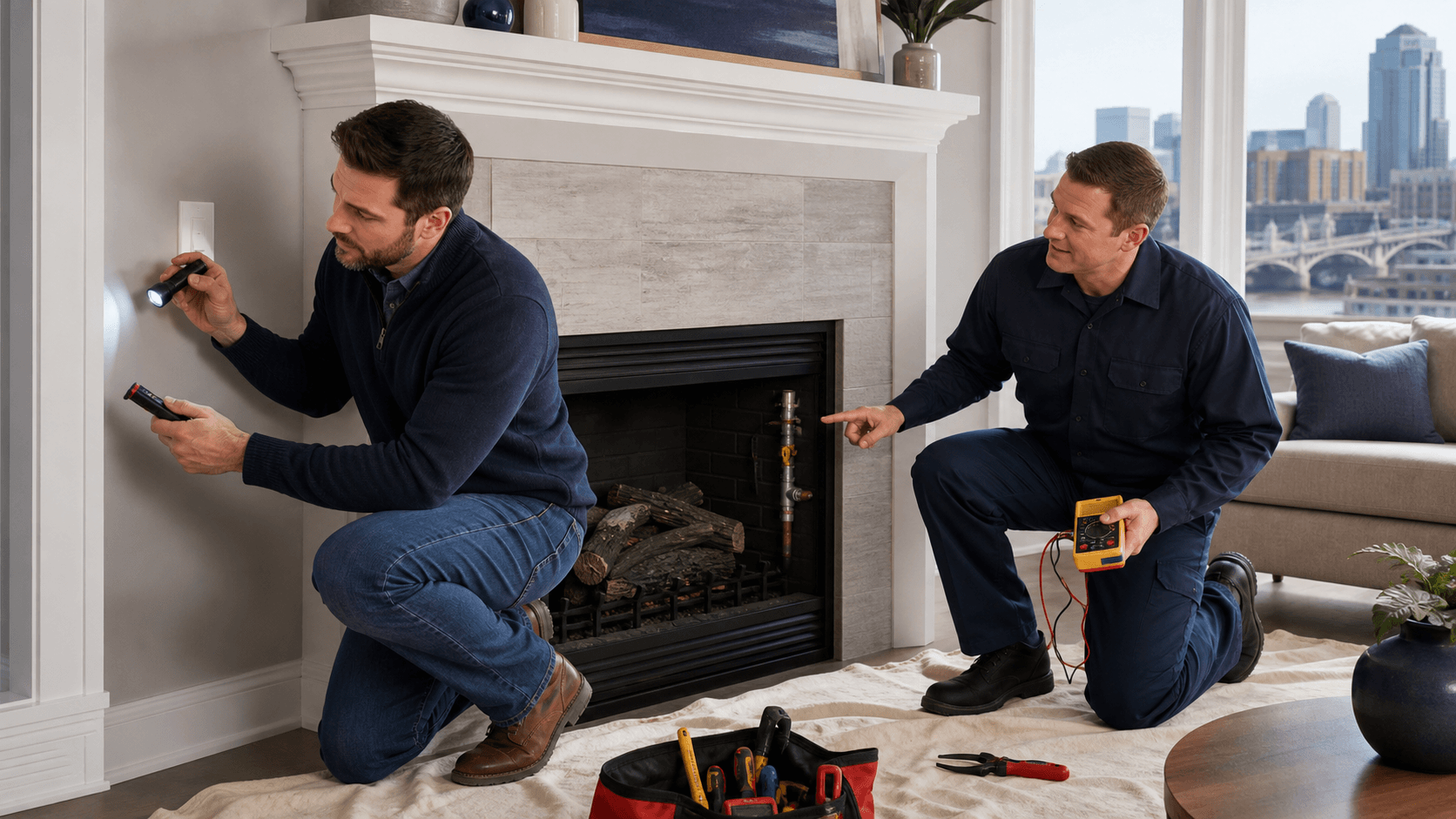
Professional technicians have tools and training homeowners do not. They can:
- Test gas pressure and confirm it is within the proper range for the unit
- Check valves, regulators, and safety sensors for correct operation
- Clean burners and pilot assemblies far more thoroughly than a surface dusting
- Inspect the venting system to look for blockages, rust, or loose sections
- Look for hidden damage like cracked fireboxes or issues with how the unit was installed
In our local area, humidity, rain, and freeze-thaw cycles can be hard on exterior vent caps and metal flue parts. Rust or movement in those areas can affect how well the fireplace starts and burns. A yearly inspection and cleaning before the main heating season can prevent many of the common "gas fireplace will not start in Cincinnati" issues that show up when the first cold front rolls through.
Stay Warm and Worry Free with Local Fireplace Experts
A short list of safe DIY checks can be enough to bring many gas fireplaces back to life. Things like checking switches, breakers, remote batteries, and obvious gas shutoff valves are simple and do not require tools. Watching for warning signs, smells, and odd flame behavior helps you know when to stop and let a professional step in.
Regular care also keeps your fireplace ready whenever the weather turns. Many homeowners like to plan a tune-up in spring or late summer, once heavy heating use is over or before it starts again. A clean, well-maintained gas fireplace tends to light faster, run more reliably, and last longer, with fewer surprises when cool Cincinnati evenings return. For help with gas fireplace inspections, repairs, chimney sweeping, masonry work, and new gas fireplace installations across Cincinnati, northern Kentucky, and southeast Indiana, our team at Chimney Works is ready to keep your home warm and comfortable.
Get Reliable Heat Flowing In Your Home Today
If your Gas fireplace won't start in Cincinnati, our trained technicians at Chimney Works are ready to pinpoint the problem and get it working safely again. We will inspect, clean, and repair your gas fireplace so you can enjoy dependable warmth without the worry. Schedule a convenient appointment online or contact us with any questions about your specific fireplace issue.