Stop Silent Roof Damage Before It Spreads
A small brown ring on the ceiling near your chimney might not look like a big deal. It might dry up in a day or two and seem to go away. Then one heavy spring storm hits, and suddenly you are dealing with soft spots in the roof, peeling paint, and a chimney that is pulling away from the flashing.
That tiny stain was not "just a leak." Water almost never stays where you first see it. It runs along wood, nails, and framing, and it soaks into hidden parts of your roof structure. Around chimneys, this can turn into slow rot, mold, and damaged insulation that can stay out of sight for months.
We work on homes across Greater Cincinnati, Northern Kentucky, Southeast Indiana, and the Dayton area, and we see this pattern all the time. In this article, we will walk through how to spot hidden damage, why chimneys are such a common source of roof leaks, what real chimney leak repair involves, and how to stay ahead of problems before the next round of strong storms.
Why Chimneys Are a Hidden Source of Roof Leaks
Many people think "bad shingles" when they hear a roof leak. But chimneys are one of the most common weak spots where water finds its way inside, even when the rest of the roof looks fine from the ground.
Water often sneaks in around a chimney through:
- Deteriorated flashing where the chimney meets the roof
- Loose or damaged counter-flashing cut into the brick
- Cracked or crumbling chimney crowns at the very top
- Missing or weak mortar joints between bricks
- Porous, weathered brick that soaks up water
- Damaged or missing chimney caps that let rain fall straight down the flue
In the Cincinnati area, we get a lot of freeze-thaw cycles, strong spring downpours, and humid summers. Water gets into tiny cracks in the masonry, then freezes and expands. Over time, this opens up small gaps around the roofline. Those gaps may be too small to see from the yard, but water has no problem slipping in.
To make it more confusing, the leak you notice on your ceiling is often not right under the spot where the water entered. Water can travel under shingles, along roof decking, and into the attic before it finally appears as a stain on drywall. That is why leaks that are blamed on "old shingles" often turn out to be chimney issues once a professional gets on the roof.
Hidden Roof Damage Most Cincinnati Owners Miss
By the time you see a stain indoors, water has usually been at work for a while. The real damage often starts quietly in places you do not see every day.
Here is how that hidden damage can build up around a chimney:
- Moisture slowly soaks into the roof decking near the chimney
- Wood begins to rot around rafters and trusses in that area
- Metal fasteners and nails start to rust and weaken
- Roof sheathing sags slightly but may not be obvious from below
These problems can grow through multiple seasons. You might not notice any change from the street, but inside your attic and framing, the structure is getting weaker.
There are also secondary impacts that spread beyond the roof wood:
- Insulation gets wet and clumps, so it no longer keeps your home comfortable
- Mold and mildew can start on damp surfaces in the attic
- Paint or drywall near the chimney may bubble, peel, or stain
- A musty or earthy smell may appear in upper rooms after a good rain
Some subtle warning signs that point toward chimney leak repair needs include:
- Faint water rings on ceilings close to where the chimney passes
- Crumbling or sandy mortar inside the firebox
- White, powdery staining on exterior brick, called efflorescence
- Dark streaks or damp spots on the attic side of the chimney or roof framing
If you notice any of these, it is a strong hint that water is getting in somewhere around the chimney, even if you do not see active dripping.
How Professional Chimney Leak Repair Protects Your Roof
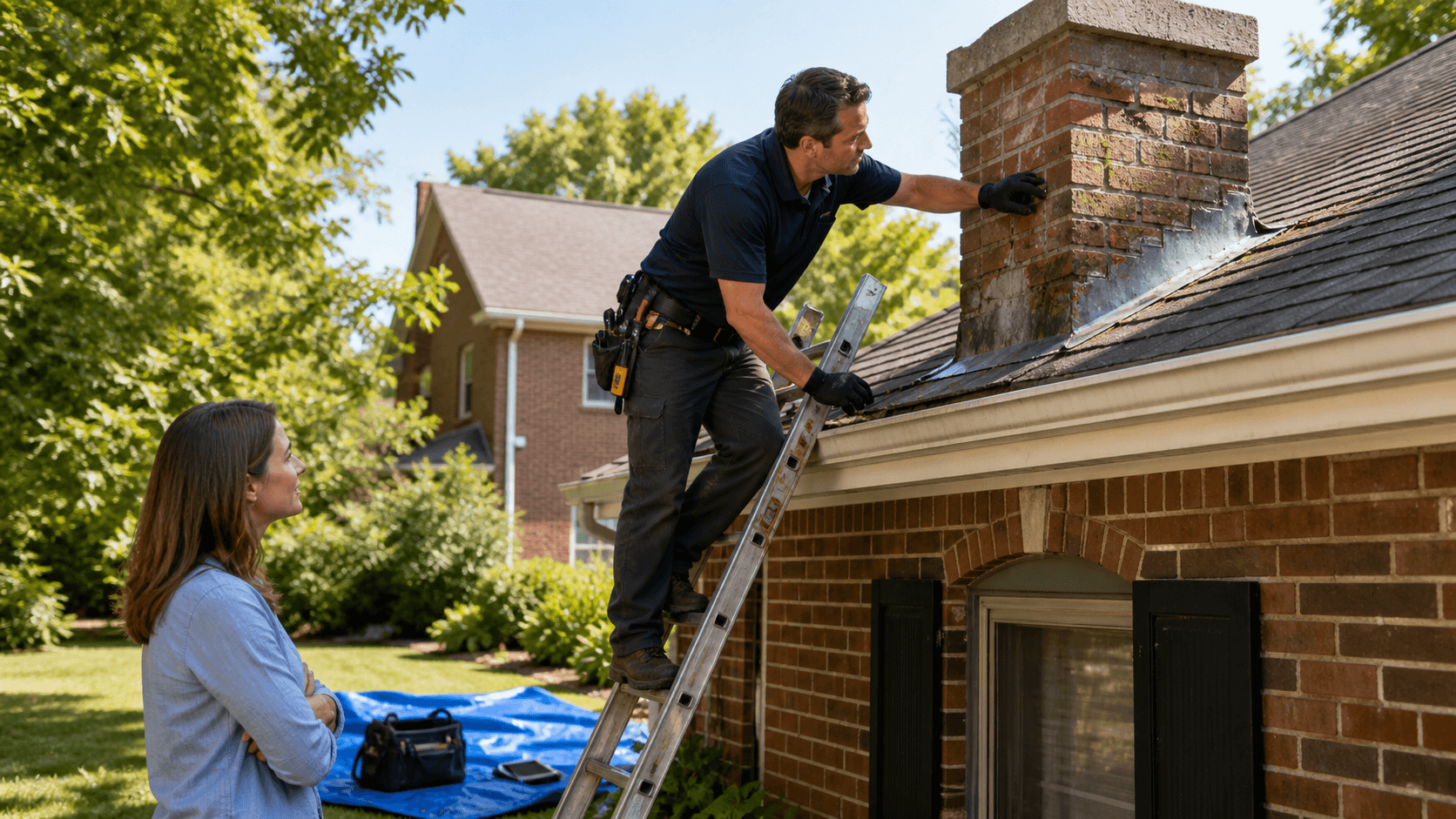
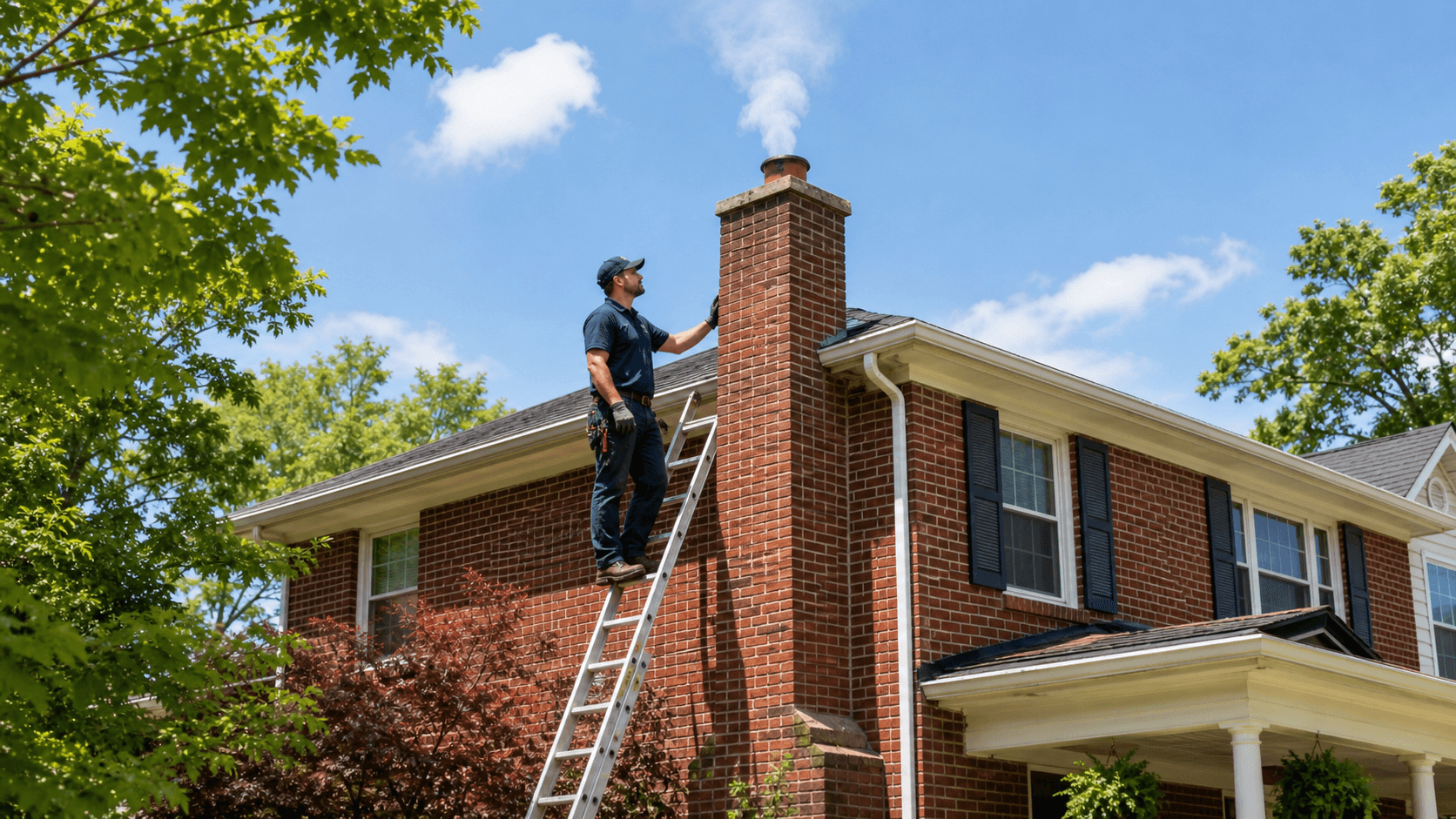
Real chimney leak repair is more than squeezing some caulk around the bricks. A proper visit starts with a detailed inspection of both the chimney and the surrounding roof area.
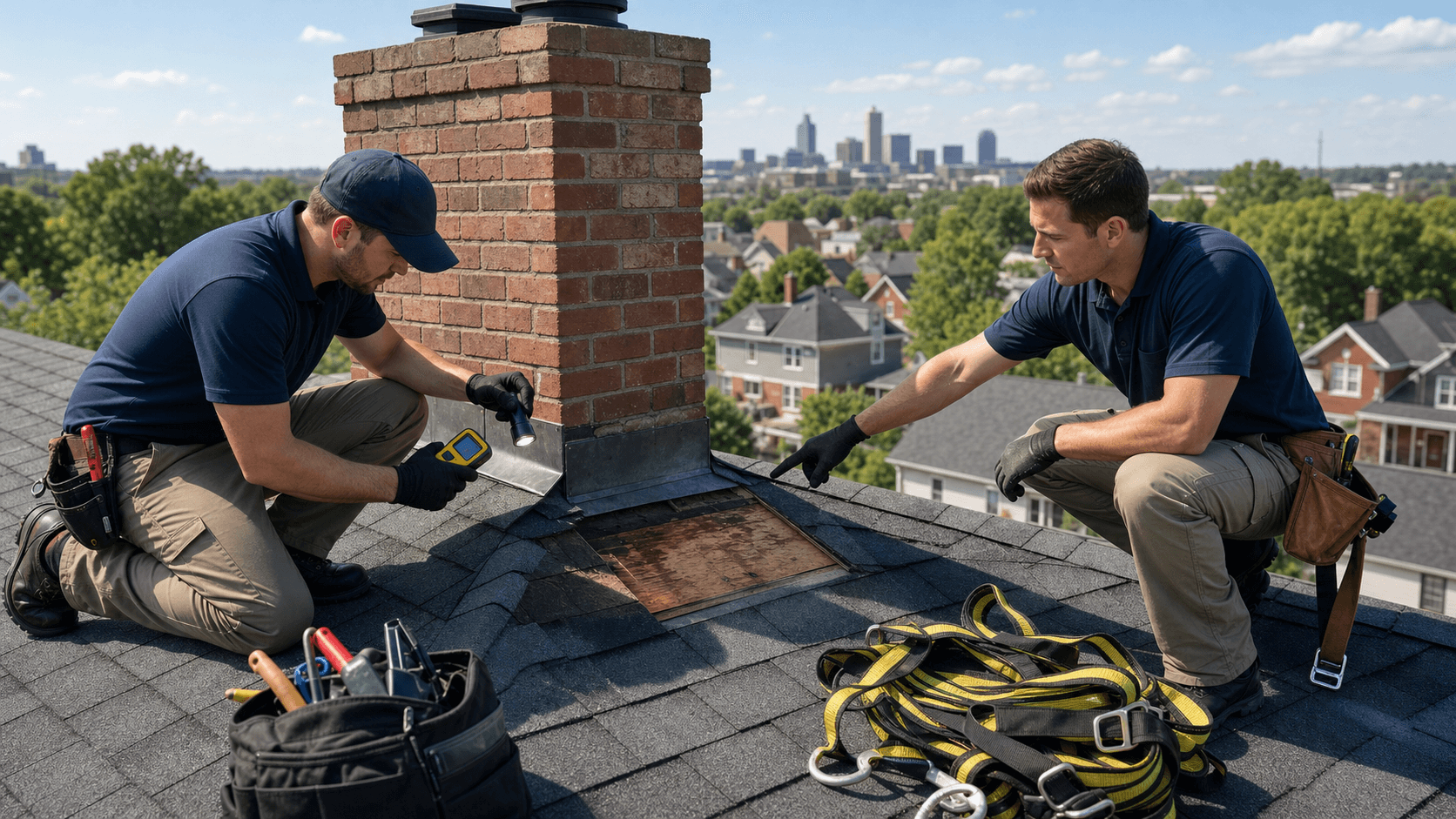
A thorough inspection typically includes:
- Checking flashing and counter-flashing for gaps, rust, or lifting
- Examining the chimney crown for cracks, holes, or missing sections
- Looking at the chimney cap to be sure it fits correctly and is not damaged
- Inspecting masonry joints for missing or loose mortar
- Reviewing the attic side of the roof for staining, rot, or mold near the chimney
- Looking at nearby roof penetrations such as vents and pipes that might connect to the same leak path
Once the problems are found, repair solutions can include:
- Removing and replacing old flashing, then sealing it properly
- Repairing or rebuilding a cracked or failing crown
- Tuckpointing damaged mortar joints to close gaps in the brickwork
- Installing or replacing a chimney cap to block direct rain entry
- Applying breathable waterproofing products to masonry to help resist future water intrusion
Taking care of these repairs before the regular high-rain and summer storm period is smart. Fixing a small leak and some worn flashing now is far easier than dealing later with rotted roof decking, damaged drywall, and indoor air quality problems from mold.
Seasonal Checklist Before Cincinnati's Summer Storms
You do not need to climb on the roof to catch early chimney leak warning signs. A simple indoor and ground-level check each spring can help you spot trouble before storms roll in.
Here is a handy pre-summer checklist:
- Walk through rooms where the chimney passes and look for ceiling stains or rings
- Look closely at walls and ceilings around the fireplace for peeling paint or hairline cracks
- Check the firebox for crumbling mortar, loose bricks, or rusted metal parts
- Step outside and scan the visible parts of the chimney for missing mortar or flaking brick
- After a good rain, pay attention to any musty odor in upper floors, closets, or the attic access
We also suggest planning a professional chimney and roof evaluation in late spring or early summer. This is when winter freeze-thaw damage usually shows itself, and it is easier to address issues before strong thunderstorms are common.
You can pair chimney care with other seasonal tasks like:
- Cleaning gutters so water flows away from the roof and chimney base
- Checking that shingles lie flat and are not curling nearby
- Making sure dryer vents and other roof penetrations are in good shape
Thinking of the roof and chimney as one system is the best way to protect your home and keep it dry, safe, and efficient.
Why Calling a Chimney Specialist Matters
Small chimney leaks can lead to major hidden roof damage, but early attention keeps that from happening. When the source is at or inside the chimney, a chimney-focused company is often better equipped to track the leak path, repair the masonry, and protect both the roof and the fireplace system at the same time.
At Chimney Works, we work on homes across Greater Cincinnati, Northern Kentucky, Southeast Indiana, and the Dayton metro area, and we see how our local weather and older housing stock affect chimneys and roofs. By focusing directly on chimney leak repair and related issues, we help homeowners catch problems early, protect the structure, and support better indoor air quality throughout the home.
Protect Your Home With Expert Chimney Leak Repair Today
If you see water stains, dripping, or a musty smell around your fireplace, our team at Chimney Works can help you stop the damage before it spreads. Schedule professional chimney leak repair so your masonry, flue, and surrounding structure stay safe and dry. We will inspect the problem, explain your options, and complete the repair with long-lasting solutions. To set up an appointment or ask questions, just contact us.