Stop the Drips Fast: Which Fix Comes First?
A wet ceiling near your fireplace can turn a normal rainstorm into a stressful night. Water stains, bubbling paint, and that faint musty smell make you wonder how bad the problem really is. The big question hits fast: is this a roof leak repair issue, or is your chimney to blame?
Many homeowners assume any stain on the ceiling means the roof is leaking. But chimney leaks are just as common and can be harder to track down. If you guess wrong and call the wrong pro first, you can end up paying for repairs that do not fix the problem.
In this article, we walk through how to tell the difference between a roof leak and a chimney leak, when to call a roofer first, when chimney repair should come before roof work, and how to plan smart so you do not deal with the same leak again and again. Our team works on chimneys and fireplaces across the Cincinnati area, Northern Kentucky, Southeast Indiana, and the Dayton metro area, and we see these situations all the time.
How to Tell If It's a Roof or Chimney Leak
Inside your home, the location and shape of the stain can give you some early clues.
Indoor signs that often point to a chimney leak include:
- Brown or yellow stains around the chimney breast or above the fireplace
- Peeling or bubbling paint on the wall that lines up with the chimney chase
- Damp spots or streaks that trace down from the ceiling right next to the chimney
These marks tend to follow the line of the chimney, not the center of the room. You might also notice that the leak is worse when rain is blowing from one certain direction, which can point to problems with flashing or the chimney cap.
Roof leak patterns often look a little different:
- Stains or soft spots in the middle of a ceiling, away from walls and chimneys
- Patches spreading out in a round or oval shape, not in a straight line
- Drips appearing near roof vents or bathroom fans, not by the fireplace
Outside, you may spot more clues from the ground or from a safe distance.
Chimney-related warning signs include:
- Cracked or missing mortar joints between bricks
- A chimney crown that looks broken, pitted, or pulled away from the brick
- A rusted, tipped, or missing chimney cap
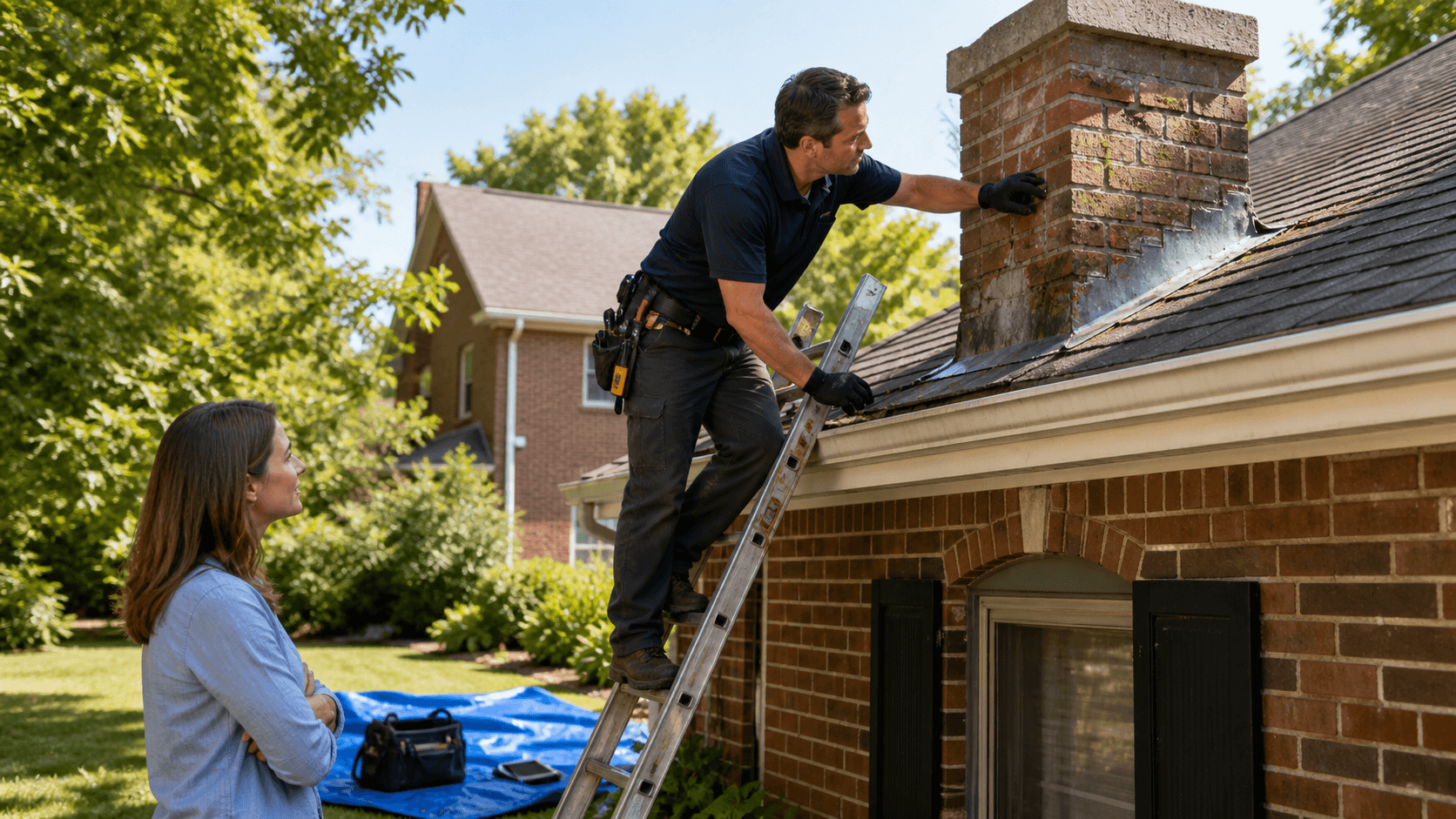
- Dark-stained brick, moss, or white streaks on the chimney face
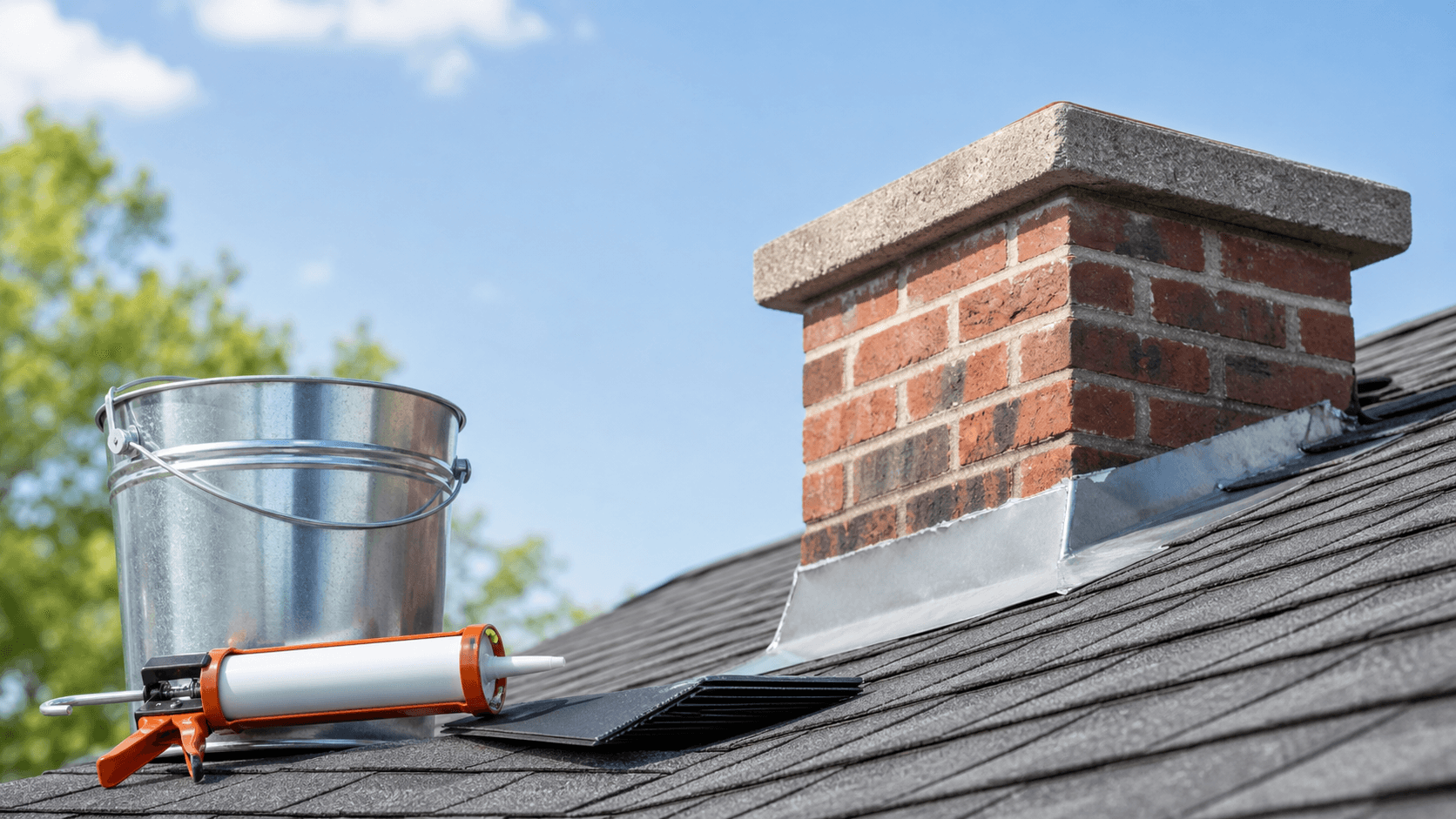
- Metal flashing around the base of the chimney that looks bent, rusty, or lifted
Roof-focused problems are usually easier to spot across the whole roof, such as:
- Aging, curled, or missing shingles over a wide area
- Sagging roof lines or visible dips in the roof surface
- Granules washing out of the gutters in large amounts
Even with all these clues, self-diagnosis can be tricky. Water likes to travel. It can run along rafters, roof sheathing, or the brick of the chimney before it finally drips through your ceiling. That means the spot you see inside is not always right under the leak. A professional inspection helps make sure you do not pay for roof work when the real issue is at the chimney, or the other way around.
When Roof Leak Repair Should Come Before Chimney Work
Sometimes the roof is clearly calling for help, and that needs to be handled first.
Roof leak repair usually comes first when:
- The roof is old and has widespread shingle damage
- There has been obvious wind, hail, or fallen branch damage across large areas
- You see sagging or soft roof decking from inside the attic
- Water is entering in several rooms that have nothing to do with the chimney
In these cases, the roof is not just dripping, it is putting the structure at risk. Waiting too long can lead to damaged sheathing, weakened rafters, soaked insulation, and mold that spreads into living spaces. When the roof structure is compromised, it can even affect how the chimney is supported where it passes through the roof.
If you already plan to replace your roof soon, it usually makes sense to time some chimney work with that project, especially anything related to flashing or how the chimney ties into the roofing system. New flashing, cricket installation, or other chimney-to-roof connections can be done in step with the roofer so everything works together. We often coordinate with local roofers so chimney caps, crowns, and flashing are installed in a way that fits the new roofing, not against it.
When Chimney Repair Should Come Before Roof Work
There are many times when the smart first call is to a chimney professional, especially if the problem seems focused around the fireplace area.
Common chimney leak sources include:
- Cracked or missing mortar between bricks or stone
- A deteriorated chimney crown that is letting water soak in
- Failed flashing or flashing that was never installed correctly
- A missing, damaged, or undersized chimney cap
- Porous masonry that takes on water and slowly leaks it inside
If the staining is mainly above the fireplace, on the chimney face, or right along the wall where the chimney runs, that is a strong sign the chimney is the main suspect, not the entire roof.
Starting with a chimney specialist can save money and time because many so-called roof leaks in these areas are actually chimney problems. Homeowners sometimes pay for roof leak repair more than once, only to find water still coming in around the same spot. A chimney inspection looks at the entire system: the interior flue, the smoke chamber, the masonry, the crown, and all the exterior details that can let water in.
Late spring and summer storms in the Cincinnati area often come with heavy rain and gusty winds. That mix is perfect for revealing hidden chimney issues. Fixing chimney problems before the strongest storms hit, and well before you want to use your fireplace again in fall, cuts down on surprise damage and last-minute emergency calls. Our leak troubleshooting is focused on finding the true entry point so the next big storm is less of a worry.
Smart Order of Fixes: Step-by-Step Game Plan
To keep stress low and protect your home, it helps to follow a simple order.
First, if the leak is near:
- A fireplace opening
- A chimney wall or chase
- Ceiling or trim that lines up with the chimney
then calling a chimney professional is usually the best starting point. A focused chimney leak inspection can confirm whether the problem starts at the chimney components. If the chimney checks out and everything is tight, you can move on to roof leak repair with more confidence.
Sometimes both the roof and chimney have age or storm damage. In those cases, the smartest path is a coordinated plan. It often helps to:
- Get written notes or photos from both your roofer and chimney pro
- Share findings so both sides understand what the other is repairing
- Decide which repairs stop active water first, then plan follow-up work
When it comes to budgeting and priorities, always handle active water entry points first. That means leaks that are staining ceilings, soaking insulation, or dripping onto floors come before cosmetic fixes. After the leak is stopped, you can look at helpful upgrades like water-repellent masonry treatments, better chimney caps, or crown repairs that reduce future water issues. Regular chimney maintenance like sweeping, inspections, repointing, and crown care greatly lowers the odds of surprise leaks and rushed roof repair calls later.
Protect Your Home From the Next Storm
A small stain near your fireplace rarely stays small if you ignore it. Water that sneaks in around a chimney can lead to damaged framing, ruined drywall, warped trim, and mold that is hard to fully remove. With spring and summer storms bringing heavier downpours to the Cincinnati, Northern Kentucky, Southeast Indiana, and Dayton areas, waiting to address a leak usually means bigger problems later.
Chimney Works focuses on chimney sweeping, inspections, leak troubleshooting, repairs, and new fireplace installations throughout the region. By carefully inspecting both the inside and outside of your chimney, we help you understand whether chimney repair, roof leak repair, or a mix of both is the smartest first move. That kind of clear plan offers something every homeowner wants: a dry, protected home, a safe and attractive fireplace, and fewer worries the next time dark clouds roll in.
Protect Your Home With Fast, Professional Leak Repair
If you see water stains, dripping, or damage around your chimney or roof, now is the time to act before a small issue turns into costly structural problems. At Chimney Works, we provide expert roof leak repair that targets the source of the problem and helps prevent future damage. Reach out today and let our team inspect, diagnose, and fix the issue with straightforward recommendations and quality workmanship. To schedule an appointment or ask questions, simply contact us.