Protect Your Chimney Before Middletown Storms Hit
Summer storms around Middletown, OH can be rough on chimneys. Heavy rain, strong wind, and thick humidity beat against the brick again and again. If your chimney is not protected, that water slowly works its way into the masonry and causes damage you may not see right away.
Water intrusion can lead to leaks, brick faces popping off, rusted metal parts, strange damp odors, and even structural issues inside the chimney. Many homeowners only notice something is wrong months later, when stains show up on the ceiling or pieces of brick start to crumble.
That is why choosing the right chimney waterproofing option matters. For many chimneys, the first decision is between silane or siloxane water repellents and acrylic sealers. But sometimes a sealer is not the right answer at all, and what you really need is tuckpointing or crown repair. As a chimney company serving Middletown, Cincinnati, Northern Kentucky, Southeast Indiana, and the Dayton metro area, we see how a good inspection before peak storm season can save a lot of headaches later.
How Summer Rains Damage Unprotected Chimneys
Brick and mortar seem solid, but they are actually porous. During an intense summer thunderstorm, wind-driven rain can soak into every tiny pore and hairline crack. The more storms that pass through, the deeper the moisture can travel into the chimney structure.
Once water is inside the masonry, the "water plus heat plus time" cycle starts. In hot weather, damp bricks heat up in the sun. Later, when temperatures drop and winter freeze-and-thaw cycles arrive, that trapped moisture expands and contracts. This movement slowly cracks and crumbles the masonry from the inside out.
Some early warning signs Middletown homeowners can watch for include:
- Brown or yellow stains on ceilings or walls near the chimney
- Musty or damp smells after it rains
- White, powdery or crusty deposits on brick, called efflorescence
- Flaking or breaking brick faces
- Thin cracks in mortar joints that seem to grow over time
Without timely chimney waterproofing in Middletown, OH, slight summer leaks can become major issues by the time cooler weather sets in. What starts as a small stain can turn into loose bricks, missing mortar, and larger interior water damage.
Silane Siloxane Sealers Explained for Brick Chimneys
Silane and siloxane sealers are often the best option for masonry chimneys in decent shape. These products are professional-grade water repellents made to soak into the brick and mortar instead of sitting on top. Think of them as a breathable raincoat for your chimney.
Here is how they work:
- They penetrate into the masonry rather than forming a surface film
- They repel liquid water so rain beads up and runs off
- They still allow water vapor from inside the chimney to escape
- They help reduce spalling, efflorescence, and hidden freeze-and-thaw damage
Because they are vapor permeable, silane and siloxane sealers do not trap moisture inside the brick. That is a big advantage over many film-forming products. They are also designed to last for years, stand up to UV rays, and dry to an invisible finish that does not change the color or texture of the brick.
Silane or siloxane is usually a strong choice for chimneys that:
- Have only minor hairline cracks in mortar
- Have sound, solid bricks with no major spalling
- Have crowns and flashing that are in good condition
- Need long-term, low-maintenance protection before the stormy season
If your chimney is structurally sound, a silane or siloxane treatment can be an effective way to protect your investment from Middletown's summer storms.
Acrylic Sealers and Why They Often Fall Short
Acrylic sealers are a different type of product. These coatings sit on the surface of the masonry and form a film. They can give the brick a glossy sheen or make it look darker, which some people like for certain hard surfaces.
But on chimneys, acrylics often create more problems than they solve:
- The film can trap moisture that is already inside the brick
- Trapped moisture may lead to spalling and peeling brick faces
- Sun and UV exposure can break down the coating over time
- The film can peel, flake, or blister as the chimney expands and contracts
In Middletown summers, high heat and humidity put extra stress on acrylic coatings. When strong storms blow rain sideways, water can find tiny openings in the film and get behind it. Once that happens, the coating may start to lift or crack. Because the acrylic layer blocks vapor from escaping, any moisture that does get inside has a hard time getting back out.
Acrylic sealers may still have their place on some concrete surfaces that are not exposed to the same heat and moisture cycles as a chimney. But for long-term chimney waterproofing in Middletown, OH, they are usually not the best choice when compared with silane or siloxane water repellents.
When to Choose Tuckpointing or Crown Repair Instead
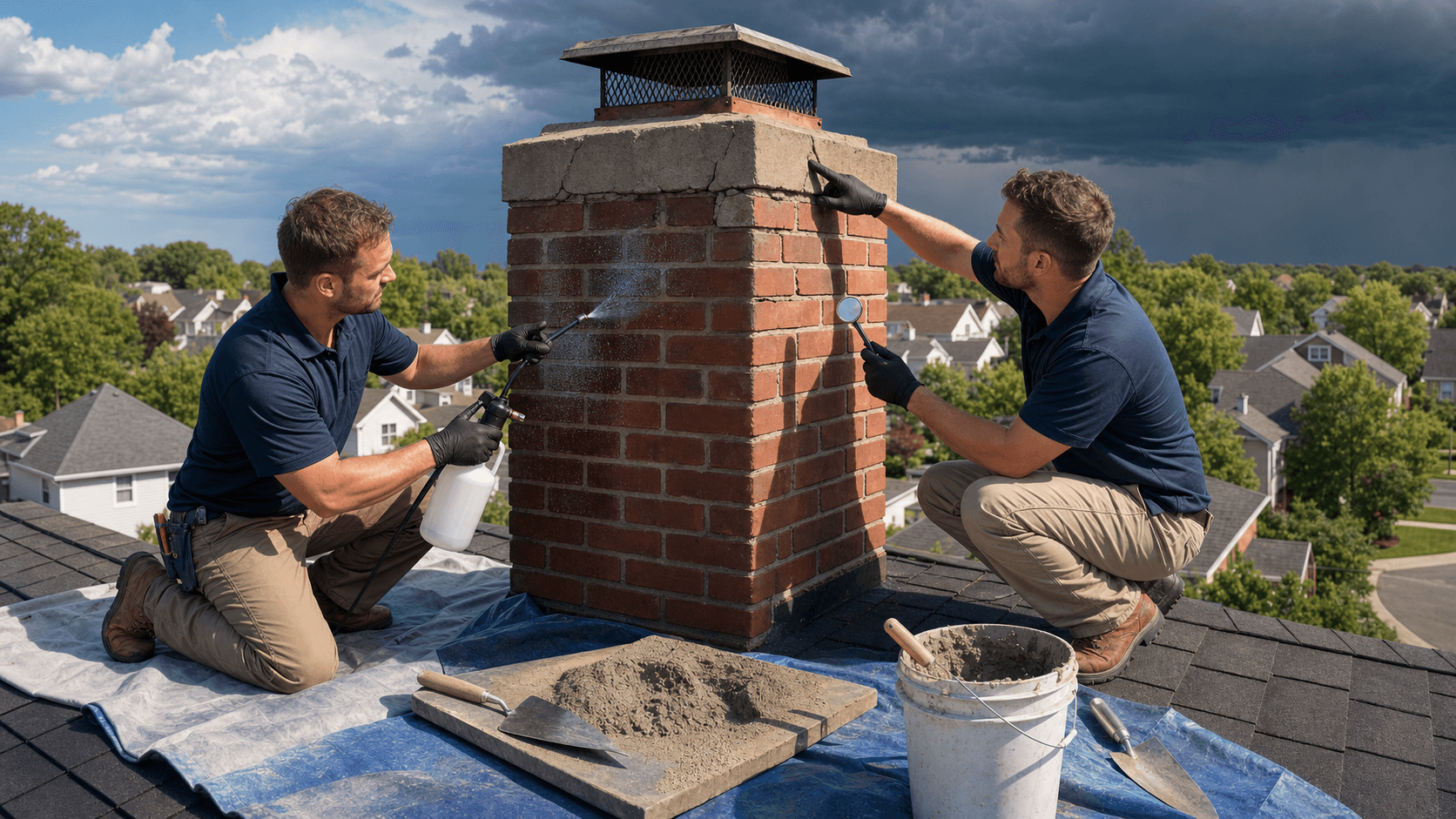
Water repellents are helpful, but they are not magic. If your chimney already has missing mortar, loose bricks, or a badly cracked crown, no sealer can fix that. In those cases, structural repair comes first, then waterproofing.
Tuckpointing is the process of removing damaged mortar joints and packing in fresh, properly matched mortar. This:
- Restores the strength of the brickwork
- Closes gaps where water can sneak in
- Helps support loose or shifting bricks
- Gives the chimney a cleaner, more uniform look
The chimney crown, which is the concrete or mortar slab at the very top, is also a common trouble spot. A good crown is thick enough, properly sloped, and extends past the brick to shed water away. A crown that is cracked, too thin, or flat on top lets water pool and run straight into the bricks below.
You may need crown repair or rebuilding if you see:
- Visible cracks or chunks missing on top of the chimney
- Standing water on the crown after rain
- Pieces of crown material on the roof or around the chimney
- Repeated leaks that seem to start at the top
As a simple rule, if you see crumbling mortar, gaps between bricks, shifting or loose bricks, a visibly damaged crown, or the same leak showing up over and over, it is time to fix the structure before applying any kind of sealer.
Choosing the Right Summer Prep with Chimney Works
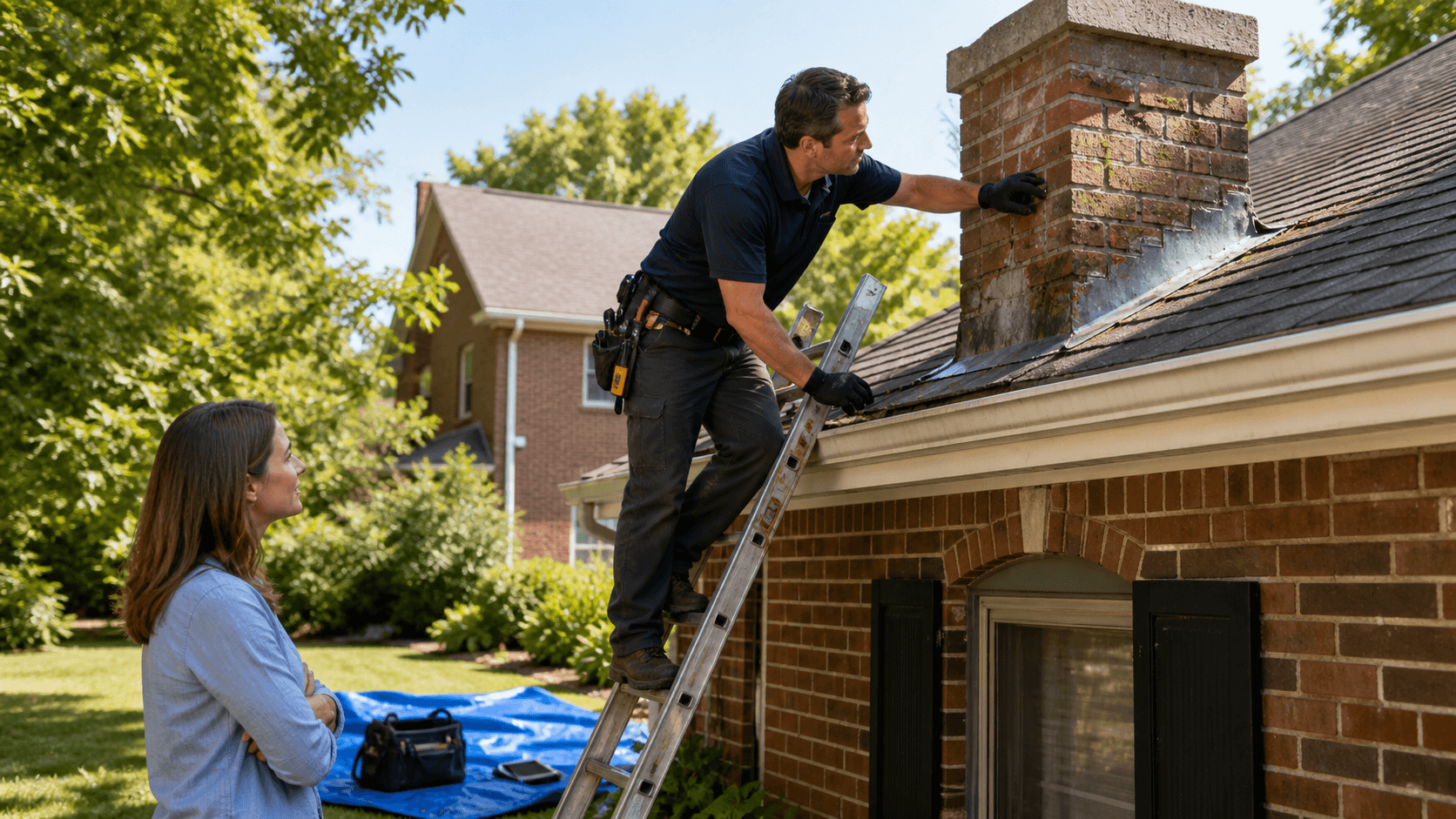
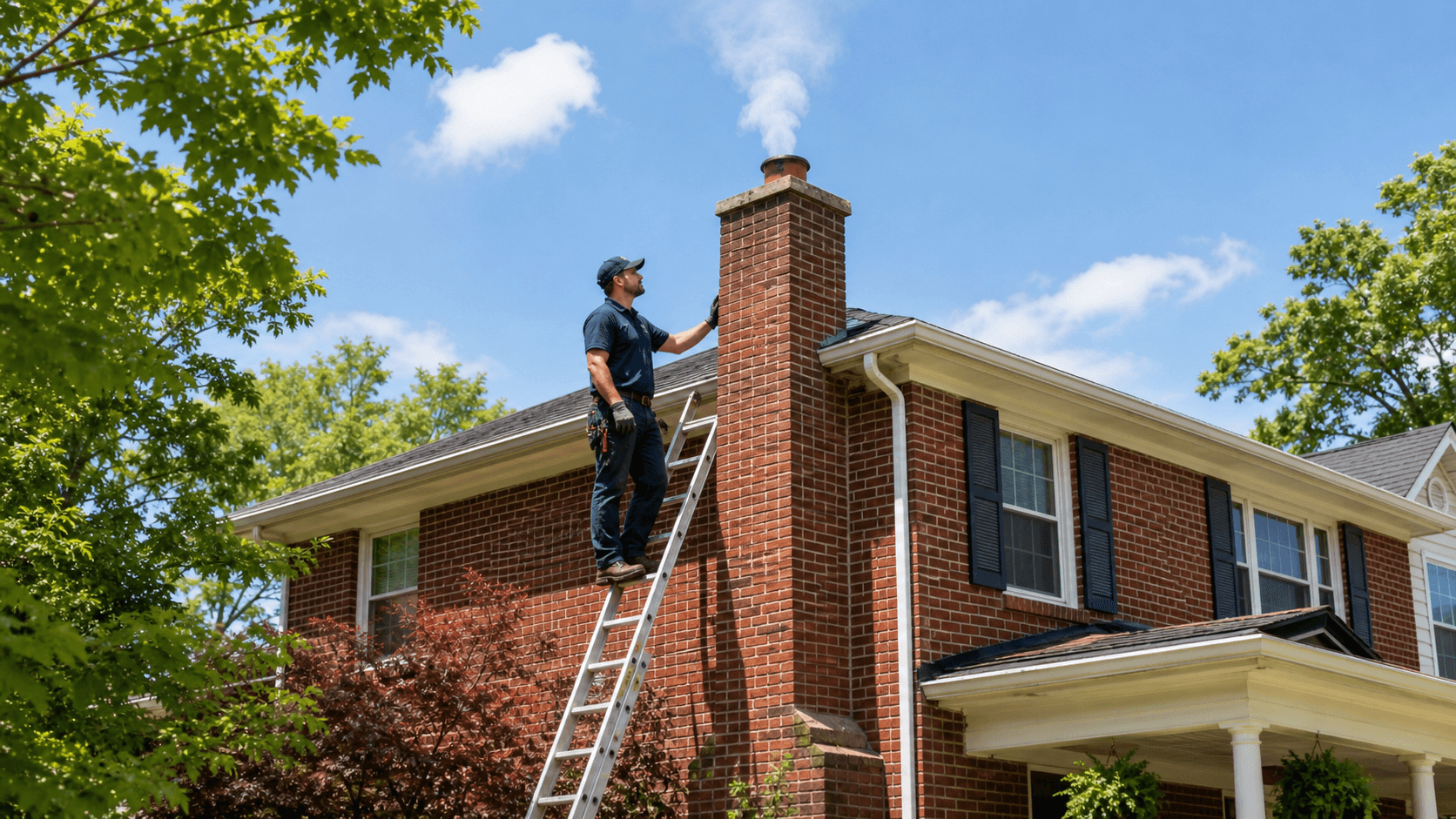
The best time to think about your chimney is before storms hit hard. A pre, storm season chimney inspection in late spring or early summer can reveal problems while they are still small and easier to address.
During an inspection, a Chimney Works technician will typically:
- Check the condition of brick and mortar from top to bottom
- Inspect the crown, chimney cap, and flashing where the chimney meets the roof
- Look for signs of water entry, staining, or hidden damage
- Recommend the right mix of silane or siloxane waterproofing, tuckpointing, or crown repair based on what they find
Taking care of these issues early can prevent bigger problems later, like interior ceiling damage, structural chimney rebuilding, or a fireplace that cannot be used safely during colder months. For homeowners in Middletown, Cincinnati, Northern Kentucky, Southeast Indiana, and the Dayton area, smart chimney waterproofing choices before summer storms hit can protect both your home and your peace of mind.
Protect Your Chimney Investment Before Problems Get Worse
If you have noticed leaks, staining, or crumbling masonry, now is the time to schedule chimney waterproofing in Middletown, OH with Chimney Works. Our experienced team will inspect your system, explain what we find in clear terms, and recommend the right solution for your home and budget. Reach out today through our contact page so we can help you stop water damage before it becomes a costly structural issue.