Protect Your Vacation Plans From Surprise Roof Leaks
Roof leak detection is not something most people want to think about right before a trip, but it can save your vacation. Roof and chimney problems often show up during heavy rain and fast summer storms, especially in our humid Ohio Valley climate. When no one is home to notice, a small drip can turn into stained ceilings, damaged floors, and a big mess waiting when you walk back in the door.
Finding signs of a leak before you leave is far less stressful than coming home to water damage. A quick check around your home can point out small problems while they are still easier to handle. With a short checklist, some photos, and help from a professional when needed, you can lock the door with a lot more confidence.
In this guide, we will walk through what to look for from the ground outside, what to check inside your home and attic, what to photograph, and when it is time to bring in a pro before your next trip.
Outdoor Walkaround for Early Leak Warning Signs
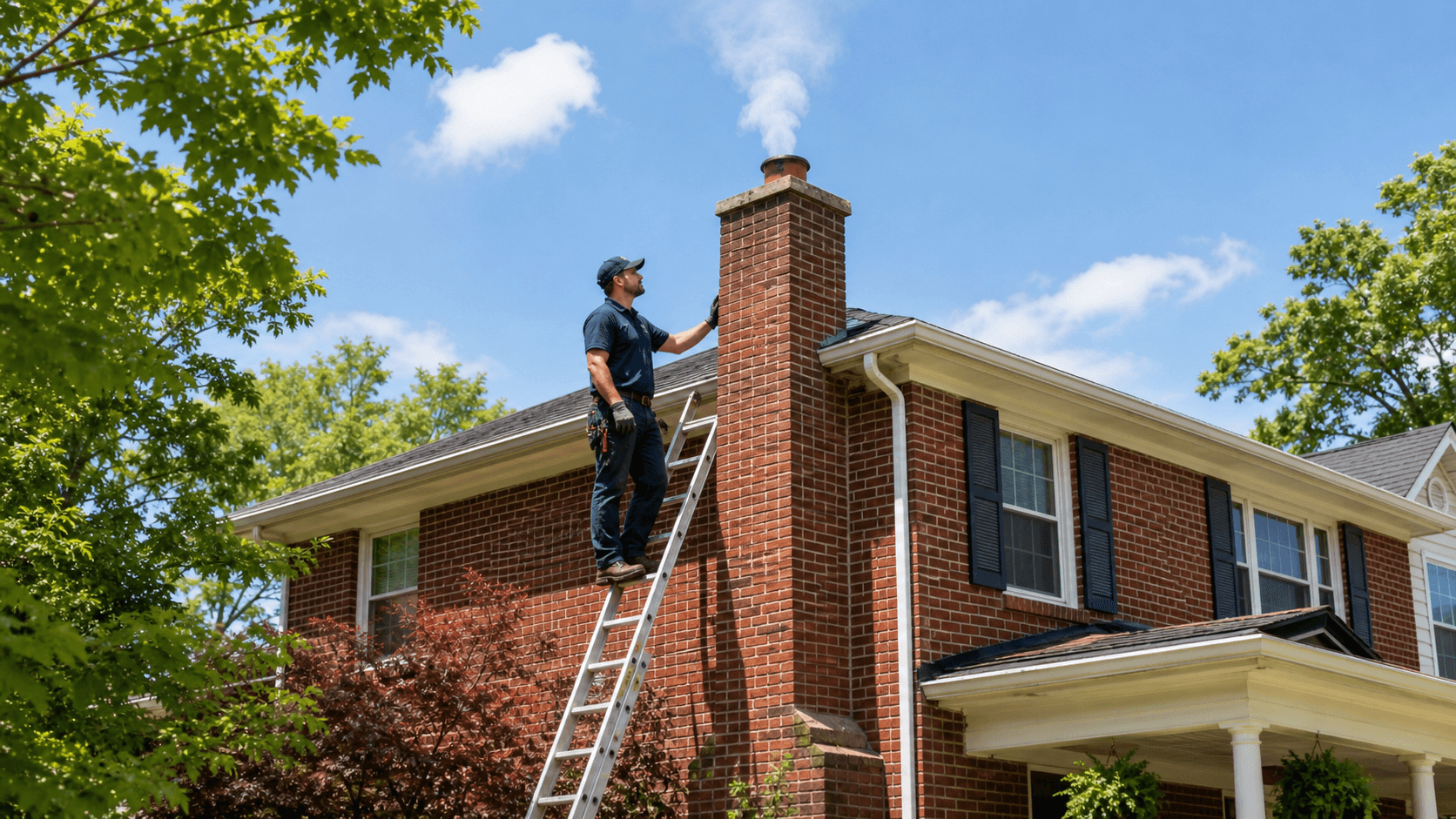
You do not need to climb on your roof to spot many early warning signs. A slow, careful walk around your home from the ground is a safer place to start. Take your time and look up at the roof, chimney, gutters, and siding from different angles.
Watch for problems like:
- Missing, cracked, or curled shingles that look different from the rest
- Areas of the roof that look saggy or uneven
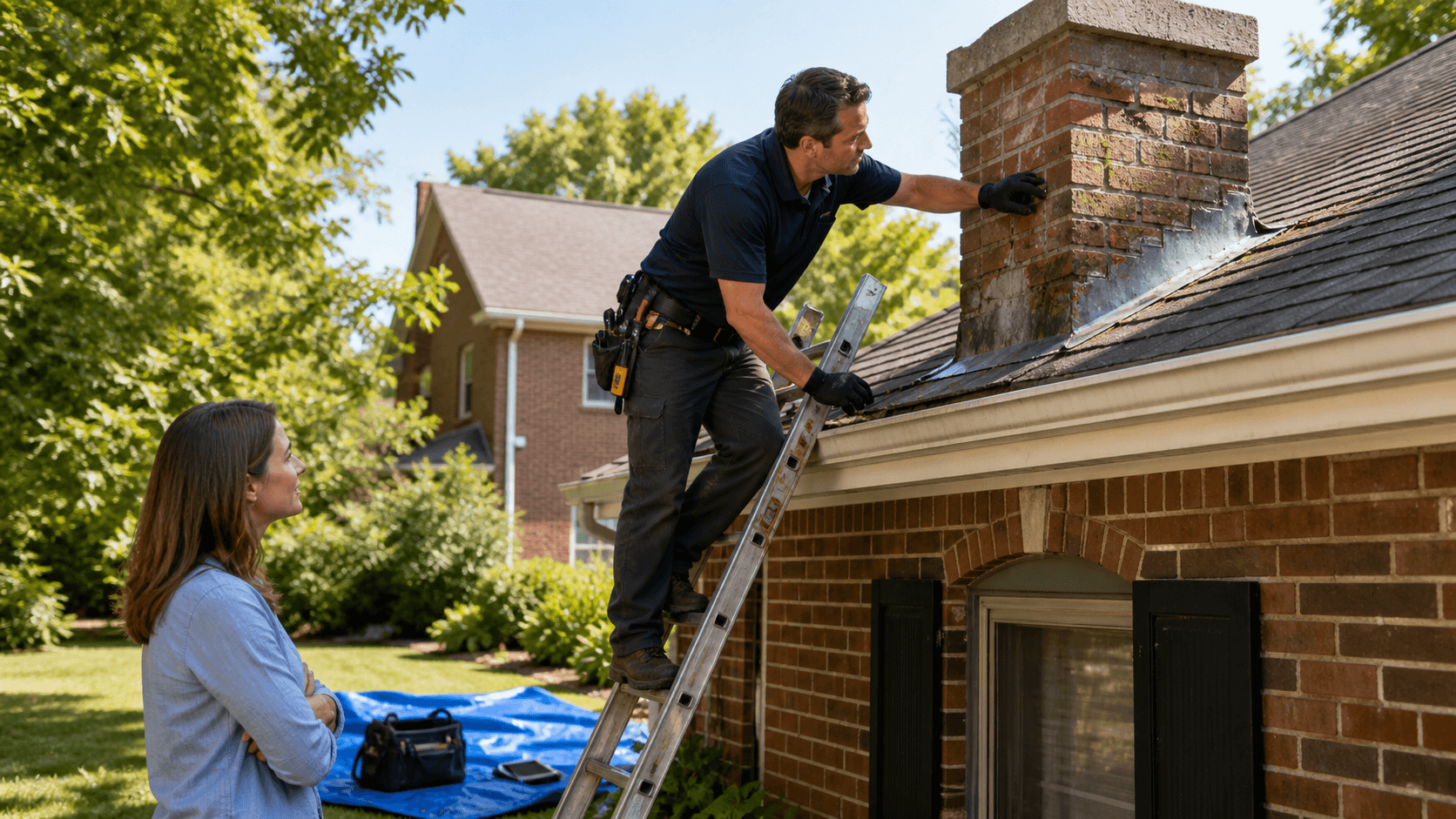
- Metal around the chimney that looks rusty, bent, or pulled away
- Gaps where the chimney meets the roof, or where different roof sections meet
- Gutters full of leaves or plants, or downspouts that are not draining well
- Dark streaks or stains running down exterior brick, siding, or near the chimney
Your phone is a handy roof leak detection tool. Use the zoom to get closer views without leaving the ground. Take clear photos of anything that looks off and make a quick note like "front left corner, missing shingle" or "back side chimney flashing looks lifted."
Issues that look urgent before a storm include:
- Large bare roof spots where shingles are missing
- Metal flashing clearly pulled away or with open gaps
- Cracks near the top of the chimney that seem to hold water
If something looks unsafe, badly damaged, or you are just not sure, that is a sign to have a professional inspection before you travel.
Indoor Checklist for Ceilings, Attic, and Fireplace
Once you have checked outside, move indoors. Roof leaks often show up on ceilings and walls long before you see anything on the roof. Slow leaks can hide, then speed up when heat and humidity rise.
Walk through each room and look for:
- Brown or yellow rings on ceilings or high on walls
- Peeling paint, bubbling drywall, or cracked plaster
- Spots that feel damp to the touch
- Musty or "wet basement" smells in rooms near the chimney
If you can safely access your attic, a quick look before a trip is smart. Use a good light and step only on safe surfaces. In the attic, check for:
- Insulation that looks damp, matted, or discolored
- Dark streaks or patches on the underside of the roof decking
- Small spots where daylight shows through the roof
- Signs of mold or mildew that may get worse in warm, wet weather
Next, look at your fireplace and the area around the chimney inside:
- Water stains or peeling paint over the fireplace or on nearby walls
- Crumbling mortar joints inside the firebox
- Rust on the damper or metal parts
- Bits of brick, tile, or crown material falling into the firebox
Any of these can point to water slipping in around the chimney, even if you do not yet see water dripping.
What to Photograph and How to Document It
Good photos and notes are a big help for roof leak detection and repair planning. They give you a record of what you saw before your trip and make it easier for a pro to understand the problem.
For the exterior, try to get:
- A few full-roof shots from each side of the house
- close-ups of missing or damaged shingles
- Clear photos of the chimney crown and cap, as much as you can see from the ground
- Photos of flashing where the chimney meets the roof
- Pictures of gutters and downspouts, especially if they look clogged or loose
- Any visible cracks, gaps, or stains on the chimney or siding
Indoors, focus on:
- Ceiling and wall stains, taken both close up and from farther back
- Any area where paint is peeling or drywall is bubbling
- Attic trouble spots like dark wood, wet insulation, or daylight showing through
- The inside of your fireplace, including rust, loose mortar, or debris
Add a simple note with each group of photos: date, location, and what you noticed. This record can help a professional spot patterns, support an insurance claim if a storm hits while you are away, and create a repair history for your home.
When DIY Roof Leak Detection Stops and Pros Step in
There is a point where watching and waiting is not a good idea, especially when you are leaving town. Before a trip, do not ignore signs like:
- Active drips from ceilings, light fixtures, or chimney areas
- Stains that seem to grow after each rain
- Chimney bricks that are breaking, cracking, or flaking apart
- Flashing that is clearly pulled away or hanging loose
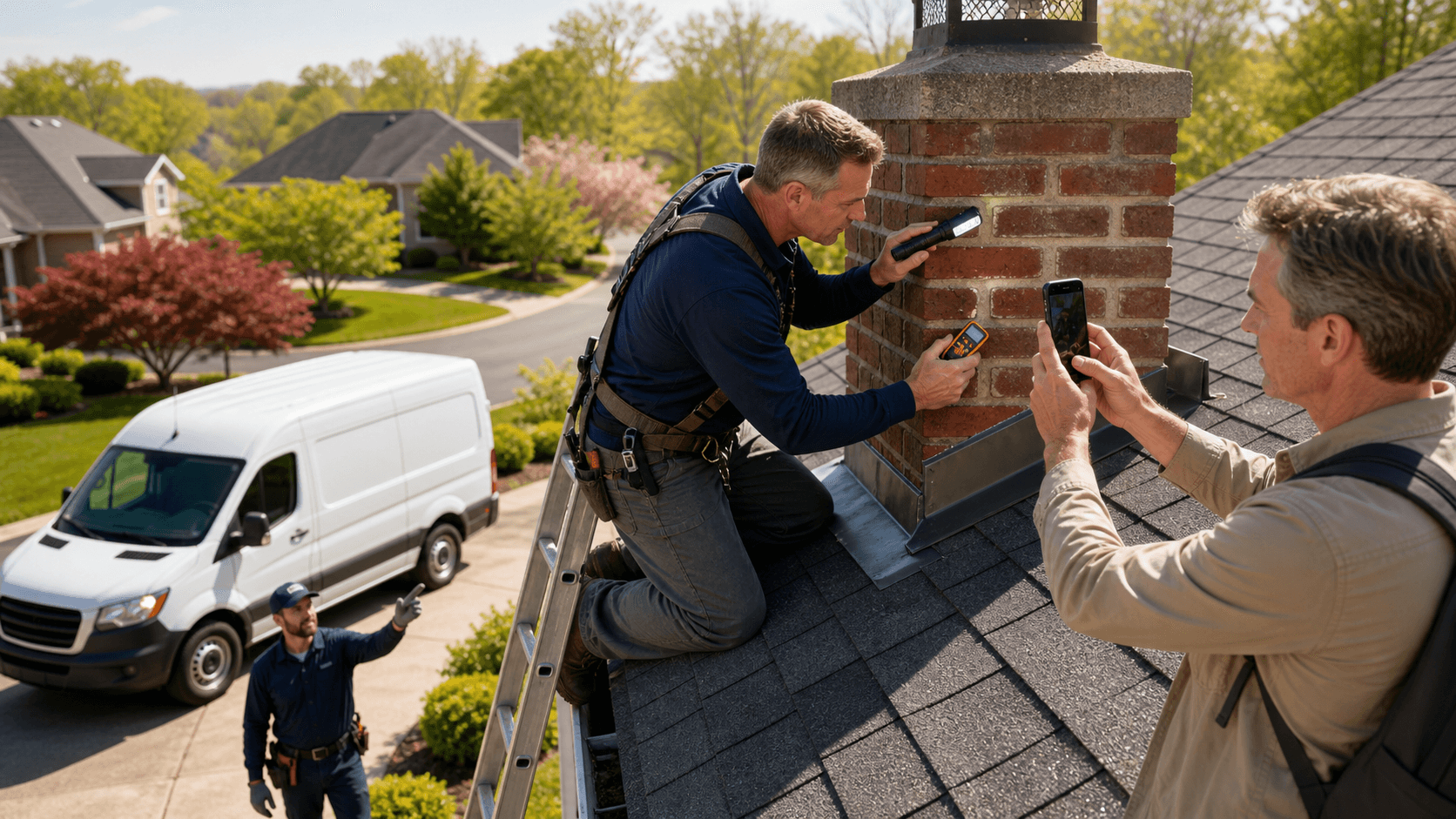
A professional inspection goes far beyond what you can see from the ground. A trained chimney and roof leak detection specialist can:
- Check your roof and chimney up close, including hard-to-see areas
- Use tools like moisture meters to find hidden damp spots
- Inspect inside the chimney flue with cameras where needed
- Carefully examine the chimney crown, cap, and liners for damage
For peace of mind, it is smart to plan any inspections or needed repairs at least a week or more before you travel, especially during stormy times of year in the Cincinnati, Northern Kentucky, Southeast Indiana, and Dayton areas. That buffer gives time for repairs to be made and checked before you pull out of the driveway.
Preventive Upgrades for Long-Term Peace of Mind
Once leaks are found and handled, a few preventive steps can help keep water out for the long run. This is especially smart before the wettest parts of the year or before big trips.
For chimneys, consider having a professional:
- Install or upgrade a chimney cap to help keep out rain and debris
- Repair or replace a cracked chimney crown that may be holding water
- Repoint loose or missing mortar joints between bricks
- Address spalling or flaking brick that can soak up water
Around the roof and gutters, common upgrades include:
- Sealing or replacing worn flashing around chimneys and roof joints
- Cleaning gutters and checking that they slope the right way
- Adding downspout extenders to move water away from the foundation
- Addressing small shingle issues before they turn into bare spots
A simple long-range plan is to set a routine for yearly roof and chimney checks, often in late spring or early summer. Many homeowners like to tie this to other home tasks, so it becomes a habit. Checking before big trips or before hosting summer guests gives you a better chance to catch problems while they are still small.
Lock in Peace of Mind Before You Lock the Front Door
A quick pre-vacation leak checklist can spare you from major headaches. Walk around your home outside, scan the roof, chimney, gutters, and siding from the ground, then do a careful indoor and attic check. Take clear photos, write simple notes, and pay close attention to stains, damp spots, and anything that seems to change after rain.
Do not gamble on "one more storm season" if you see warning signs. Fixing small roof and chimney issues early is almost always easier than dealing with water damage later. With careful roof leak detection and help from a professional when needed, you can enjoy your time away knowing you did your part to keep water on the outside where it belongs.
Get Started With Your Project Today
If you are seeing water stains or suspect moisture issues around your chimney, our team at Chimney Works can help pinpoint the problem with expert roof leak detection. We carefully inspect your chimney and surrounding roofing to find the exact source before recommending targeted repairs. Reach out today to schedule an inspection or ask questions about your specific situation through our contact page.