Know for Sure Before You Start Tearing Into Brick
Water near a chimney can be tricky. It might show up on a ceiling, wall, or fireplace front, but that does not always mean the leak is right behind that spot. Water can travel behind brick, block, and framing, then appear several feet away from where it actually got in. That is one reason chimney leak misdiagnoses are so common.
Many homeowners are told the problem is the roof, the chimney, or even plumbing, only to fix one thing and still see stains after the next storm. Acting on the wrong diagnosis can mean paying for work that does not stop the water at all. It can also let hidden moisture keep soaking wood, insulation, and masonry, which can lead to mold and long-term damage.
Our goal here is to help you double-check a chimney leak diagnosis before anyone starts tearing into brick or sealing things up. We want Cincinnati-area homeowners to feel confident asking questions, spotting weak inspections, and knowing when it is time to get a second opinion on chimney leak repair.
Spot the Red Flags of a Questionable Leak Diagnosis
Not every visit adds up to a real inspection. Some people try to diagnose a chimney leak from the driveway or living room in just a few minutes. That is a warning sign.
Watch out if the person inspecting your chimney:
- Never goes on the roof to look at the crown, cap, or flashing
- Skips the attic or does not look above the ceiling stains
- Does not look inside the firebox or flue at all
- Glances at the chimney from the ground and gives an instant answer
The way they talk about the problem matters too. Red flag phrases include:
- "It is always this part that leaks" with no testing or proof
- "We will just seal everything up and that should fix it"
- "I do not need photos, I have seen this a thousand times"
- "If you sign today, we can give you a special deal"
If the explanation is vague, if you are not shown any photos, or if you are pushed to say yes right away, it is smart to slow things down.
While you pause, start documenting what you see at home. Note:
- Where the stains are (above windows, around the chimney, on ceiling corners)
- When the leak shows up, after heavy downpours, wind-driven rain, or snow melt
- Any musty odors near the fireplace or in nearby closets
- Any smoke backing up or draft changes when the fireplace is used
These details help a true chimney leak repair professional track the path of the water and rule out other sources.
How Pros Confirm Chimney Leaks the Right Way
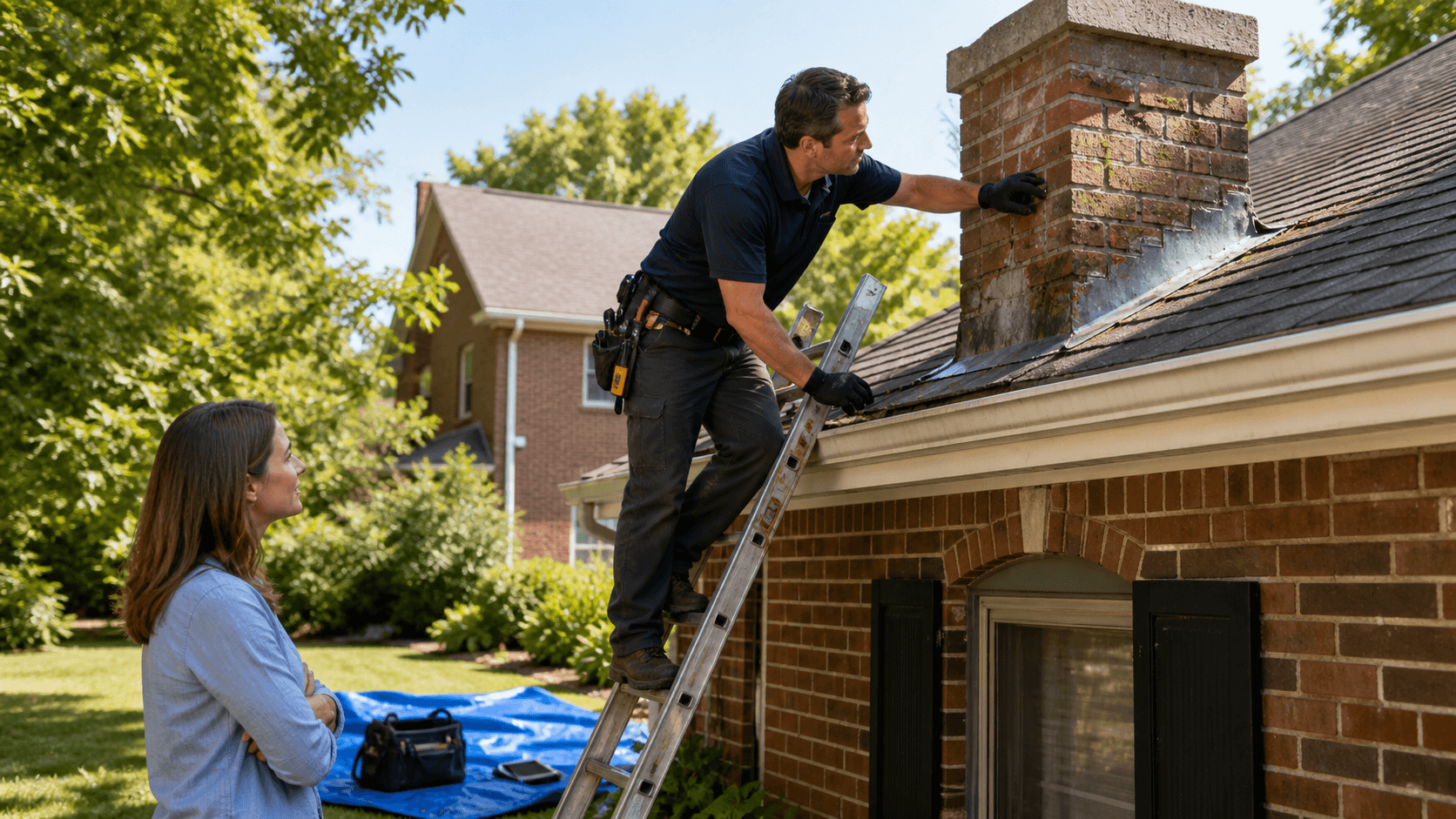
A careful leak inspection takes time and follows a clear path. A thorough check should include both the outside of the chimney and the areas around it inside your home.
On the exterior, a pro should:
- Inspect the brick or siding for cracks, missing mortar, or spalled surfaces
- Check the crown or top wash for cracks, holes, or poor slope
- Verify that a chimney cap is present, attached, and in good shape
- Look closely at the flashing where the chimney meets the roof
Inside, a quality inspection usually includes:
- Looking in the attic for dark, damp sheathing or stained rafters near the chimney
- Checking ceilings and walls for moisture trails running back toward the chimney
- Examining the firebox and smoke chamber for water marks, rust, or efflorescence
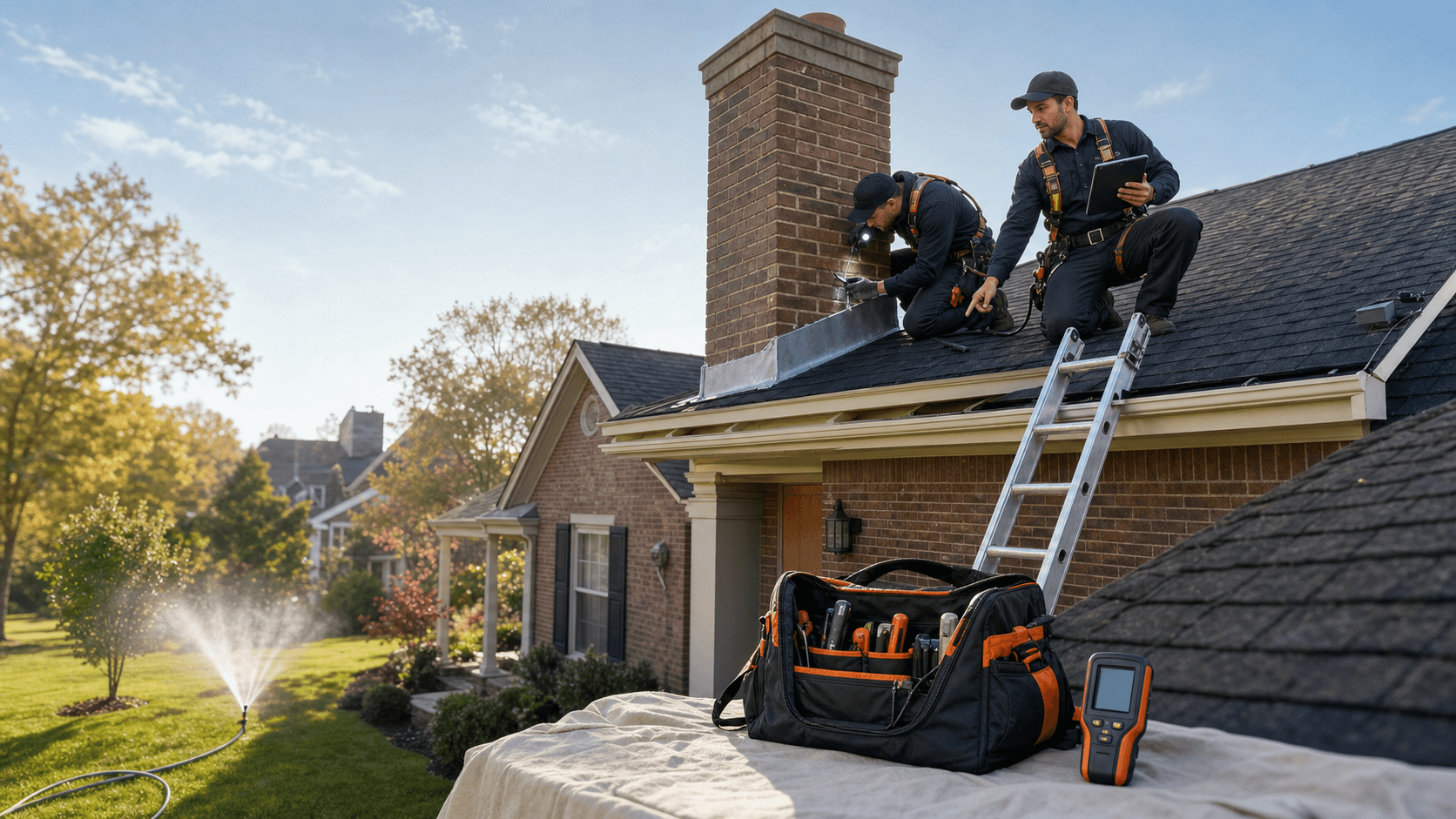
Many companies also use tools to back up what they see. That might include moisture meters on wood and drywall, camera inspections inside the flue, and controlled water testing, where water is run in stages on specific parts of the chimney and roof to see when and where it appears indoors.
Before agreeing to chimney leak repair, you have every right to ask for:
- Written findings, not just a quick verbal summary
- Labeled photos of any damage, so you can see what they see
- A clear statement of what is leaking, crown, flashing, brick, cap, chase cover, or another part
- A basic plan for how they will confirm the leak is solved once work is done
If those items are missing, it is hard to be sure you are fixing the true problem.
Simple Checks You Can Do Safely From the Ground
You do not have to climb a ladder to get at least a sense of whether a diagnosis fits what you see. There are a few safe checks you can do from the yard with your feet on the ground.
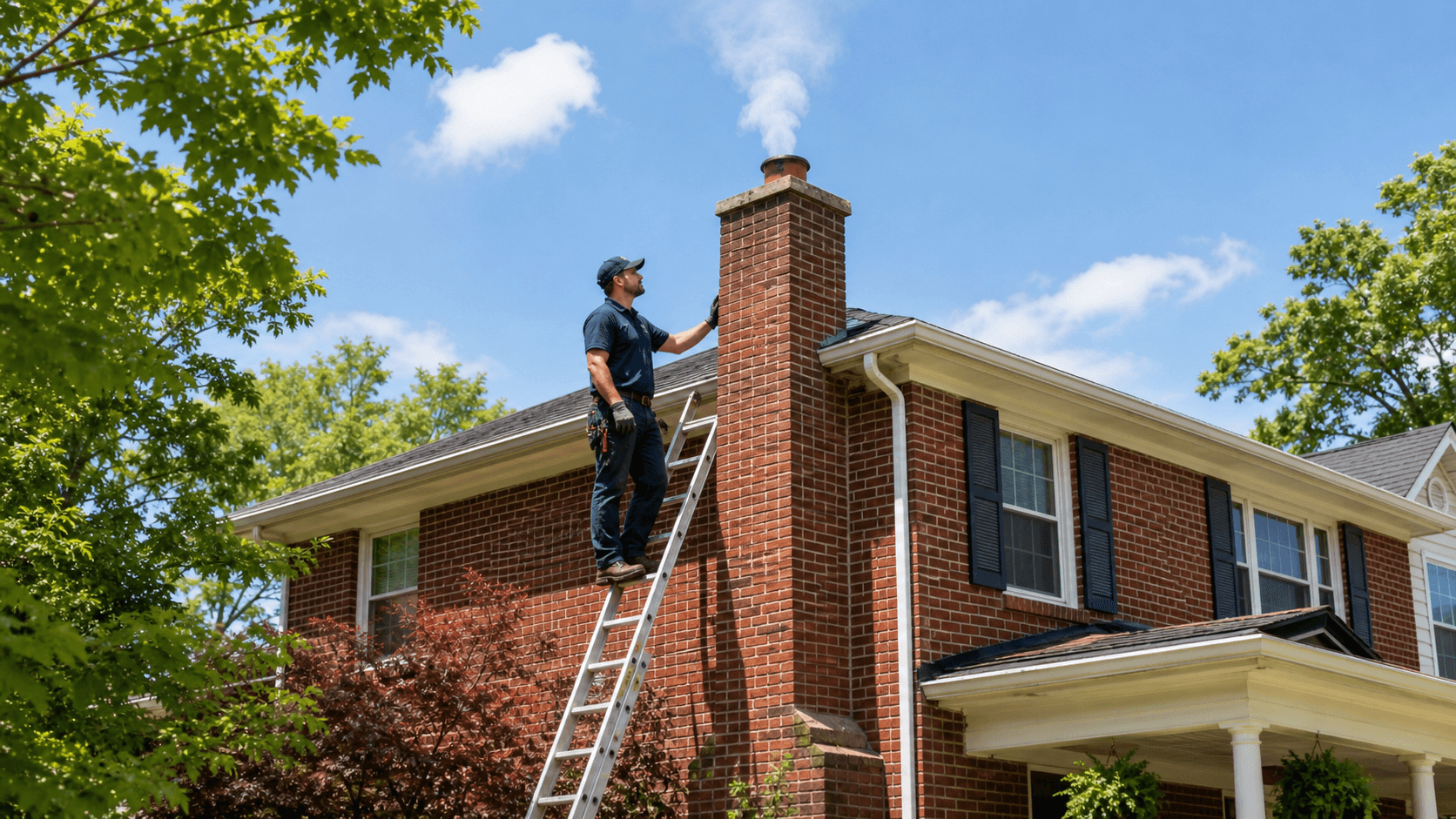
With binoculars, look at:
- The top of the chimney, is there a cap, and does it look crooked, missing, or damaged?
- The crown, do you see visible cracks or chunks missing?
- The brick or stone, are there areas that look crumbly, flaking, or heavily stained?
- A metal chase cover on a factory-built chimney, does it look rusted, sagging, or split?
- The line where the chimney meets the roof, do you see big gaps or lifted flashing?
Inside the home, keep track of leak patterns over several rainy days. Note which types of storms cause trouble. For example, do only strong wind-driven rains cause water to show up, or does a steady light rain do it too? Does water streak down the face of the fireplace, or just stain the ceiling a few feet away?
These clues can help a pro focus on the right area, but it is important not to turn this into a DIY repair. We strongly caution against:
- Walking on the roof or leaning ladders against the chimney
- Pulling off caps, shrouds, siding, or flashing pieces
- Smearing caulk or roof cement over joints to "see if it stops"
Quick patches with the wrong products can trap water in the chimney, hide the true entry point, and make long-term chimney leak repair more complicated.
Getting a Second Opinion Without Delaying Repairs
Sometimes your gut tells you something is off. That is the time to consider a second opinion. It is especially worthwhile when:
- The recommended repair is large, like a rebuild, full relining, or big flashing project
- Two people give you very different diagnoses for the same stains
- The explanation you received does not match what you see and smell at home
When you get more than one estimate, compare more than just the bottom line. Look at:
- The scope of work, what exactly is each company planning to fix?
- The materials, such as chimney caps, crown products, or flashing metals
- Any warranties on labor or products
- How they plan to protect your home, drop cloths, dust control, cleanup
- How they will confirm success, follow-up visits, water testing, or moisture checks
Timing matters too. In the Greater Cincinnati area, many people start thinking about chimney issues when the weather turns cool. Leak repairs often go faster when you schedule inspections earlier in the year, before the busiest fireplace season and before long stretches of heavy storms.
Choose a Chimney Leak Repair Partner You Can Trust
In the end, you want a chimney company that treats leak diagnosis as careful detective work, not guesswork. When you are vetting a potential partner, pay attention to:
- Local experience with water entry and masonry in our climate
- Strong, detailed reviews that mention inspections and communication
- Clear inspection reports with photos, not just a one-line invoice
- A willingness to explain their findings in plain language and answer questions
Good chimney leak repair is not only about stopping the current drip. It should also reduce the chances of the same problem coming back next rainy season. Ask how they handle prevention as part of the job, such as waterproofing masonry, improving crowns, upgrading caps, and correcting flashing details that invite water in.
At Chimney Works, we have seen how frustrating mystery water can be for homeowners across Greater Cincinnati, Northern Kentucky, Southeast Indiana, and the Dayton metro. With the right questions, proper inspections, and a focus on long-term solutions, you can feel confident that when the next round of storms rolls through, your chimney is ready.
Protect Your Home With Expert Chimney Leak Repair Today
If you are seeing water stains, damp odors, or crumbling masonry, our team at Chimney Works can inspect the damage and provide reliable chimney leak repair before small issues become costly structural problems. We focus on long-lasting solutions that help safeguard your home from future leaks. To schedule an appointment or ask questions about your specific situation, please contact us today.