Get Your Chimney Ready Before Summer Storms Hit
Chimney mortar usually fails quietly. It flakes a little, cracks a little, and then one day a big storm moves through and you notice water stains on the ceiling or bricks starting to crumble. By the time leaks show up inside, the damage in your chimney structure has often been building for a long time.
Late spring and early summer are a smart time to give your chimney a close look. In our Ohio, Northern Kentucky, and Southeast Indiana area, that is when heavy rain, strong winds, and sticky humidity really kick in. Worn mortar joints can let all that moisture seep into the bricks and into your home. In this article, we will walk through the early-warning signs of failing mortar, what to look for both outside and inside, and when it is time to call a chimney masonry repair professional instead of hoping the next storm passes you by.
Why Sound Chimney Mortar Matters in Storm Season
Mortar is the "glue" that holds your chimney bricks together. It seals the tiny spaces between each brick so water and wind stay on the outside where they belong. When mortar is solid and intact, your chimney can stand up better to pounding rain, gusty winds, and quick temperature swings from hot to cool.
When mortar fails, your chimney loses that protection. Gaps and cracks let water:
- Soak into the bricks, which can cause them to flake and break
- Reach metal parts like the damper or firebox and cause rust
- Travel down into wall cavities and ceilings around the chimney
Water that sits inside brick and mortar can freeze and thaw, which makes cracks grow larger. Over time, this can lead to spalling bricks, where the face of the brick pops off or crumbles. That is not just a cosmetic issue; it is a sign that water has been moving through the masonry for a while.
There is also a safety side. Weak or missing mortar joints can affect how strong your chimney is as a structure. In bad cases, it can start to lean or shed bricks. Even before it gets that far, damaged mortar can allow air leaks that change how your fireplace drafts, which can lead to smoke problems or poor performance.
Visual Warning Signs Your Chimney Mortar Is Failing
You can spot many mortar problems from the ground or with a simple look from a safe spot outside. You do not have to climb onto the roof, and we do not recommend that homeowners try to do that.
Here are some common signs of trouble:
- Crumbling, flaking, or missing mortar
- Cracked or spalling bricks
- Staining and discoloration on the chimney surface
Crumbling or missing mortar shows up as gaps between bricks or rough, pitted joints instead of smooth, tight lines. You might notice loose bits of mortar on the roof or on the ground below the chimney. If a light scrape with a screwdriver or key would easily dig out the mortar, that joint is no longer doing its job.
Cracked or spalling bricks are another big warning sign. If you see bricks with the faces popped off, deep cracks running through them, or pieces missing, that often means water has already gotten in through failing mortar and started breaking the brick apart from the inside. When bricks reach this point, simple touch-up work will not fix the real issue, because the water pathway is already established.
Staining and discoloration can tell a story too:
- White, powdery staining (efflorescence) where salts are left behind as water evaporates
- Dark streaks running down from the top or from mortar joints
- Rust-colored stains near metal parts or flashing
These marks mean moisture is moving through the masonry and bringing minerals to the surface. They may look harmless at first, but they signal that water is already finding paths into your chimney system.
Hidden Moisture Clues Inside Your Home
Not all chimney mortar problems show up clearly outside. Sometimes the first clues are inside your home, especially after a stretch of strong rain or storms.
Around walls and ceilings near the chimney chase or fireplace, watch for:
- Peeling paint or wallpaper
- Bubbling or soft drywall
- Brown or yellow water stains
These issues often appear slightly offset from the chimney, which can trick homeowners into thinking the roof is the only cause. In many homes, damaged mortar lets water enter the chimney structure first, then that water works its way into the nearest wall or ceiling surface.
Musty odors can also be a clue. If the area around your fireplace smells damp or "old basement" even when you have not used the fireplace, that can point to moisture getting into the masonry. Rust on the damper, fireplace doors, or firebox, and any signs of mold growth around the hearth, are also signs that water is getting where it does not belong.
If you can safely access your attic, it is worth checking around the chimney after strong storms:
- Damp or matted insulation near the chimney
- Darkened or discolored wood framing next to the brick
- Any visible mold or mildew growth
These are strong indicators that water is coming in at the chimney, often through failed mortar joints, cracks in the crown, or gaps in flashing.
When a Simple Tuckpointing Job Is Not Enough
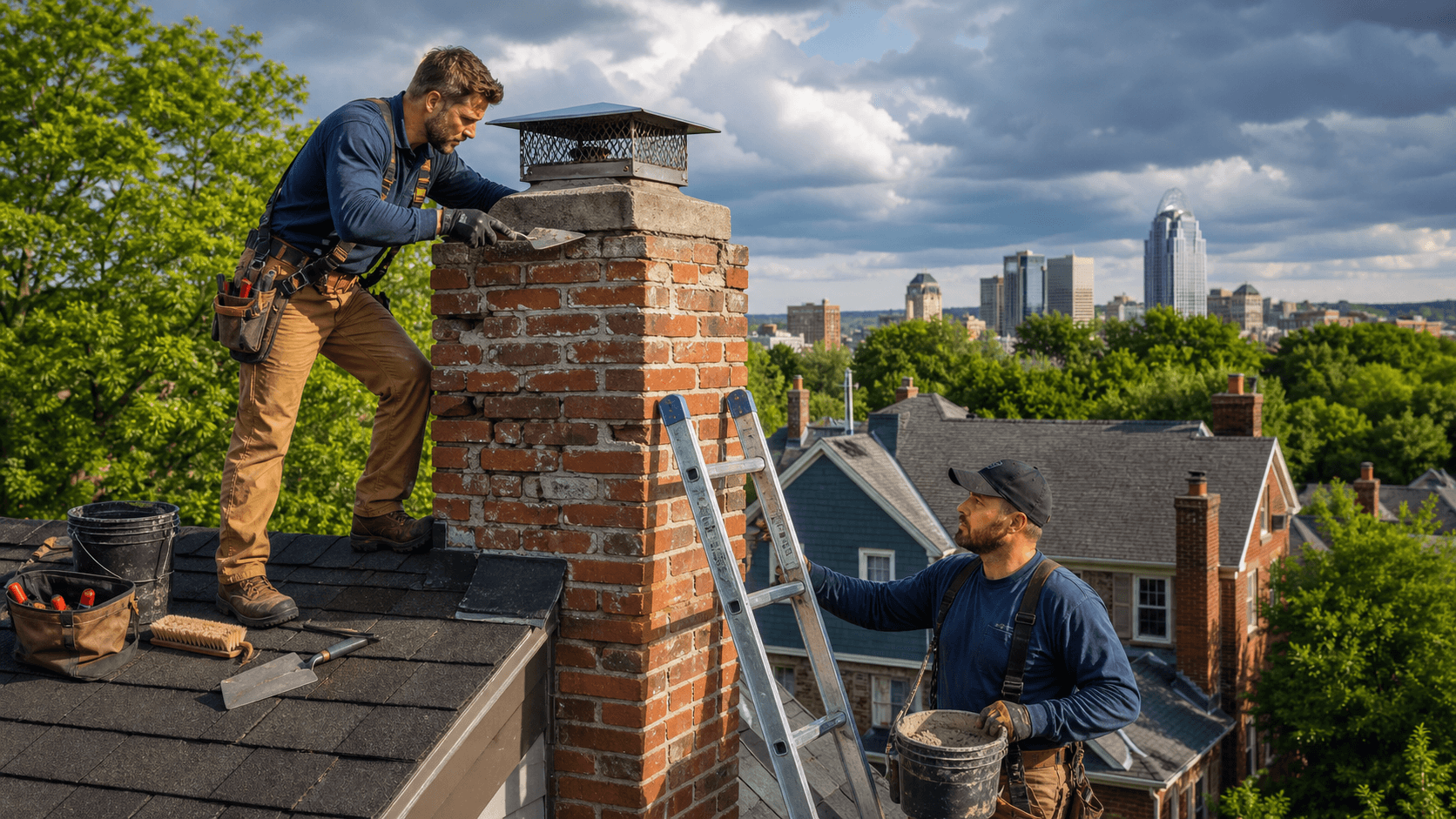
Tuckpointing is the process of removing a shallow layer of damaged mortar and packing in fresh, properly mixed mortar in its place. When caught early, this kind of repair can give a chimney many more years of solid service.
However, some problems go beyond a simple surface fix. You may need more extensive chimney masonry repair if you notice:
- Deep vertical or stair-step cracks in the chimney
- Bricks that are loose, badly spalled, or missing
- A chimney that appears to lean or pull away from the house
- Leaks that keep coming back even after past repairs
In these cases, the chimney may need work like rebuilding a damaged crown at the top, replacing spalled bricks, repairing or replacing flashing, or even partial chimney rebuilds where unsafe sections are taken down and rebuilt correctly.
A trained chimney professional can inspect the mortar, bricks, crown, and flashing as a complete system. That way, you are not just hiding symptoms with a thin layer of new mortar while deeper structural or water-entry problems continue to grow.
How Professional Chimney Masonry Repair Protects Your Home
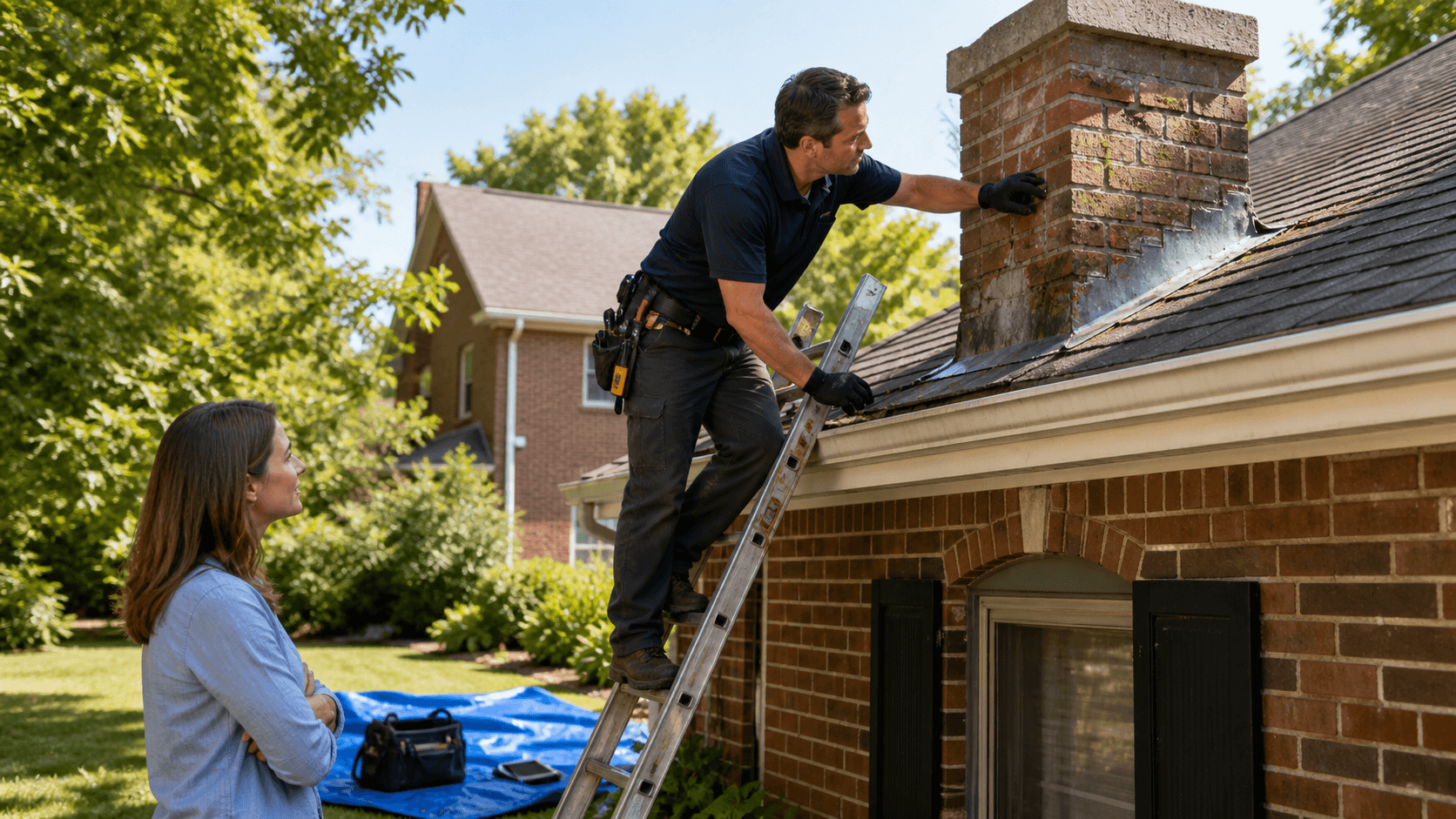
When you bring in a professional, the visit usually starts with a full visual inspection of the chimney exterior and accessible interior areas. The technician will look for signs of moisture, structural movement, and past repair attempts, and may take photos so you can see what they see.
From there, the technician may recommend:
- Quality tuckpointing in areas where mortar is weak but bricks are still sound
- Crown repair or replacement if the top surface is cracked or crumbling
- Waterproofing applications on the exterior brick to help shed water
- Proper flashing repair or replacement where the chimney meets the roof
The goal is to stop water from entering, strengthen the chimney structure, and help your fireplace or stove work the way it should. Good masonry work can extend the life of your chimney, reduce the risk of leaks and interior damage, and give you peace of mind through stormy months and beyond.
By catching mortar problems early and addressing them with proper chimney masonry repair, you protect not just the chimney itself, but also your roof, walls, ceilings, and the living spaces your family uses every day.
Protect Your Chimney and Home With Expert Repair
If you have cracked bricks, crumbling mortar, or water leaks, our team at Chimney Works is ready to help with professional chimney masonry repair. We carefully inspect your chimney, explain what we find, and recommend only the repairs you truly need. Schedule an appointment today or contact us with any questions so we can restore your chimney's safety and performance.