Why Summer Storms Suddenly Reveal Chimney Leaks
A roof leak around the chimney often shows up right after a hot day followed by a fast, cooling rain. The house has been baking in the sun, the storm rolls in, and suddenly you notice a drip, a stain, or a musty smell near the fireplace. It feels like the leak came out of nowhere.
What is really happening is that heat, sudden cooling, and strong wind are working on weak spots that have been building over time. Those weak spots might be in the masonry, the chimney crown, or the flashing where the chimney meets the roof. In our Cincinnati area climate, with hot, humid summers and pop-up storms, this pattern is very common, and it can cause real damage if you ignore it.
At Chimney Works, we see these issues all the time in homes across Ohio, Northern Kentucky, and Southeast Indiana. We want you to understand why this happens, what signs to look for, and how to document what you see so a chimney professional can find the problem faster and fix it the right way.
How Hot-to-Cool Summer Rains Stress Your Chimney
On a sunny summer day, every part of your chimney heats up. Bricks, mortar, metal flashing, chimney liners, concrete crowns, and caps all expand as they get hot. Then a storm blows in with cooler rain, and that same chimney cools down quickly. When it cools, everything contracts.
All those different materials expand and contract at slightly different rates. That constant movement can:
- Loosen mortar joints between bricks
- Open small gaps between metal flashing and masonry
- Create hairline cracks in the chimney crown
- Stress sealants around the cap or chase cover
At first, these gaps may be tiny. You may not see anything wrong from the ground, and you may not notice any water. But with each hot day and cool rain, the movement repeats. Over time, those tiny openings grow just enough to let water in when conditions line up just right.
So when you see a roof leak around the chimney after a storm, that leak is usually the last phase of a slow breakdown, not a one-time event. The damage may have been building for months or even years, hidden inside the chimney structure, roof deck, or walls.
Wind-Driven Rain and Why Angled Storms Find Every Gap
Not all rain falls straight down. In many summer storms, especially in the Cincinnati region, the wind can push rain sideways or even upward. This is called wind-driven rain, and it behaves very differently from a light, straight shower.
Wind-driven rain can:
- Blow under loose or lifted flashing where it meets the shingles
- Push water behind siding close to the chimney structure
- Soak into porous or aged bricks and mortar faster than normal
- Slide into gaps around the crown, cap, or chase cover
Because the water is hitting at an angle, it can reach places that normally stay dry. That is why you might only see a leak during heavy, windy storms, or only when the wind comes from a certain direction. The pattern can make the leak seem random or mysterious, even though it is following the path of least resistance through those hidden gaps.
This is also why a chimney leak is not always a simple "hole in the roof." Wind-driven rain tests every seam, crack, and weak point around the chimney, then carries water inside the structure until it finds a place to show itself.
Clues Inside the House When You Spot a Chimney Leak
You do not need to climb on the roof to gather helpful clues. A lot of evidence shows up inside the house if you know where to look after a storm.
Watch for signs like:
- Brown or yellow rings on the ceiling near the chimney
- Peeling or bubbling paint on walls or ceilings
- Swollen or warped trim, baseboards, or window frames nearby
- Damp carpet or flooring along walls close to the chimney
- Water in the firebox, on the hearth, or on the damper
Timing matters too. Try to note:
- Did the leak start during the heaviest rain or after the storm ended?
- Does it only happen when the wind blows from a certain side of the house?
- Does the damp area feel warm, cool, or musty when you touch or smell it?
From floor level, you can safely look inside the firebox, at the damper, and around the surround for signs of moisture, rust, or staining. A musty or smoky damp smell after storms is also a clue that water is getting where it should not.
What to Photograph and Record Before Calling a Pro
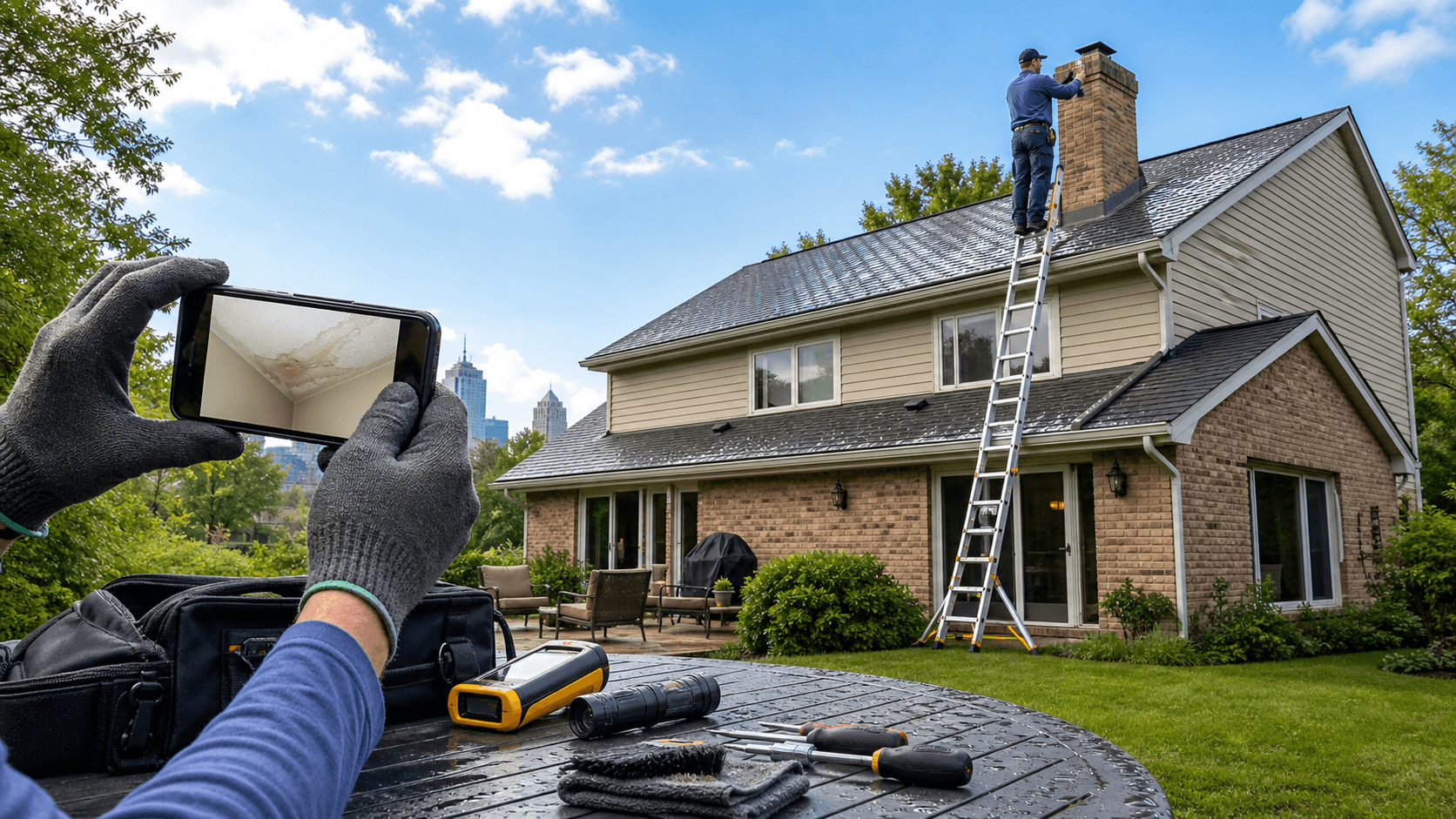
Good notes and photos can save time and help a chimney technician zero in on the true cause of the leak. You do not need special tools, just your phone and a little patience.
Helpful photos include:
- Ceiling or wall stains near the chimney area
- Active drips, if you see water during a storm
- Bubbling or peeling paint, cracked drywall, or swollen trim
- Rust or discoloration on the firebox, damper, or metal components
- Any visible cracks in the firebox, hearth, or masonry you can see from inside
Along with photos, keep a simple "leak log" with details like:
- Date and time you noticed the leak
- How heavy the rain was and whether it was windy
- Which side of the house the wind seemed to hit hardest
- Whether your HVAC or whole-house fan was running
These notes help a pro tell the difference between true water entry and indoor condensation issues. By sharing clear photos and a pattern of when the leak appears, you can speed up the diagnosis and help focus repairs on the most likely trouble spots.
Common Chimney Leak Sources a Pro Will Investigate
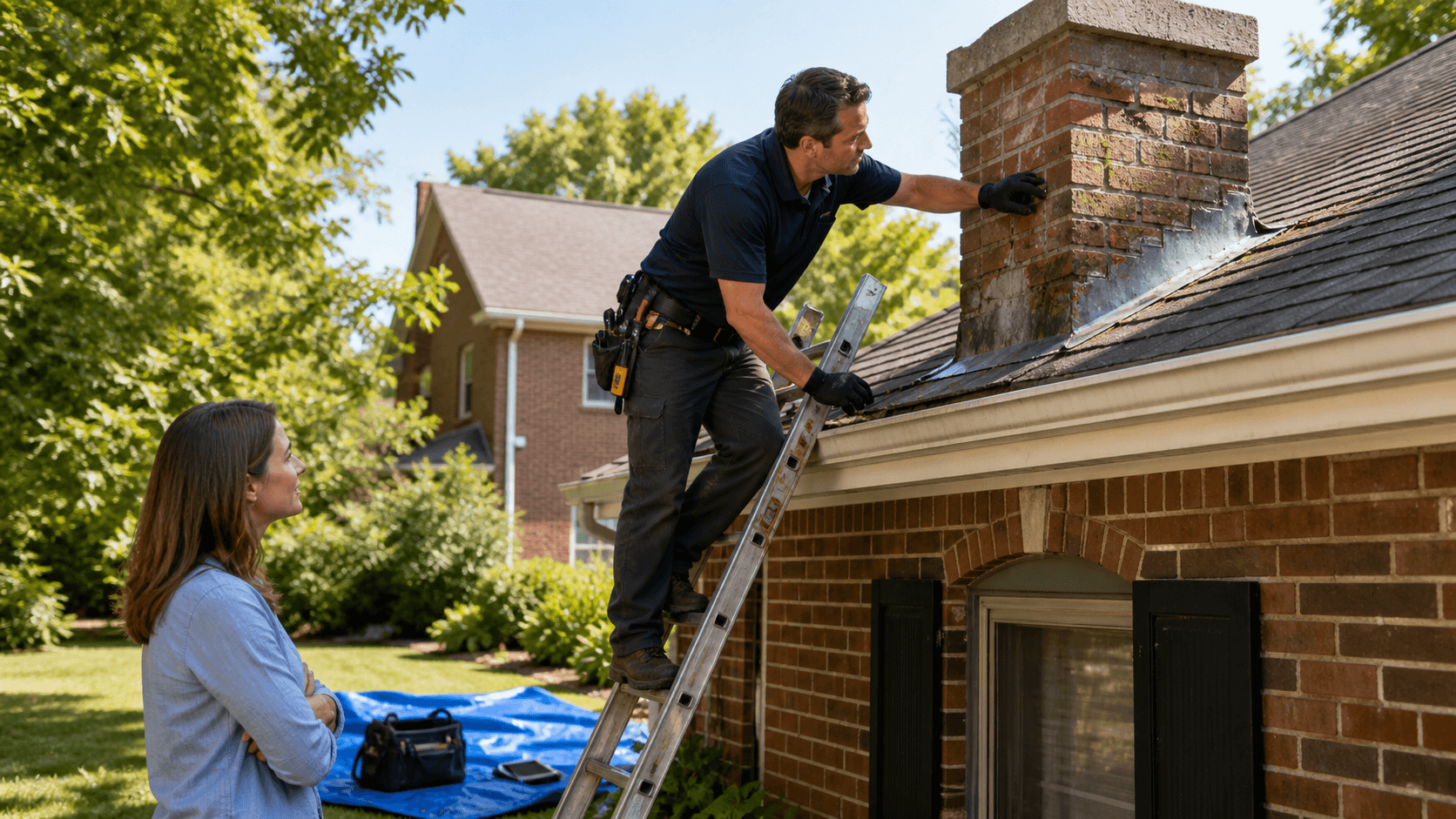
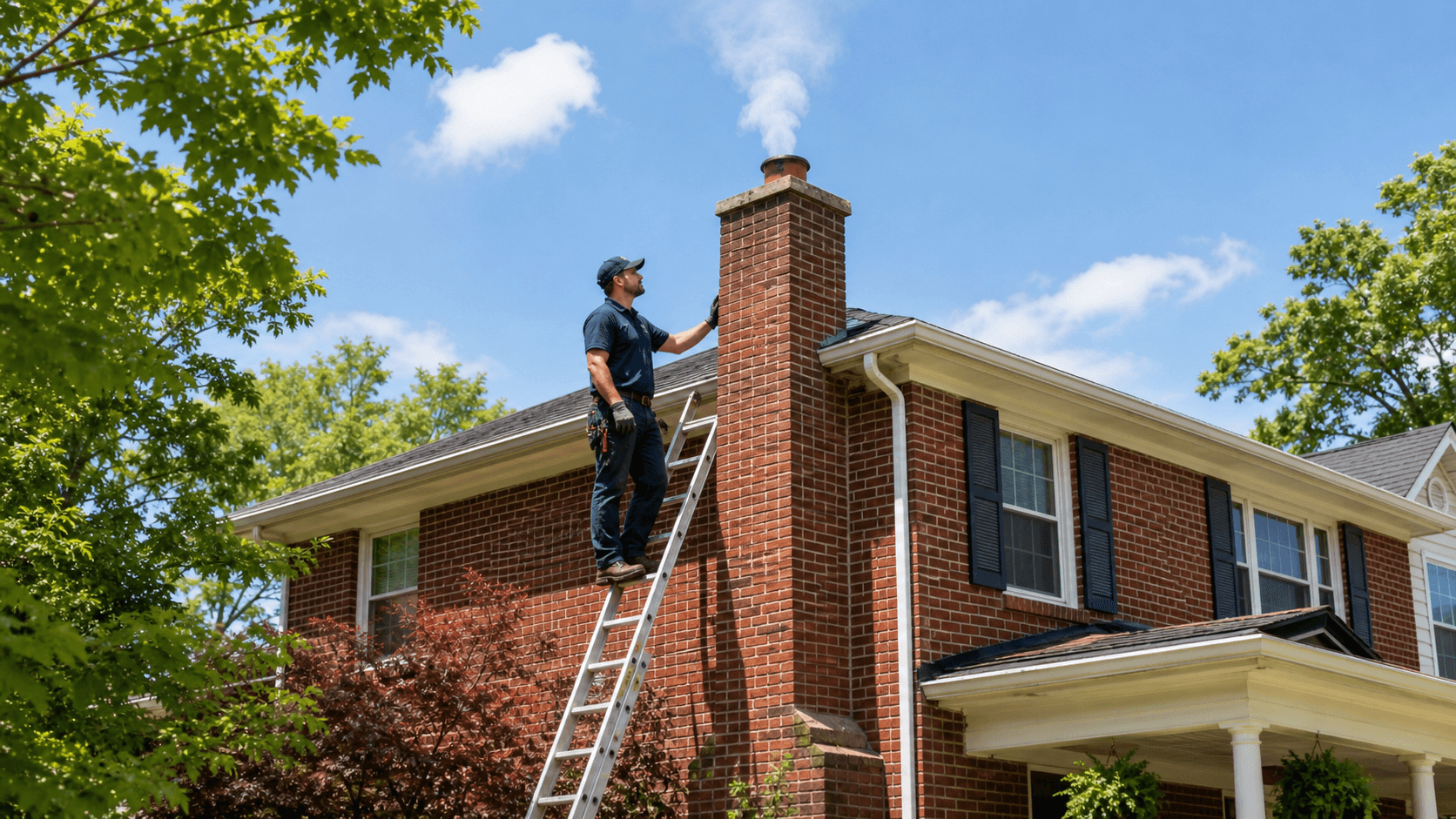
When a chimney professional comes to inspect a roof leak around the chimney, they will look at both the interior and exterior parts of the system. There are several common trouble areas they will often check first.
On the exterior, they may find:
- Failing or improperly installed chimney flashing
- Cracked or deteriorated chimney crowns
- Missing, damaged, or undersized chimney caps
- Worn mortar joints or porous bricks that soak up water
- Rusted or damaged chase covers on prefabricated chimneys
They will also look at how the chimney meets the roof, how water is supposed to drain around it, and whether nearby roofing or siding has been affected. Tools like cameras and moisture meters can help track the actual path of water inside the structure, from the point of entry to the visible stain or drip.
Even leaks that seem stubborn or confusing usually trace back to one or more specific defects. Once those are found, a pro can match them with the right repair, whether that means fresh flashing, tuckpointing, crown repair, sealing masonry, replacing a cap, or addressing damage to the chimney structure itself.
Schedule a Pro Inspection Before the Next Big Storm Hits
Once you notice any sign of a chimney leak, it is smart not to wait. Water problems rarely stay the same; they spread. Summer and early fall are often the best times to deal with chimney issues because access is safer, materials can cure properly, and your system can be ready before you rely on it in colder weather.
Fixing problems now also helps protect your chimney and home during winter freeze-and-thaw cycles, when trapped moisture can expand in cracks and make them worse. In our Ohio, Northern Kentucky, and Southeast Indiana service area, that combination of summer storms and winter cold is tough on chimneys, but catching issues early makes a big difference.
By watching for signs around your home, keeping simple notes, and sharing clear photos, you give a chimney professional a head start on finding the real source of a roof leak around the chimney and recommending lasting solutions.
Protect Your Home From Costly Water Damage Today
If you are seeing stains on your ceiling or walls near the fireplace, a roof leak around the chimney can quickly turn into serious structural damage. At Chimney Works, we carefully inspect your chimney, flashing, and roofing materials so we can fix the problem at its source, not just patch the symptoms. Let us help you safeguard your home before the next heavy rain. Schedule an appointment or ask a question anytime through our contact page.