Spring Storms Expose Hidden Chimney Leak Dangers
A roof leak around the chimney often shows up at the worst time. Many homeowners feel fine all winter, then after a few strong spring rains, there is a brown stain on the ceiling, a drip in the attic, or a musty smell near the fireplace. It can feel sudden, but most of the time that leak has been building for months.
Spring weather in the Cincinnati, Northern Kentucky, Southeast Indiana, and Dayton areas can be rough on roofs and chimneys. Strong wind, driving rain, and quick temperature swings all put stress on brick, mortar, metal, and shingles. In this article, we will explain why leaks tend to get worse after spring storms, what to watch for outside and inside, and when it is time to bring in a professional to protect your home.
Why Chimney Leaks Often Appear After Spring Storms
Leaks that show up in spring usually started in winter. Freeze and thaw cycles cause tiny cracks in chimney crowns, mortar joints, and masonry. When water gets into those small openings, it freezes, expands, and slowly pushes things apart. You may not see any problem during lighter winter moisture, but once heavy spring rain hits, those tiny gaps let water travel deeper.
Another factor is wind-driven rain. During spring storms, rain does not always fall straight down. Strong gusts blow water sideways, pushing it:
- Under lifted shingles near the chimney
- Behind loose or rusted flashing
- Into gaps around the chimney cap or top
Those pressure-driven leaks are different from a light drizzle. They reach weak points that did not leak before. Spring thunderstorms and high winds in our region usually do not create brand-new problems from nothing. Instead, they expose and speed up damage that was quietly growing all along.
Common Weak Points That Let Water in Around Chimneys
Most roof leaks around the chimney start at a few key spots. When those areas wear out or get damaged, water can move quickly from the outside to the inside of your home.
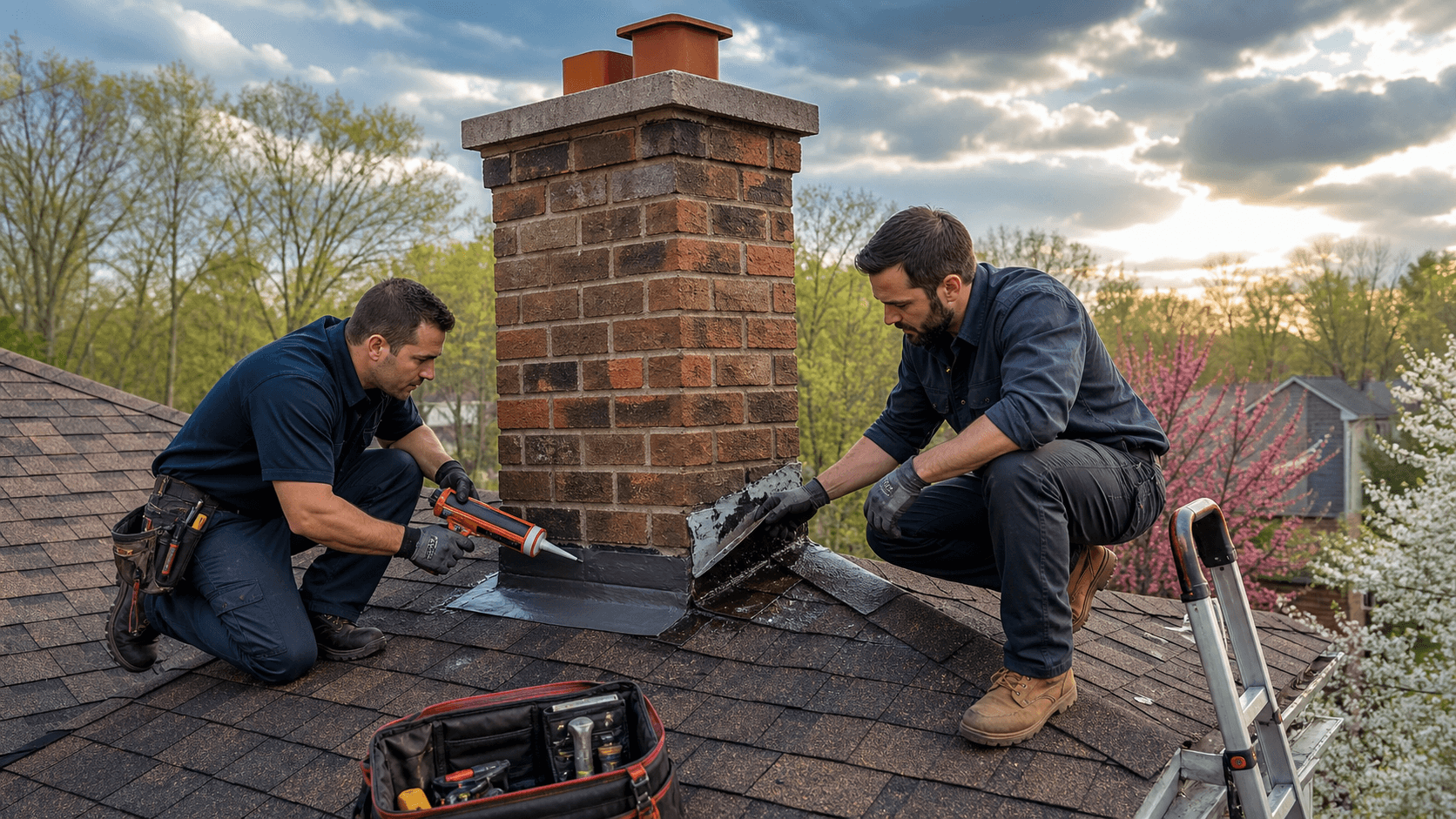
Flashings and counterflashings are a big one. These are the metal pieces that seal the joint where the chimney meets the roof. Over time, they can:
- Pull away from the brick
- Crack or corrode
- Separate where they were sealed
When that happens, water can slide right into the gap between the roof and the chimney. A strong storm can widen that space in just a few hours.
The chimney crown and masonry are also common trouble areas. The crown is the concrete or cement layer at the very top. Cracks in the crown let water soak into the brick and mortar below. Spalling bricks that are flaking or breaking, and crumbling mortar joints, act like a sponge. Once they absorb enough water, it can travel down inside the structure and show up as leaks in the attic, ceilings, or walls.
Missing or damaged chimney caps are another problem. Without a proper cap, rain can pour straight into the flue and smoke chamber. Even a poorly fitted or bent cap can let in more water than you would think. Every heavy downpour adds moisture inside the chimney, which increases the risk of leaks, odors, and damage to nearby framing.
How Spring Storms Turn a Small Leak Into Major Damage
A tiny leak might not seem like a big deal at first, especially if you only see a faint stain or a small damp patch. But spring weather can turn that small issue into a major repair in a short time.
Repeated storms keep roofing materials wet. Shingles, underlayment, and wood framing never get the chance to dry out. Constant moisture can lead to:
- Rot in roof decking and rafters
- Mold growth in insulation and drywall
- Soft, warped trim and baseboards
Wind is another problem. Strong gusts during a storm can lift shingles right next to the chimney or bend flashing just enough to open a wider gap. Every time the wind blows, that opening grows, which means more water the next time it rains.
Inside the home, the signs often show up a little later. Homeowners may notice peeling paint near the chimney, musty odors in a room that used to smell fine, or brown spots spreading across the ceiling. Sometimes the damage appears weeks after the worst storm, once the water that got in has spread and soaked into finishes.
Spotting Early Signs of a Roof Leak Around the Chimney
Catching a leak early gives you a much better chance to avoid major repairs. A quick check during or right after a storm can tell you a lot, even without climbing on the roof.
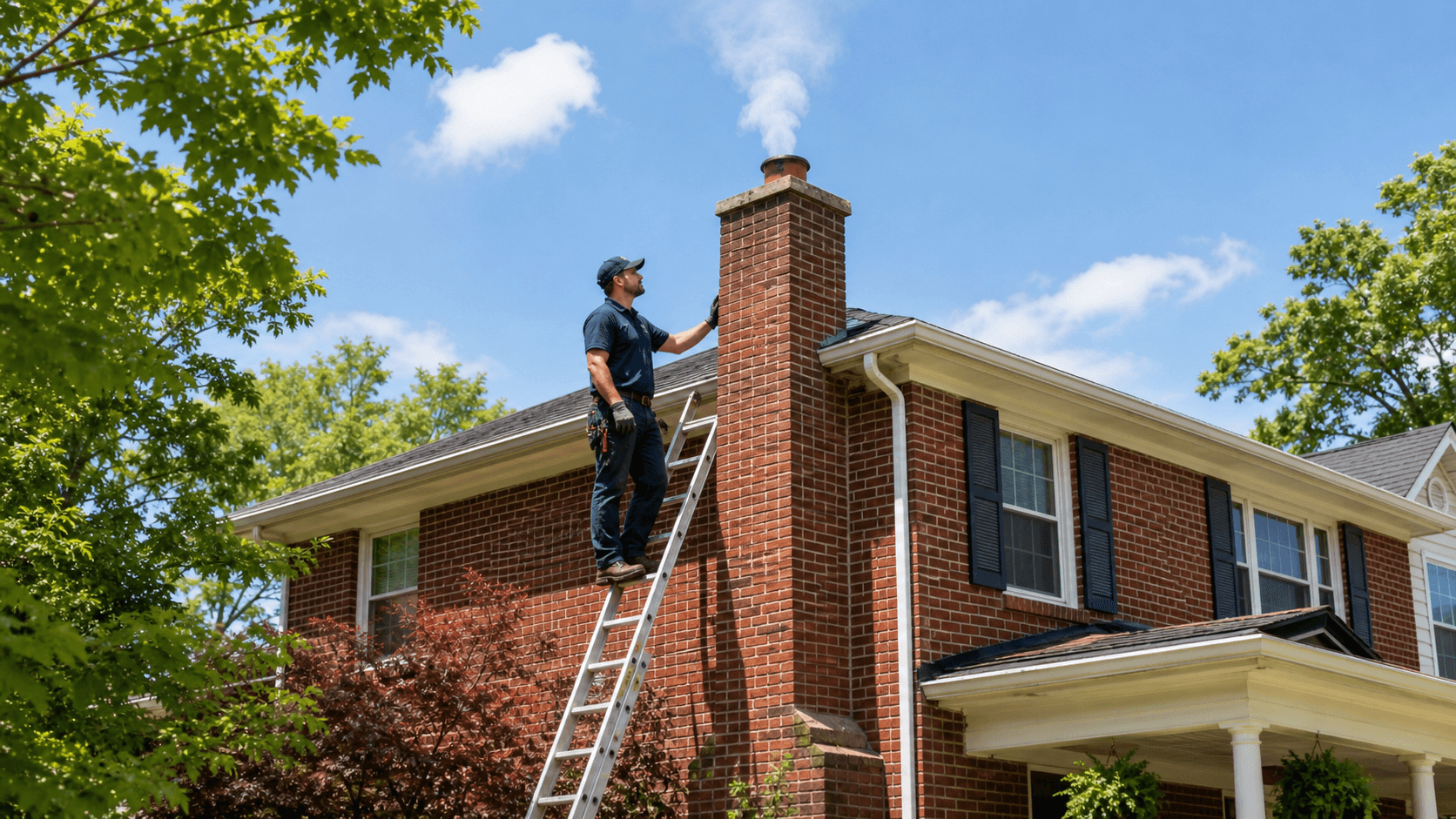
Outside, from the ground with binoculars if possible, look for:
- Rust stains or streaks on the metal flashing
- Cracked or broken chimney crown at the top
- Loose, missing, or crumbling mortar joints
- Moss, algae, or dirty streaks running down from the chimney area
- Extra shingle granules in the gutters below the chimney
Inside, the attic is often the first place leaks show up. When it is safe to do so, and using good lighting, check for:
- Damp or flattened insulation around the chimney
- Darkened or stained roof decking near the chimney penetration
- Active drips during or just after a heavy rain
It is never safe to walk on a steep, wet, or damaged roof. Ground checks and attic checks are usually enough to spot warning signs. A trained chimney and roof professional can then perform a closer inspection with the right safety gear and tools.
Professional Repairs That Help Stop Chimney Leaks
When there is a roof leak around the chimney, a quick patch is rarely enough. The key is finding the true source of the water, which is often different from where the drip appears inside.
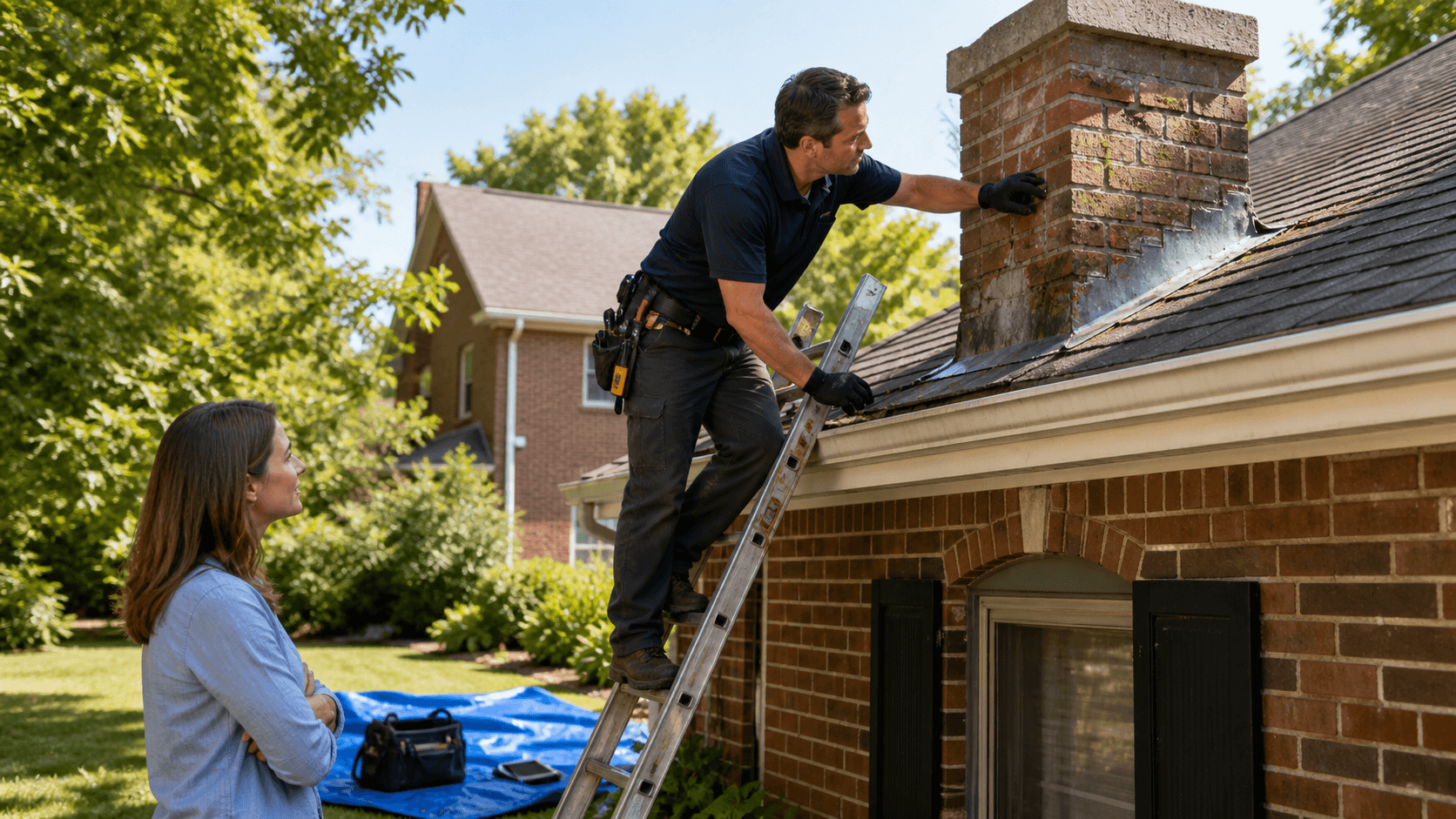
A professional inspection should include a careful look in the attic, a detailed review of the exterior roof and flashing around the chimney, and a full check of the chimney structure from top to bottom. This helps uncover hidden cracks, missing sealant, loose flashings, and other pathways water may be using.
Depending on what is found, long-lasting repair options may include:
- Installing new step flashing and counterflashing
- Rebuilding or sealing a damaged chimney crown
- Tuckpointing loose or missing mortar joints
- Applying masonry waterproofing products
- Installing or replacing a properly sized chimney cap
Taking care of these issues before summer storms and later fall rains can protect the roof framing, ceilings, walls, and interior finishes. Timely repairs also help prevent ongoing mold growth and stubborn odors that can be hard to remove once they get into drywall and insulation.
Schedule a Spring Chimney Leak Check Before Storms Hit
Spring is a smart time to pay attention to any signs of a roof leak around the chimney. In the Cincinnati and Dayton areas, late spring often brings strong storms and sometimes the remnants of bigger systems that can drop a lot of rain in a short time. A careful inspection now can reveal problems that winter and early spring weather have started.
At Chimney Works, we focus on helping homeowners across Cincinnati, Northern Kentucky, Southeast Indiana, and the Dayton metro area keep their chimneys and roofs dry and safe. If you notice stains on ceilings near your chimney, damp smells around your fireplace, or any of the exterior warning signs we covered here, a professional leak check can make all the difference. Fixing small chimney and flashing issues early helps keep your home dry, protects your roof, and gives you peace of mind before the next storm rolls through.
Protect Your Home From Costly Chimney Leaks
If you suspect a roof leak around the chimney, we can inspect the problem, explain your options, and provide a lasting repair. At Chimney Works, our team focuses on identifying the root cause so you are not dealing with repeat water damage every rainy season. Reach out today through our contact page to schedule an appointment and get your chimney and roof back in solid shape.