Stop the Drips: Why Moisture Around Fireplaces Matters
Water around a fireplace is not just an ugly stain on the wall. Even a small drip or damp spot can slowly damage brick, mortar, and wood around the opening. Rust can start on fireplace parts, damp odors can spread into the room, and in some cases the structure around the chimney can weaken.
Moisture near a fireplace usually comes from one of two places: a roof leak around the chimney or condensation forming inside the system. Telling these apart is not always simple. They can look very similar, but the fix is completely different. Getting the right answer early saves time, mess, and repeat repairs.
For homeowners in Cincinnati, Northern Kentucky, Southeast Indiana, and the Dayton metro area, this matters even more. Our humid summers, strong storms, and cold, icy winters are hard on chimneys. The mix of wind-driven rain and freeze-and-thaw cycles can turn a small moisture issue into a big problem if it is not checked by a professional.
How Water Sneaks in Around Chimneys and Fireplaces
When the problem is a true roof leak around the chimney, water is finding a way in from the outside. There are several common trouble spots that we see again and again during inspections.
Typical exterior leak paths include:
- Damaged or loose flashing where the roof meets the chimney
- Counterflashing that has pulled away from the brick or stone
- Cracked or missing chimney caps that let rain fall straight into the flue
- A deteriorated chimney crown that is cracked or crumbling
- Worn roof shingles or roof decking near the chimney
Rain does not always fall straight down. During strong storms, wind pushes water sideways, up under shingles, and into tiny gaps around metal flashing. The leak might start up high, then follow framing or masonry until it shows up as:
- Stains on the ceiling near the fireplace
- Damp spots on walls beside the chimney
- Drips in front of, or beside, the firebox
These leaks are often slow and may not show up every time it rains. Many homeowners think they had a one-time problem when the stain dries up a few days later. In reality, the leak may keep happening in heavy or windy storms, soaking the same area over and over until you see cracking, peeling paint, or soft wood.
Condensation Clues: When the Problem Starts Inside
Condensation is different. Instead of water coming in from outside, moisture forms when warm, damp indoor air hits a cold chimney or metal flue. This can happen in late spring, cool wet weather, or anytime the AC is running and the chimney is not being used.
Some signs point more toward condensation than a roof leak around the chimney:
- Dampness mainly when the AC is running, not just during rain
- A musty or sour smell around the fireplace even when everything looks dry
- Metal flue pipes that look like they are sweating
- Moisture spots that show up after the fireplace has been unused for a long time
Condensation is more likely when:
- The chimney is unlined or has an old liner that is too large for the appliance
- The venting system is not moving air well
- Indoor humidity is high, especially in tight homes with little fresh air flow
In these cases, the roof can be in good shape, and the flashing and cap can be fine. The moisture is actually forming on the inside surfaces, running down, and then soaking into masonry or staining nearby walls. That is why a careful inspection is so important before anyone starts patching seams on the roof.
Telltale Signs of a Roof Leak Around the Chimney
While condensation can be sneaky, exterior leaks leave their own set of clues. Paying attention to what you see and when you see it can help a professional quickly narrow down the cause.
Signs that often point to an exterior leak include:
- Brown or yellow ceiling stains near the chimney or over the mantel
- Peeling or bubbling paint above the fireplace opening
- Bricks that feel soft, crumbly, or show white, powdery streaks called efflorescence
- Dark, soft, or warped roof decking or shingles close to the chimney
Timing is another big clue. If the water appears, grows, or starts dripping during or right after heavy rain, especially when the wind is strong, a roof leak is more likely. If the area stays dry in clear weather, then gets damp again with the next big storm, that pattern is helpful information for the inspector.
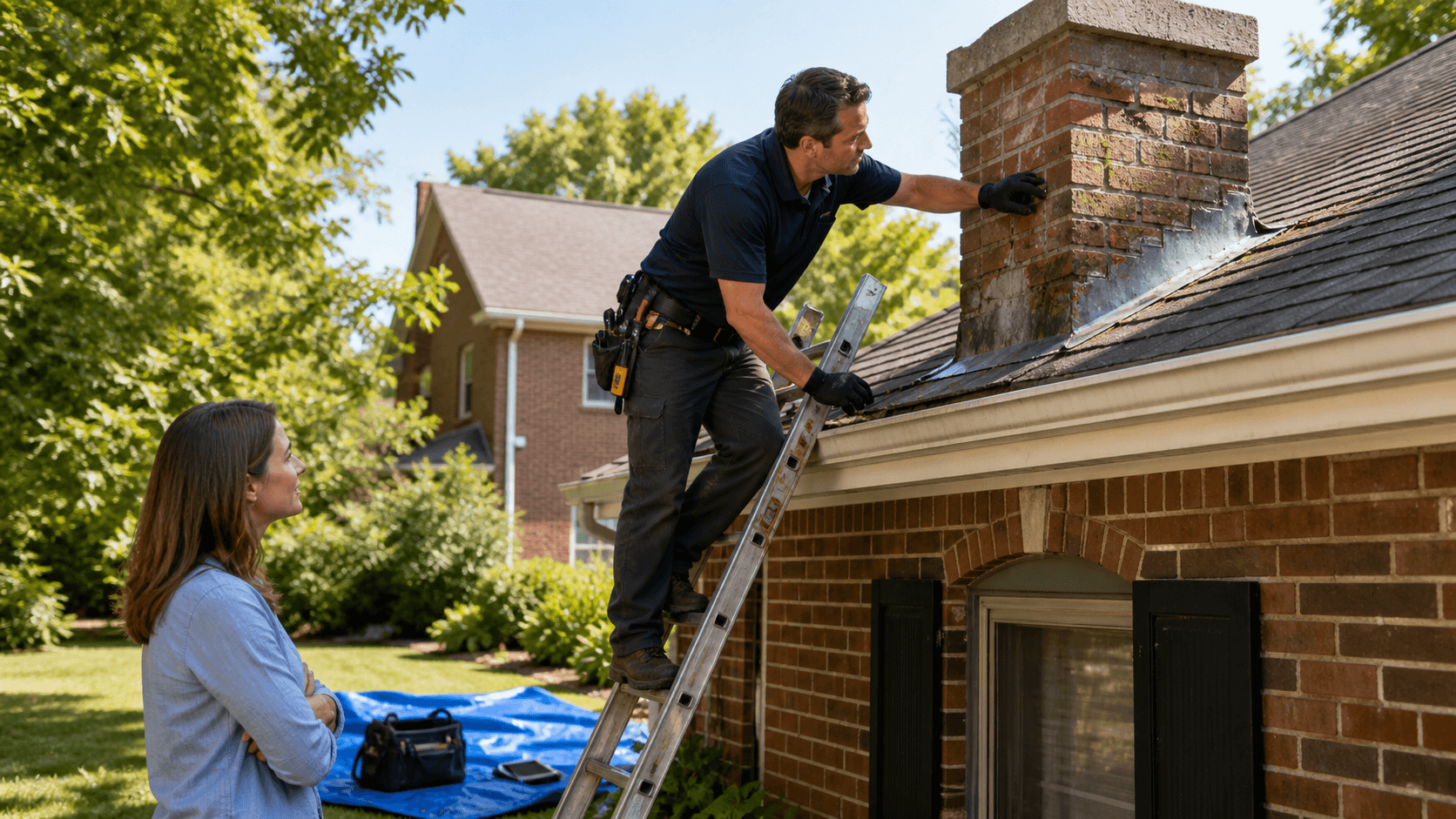
When we inspect for a roof leak around the chimney, we look at:
- Base flashing and counterflashing on all sides of the chimney
- The chimney crown, to check for cracks that let in water
- Mortar joints and brick faces for gaps and holes
- The area where the roof, siding, and chimney all meet
- The interior of the firebox and smoke chamber for water tracks or staining
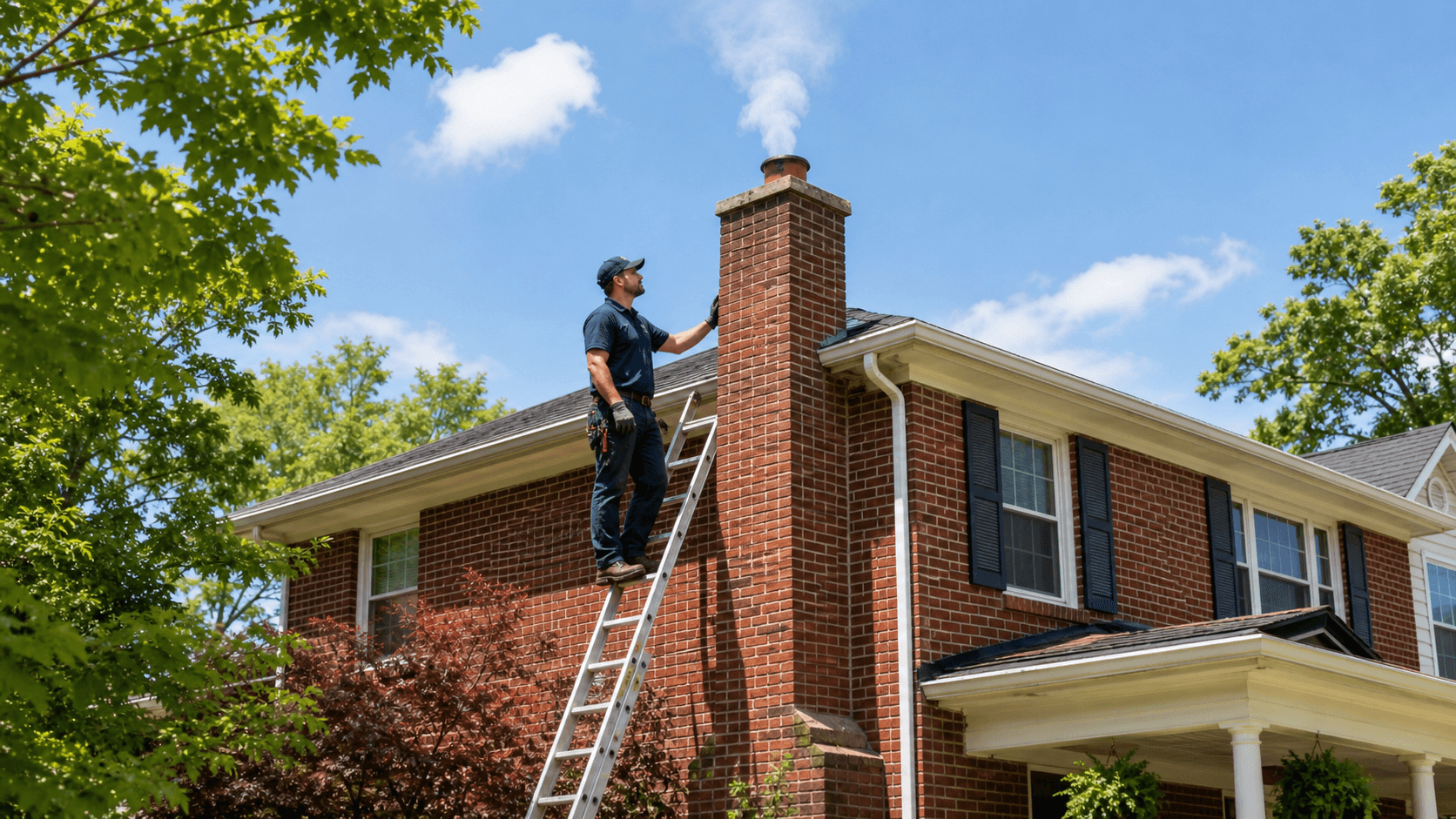
A careful roof and chimney inspection, from both inside and outside, is the best way to separate rain leaks from condensation problems.
Professional Fixes That Actually Solve the Moisture Problem
Once the true cause is clear, the repair plan becomes much more straightforward. Guessing or trying a quick patch usually leads to more damage and more frustration.
For true leaks from the outside, common repairs might include:
- Reflashing the roof around the chimney to seal the joint correctly
- Rebuilding or sealing the chimney crown so water sheds away from the structure
- Tuckpointing, which means grinding out and replacing weak mortar joints
- Installing or replacing a proper chimney cap to keep out rain and debris
For condensation problems, the fixes are different because the moisture starts inside. Helpful solutions can include:
- Installing or repairing a flue liner that is properly sized for the appliance
- Improving combustion air and venting so moist air does not sit in the chimney
- Making sure dampers and glass doors are used properly so air flow is balanced
- Managing indoor humidity levels so the chimney stays drier in the off-season
Quick DIY fixes, like smearing sealant over flashing or painting over stains, might hide the issue for a while but they do not stop the water or condensation. Over time, hidden moisture can lead to mold growth, rotted framing, spalling brick, and costly interior repairs. A skilled chimney professional can track the moisture to its source and target the repair so it actually lasts.
Get Your Chimney Moisture Problem Checked Before It Gets Worse
In our area, strong spring and summer storms tend to show up any weakness in a chimney system. Then, when temperatures drop, that trapped moisture can freeze inside the masonry and widen tiny cracks. Taking care of damp spots, stains, or odd smells around your fireplace before they grow is one of the best ways to protect both your home and your peace of mind.
At Chimney Works, we help homeowners across Cincinnati, Northern Kentucky, Southeast Indiana, and the Dayton metro area sort out whether they are dealing with a roof leak around the chimney, an indoor condensation issue, or a mix of both. A thorough inspection, along with the right repair plan, keeps your fireplace safer, your home drier, and your chimney ready for the next heating season.
Stop Small Chimney Leaks Before They Become Big Problems
If you have a roof leak around the chimney, our team at Chimney Works can inspect the damage and recommend the right repair before water causes serious structural issues. We use professional tools and proven techniques to find the true source of the leak, not just the visible stains. Schedule an appointment or ask a question anytime through our contact page so we can help protect your home.